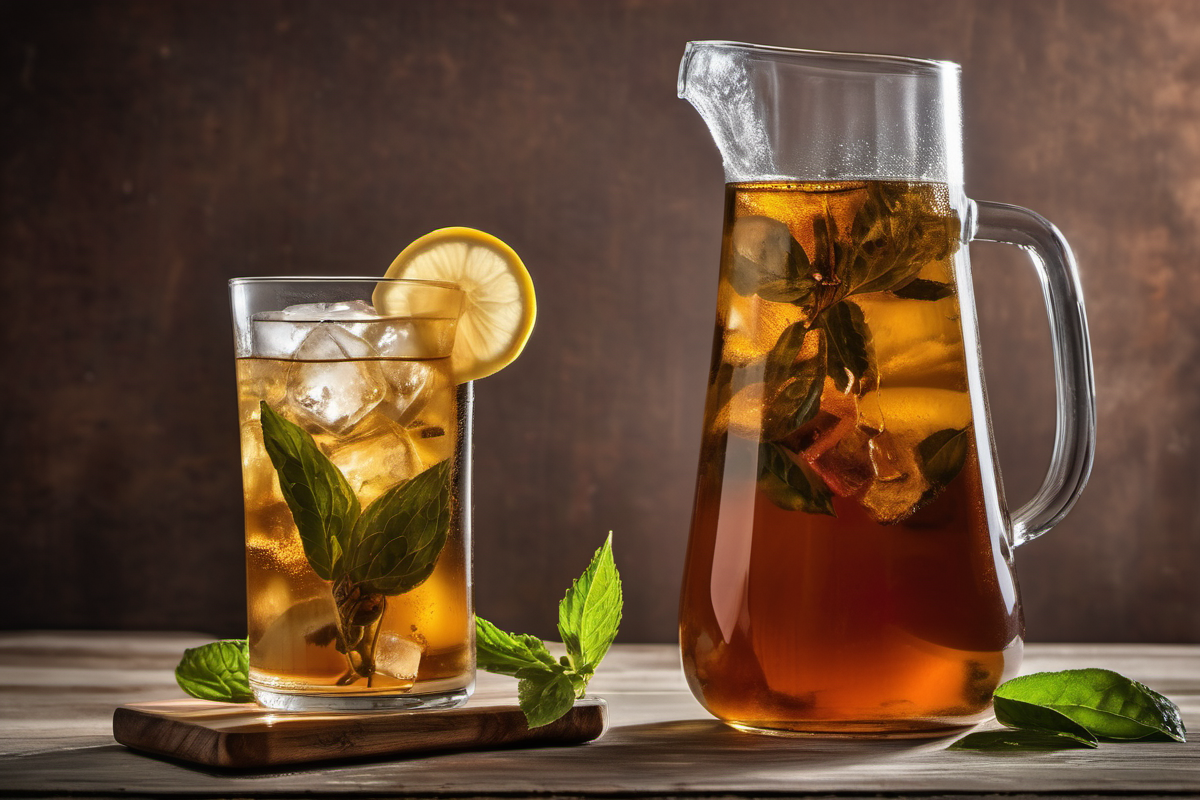
Iced oolong is one of the most refreshing drinks you can make at home. It’s smoother than iced green tea, more aromatic than iced black tea, and — when brewed cold — almost impossible to get bitter.
This guide walks you through two methods: the overnight cold brew (smoothest, sweetest, easiest) and the quick hot-flash method (when you want iced tea in 10 minutes). Both work for any oolong — Tieguanyin, Da Hong Pao, Dong Ding, or your daily drinker.
If you’re new to oolong brewing in general, see our how to brew oolong guide and our Tieguanyin vs Da Hong Pao comparison to pick the right tea first.
The 30-Second Answer
Best method: Overnight cold brew in the fridge.
- Ratio: 5 g tea per 500 ml cold water (1:100)
- Time: 6–8 hours in the fridge
- Steps: Add tea + cold water to a pitcher, refrigerate overnight, strain in the morning
- Result: Smooth, sweet, low-bitterness iced tea with all of oolong’s floral or roasted character intact
Best for: Hot summer days, weekly meal prep, anyone who keeps forgetting to take tea out of the cabinet.
If you want it in 10 minutes instead of 8 hours, use the hot-flash method (brew hot, cool fast over ice) further down.
Why Cold Brew Is the Best Method for Oolong
Most Chinese teas are brewed hot. But for iced tea specifically, cold brewing has real advantages over hot-flash:
- Less bitterness and astringency — cold water extracts fewer tannins and catechins, so the cup is smoother
- More aromatic top notes — floral and fruit notes (which are volatile) survive better in cold extraction
- Cleaner flavor — no over-extraction risk; you literally cannot over-steep
- Easier to get right — set it and forget it
For oolong specifically, cold brew preserves the tea’s aromatics (which can dissipate with hot brewing) while keeping the body and huigan(returning sweetness)intact.
The one trade-off: cold brew takes 6–8 hours. If you want iced tea now, use the hot-flash method at the end of this guide.
Method 1: Overnight Cold Brew (Recommended)
This is the easiest method and the one most people should use most of the time.
Ingredients
- 5 g loose-leaf oolong tea (any oolong — light, roasted, high mountain)
- 500 ml cold filtered water
- Optional: 1–2 thin slices of fresh lemon, peach slices, or mint sprigs
Equipment
- Glass pitcher or mason jar (1 liter capacity, with lid)
- Fine mesh strainer or built-in infuser
- Fridge
Step-by-Step
- Measure the tea — use 5 g of loose-leaf oolong per 500 ml water. For a lighter cup, drop to 3 g; for stronger, go up to 8 g (but don’t exceed 8 g or the cup gets astringent even cold) $TRAE_REF.
- Add to a clean pitcher — drop the tea directly in, or use a removable infuser for easier straining.
- Pour in cold filtered water — make sure the leaves are fully submerged.
- Cover and refrigerate — 6–8 hours is the sweet spot. Overnight works perfectly: set it up before bed, strain in the morning.
- Strain and serve — pour through a fine mesh strainer into glasses filled with ice. The tea is now ready to drink.
- Store the rest in the fridge for up to 48 hours. After 48 hours, the flavor starts to flatten.
Timing Reference
| Tea type | Cold brew time | Ratio (per 500 ml) | Flavor profile |
|---|---|---|---|
| Light oolong (Tieguanyin, high mountain) | 6–8 hours | 3–4 g | Bright, floral, peach/cherry-forward |
| Medium oolong (Dong Ding, Se Zhong) | 6–8 hours | 4–5 g | Balanced floral + roasted |
| Roasted oolong (Da Hong Pao, Rou Gui) | 8–10 hours | 4–5 g | Caramel, mineral, smooth $TRAE_REF |
| Aged oolong (5+ years) | 8–10 hours | 5 g | Deep, woody, complex |
Why longer for roasted? Roasted oolongs have dense, tightly-twisted leaves that need more time to release their flavor into cold water. Light oolongs extract faster.
Common Questions on Cold Brew
Do I need filtered water? Yes — chlorine and hard water minerals mute the tea’s aromatics. Filtered or spring water is worth it for cold brew especially.
Can I reuse the leaves? Yes! After 6–8 hours of cold brewing, the leaves have only partially extracted. You can do a second cold brew with the same leaves (add 500 ml fresh water, refrigerate another 6–8 hours) or brew them hot for a quick re-steep afterward. Either way, don’t waste good tea.
Can I add sugar or flavorings? You can — but try it plain first. Good oolong has natural sweetness that cold brew preserves beautifully. If you want to flavor, simple additions work: a slice of fresh peach, a few mint leaves, or a thin slice of lemon (add lemon only to light oolongs; it muddles roasted ones).
Should I dilute it after brewing? Some people find cold brew more concentrated than expected. If it’s too strong, dilute with cold water 1:1. If it’s too weak, add more leaves next time.
Method 2: Hot-Flash Iced Tea (When You Want It Now)
Sometimes 6 hours is too long. The hot-flash method takes about 10 minutes and works well if you have good ice on hand.
Ingredients
- 8–10 g loose-leaf oolong
- 200 ml hot water at 90–95°C / 194–203°F
- 200 g ice cubes (about 2 cups)
Equipment
- Heat-proof pitcher or jar (at least 500 ml capacity)
- Fine mesh strainer
- Kettle for heating water
Step-by-Step
- Heat water to 90–95°C — for light oolong, stay closer to 90°C; for roasted, lean toward 95°C.
- Steep the tea hot for 30–45 seconds — use a higher leaf ratio (8–10 g per 200 ml) so the brew is concentrated.
- Strain into a heat-proof pitcher filled with ice — the hot tea hits the ice and cools in seconds (“hot flash”). This rapid cooling is what preserves the aromatics.
- Stir gently — make sure all ice is melted or nearly melted. The resulting volume should be roughly 400 ml (200 ml hot tea + ~200 ml from melted ice).
- Serve immediately over fresh ice. Don’t let it sit at room temperature.
Why This Works
The hot-flash method relies on rapid cooling: by dropping hot concentrated tea onto ice, you extract full flavor fast and then lock the aromatics in by chilling immediately. This is the technique used in coffee shops and high-end tea houses for iced tea.
Common Mistakes with Hot-Flash
- Too much leaf, too long — if you steep hot for 3 minutes and then chill, you’ve over-extracted and the cold won’t fix the bitterness. Keep the steep to 30–45 seconds.
- Too little ice — if the ice melts faster than you add hot tea, you’ll end up with warm diluted tea. Use at least 1:1 ice to hot tea by weight.
- Slow cooling — pouring hot tea into a glass and then adding ice cubes one at a time lets the temperature sit too long in the danger zone. Drop all the hot tea onto the ice at once.
Method 3: Hot-Brew Then Refrigerate (Best of Both)
If you want smoothness like cold brew but in 2 hours instead of 8, brew the tea hot and concentrated, then refrigerate it diluted.
Step-by-Step
- Brew concentrated tea hot — 10 g per 200 ml water at 90–95°C, steep 1 minute, strain.
- Dilute 1:1 with cold water — add 200 ml cold filtered water to the hot brew.
- Refrigerate for 2 hours to chill through and let flavors settle.
- Serve over ice.
This method is great when you forgot to start cold brew in the morning and want iced tea by lunch.
How to Pick the Right Oolong for Iced Tea
Different oolongs make very different iced teas. Here’s a quick guide.
Best Oolongs for Iced Tea
| Tea type | Iced character | Notes |
|---|---|---|
| Light high-mountain oolong (Taiwanese, light Anxi Tieguanyin) | Bright, fruity, peach, floral | The classic iced oolong — clean, refreshing, no bitterness |
| Tieguanyin (green-fresh / Qing Xiang) | Floral, creamy, sweet | Excellent; slightly more body than high mountain |
| Dong Ding | Balanced floral + light roast | Good middle ground |
| Da Hong Pao (lightly roasted) | Smooth, caramel, mineral | Works but more mellow; flavors mute a bit when cold |
| Heavily roasted Da Hong Pao | Soft, sweet, almost no mineral edge | Edges flatten in cold brew; better hot |
| Aged oolong (5+ years) | Deep, woody, complex | Excellent cold brew; aging character shines |
Which to Avoid
- Heavily roasted oolongs (heavy Da Hong Pao, charcoal-roasted Wuyi yan cha) — the roasted character gets muted by cold water. Drink these hot.
- Very cheap “Tieguanyin” — low-grade teas often have stale or papery notes that become more obvious when cold-brewed.
- Flavored or scented oolongs — if you want jasmine or osmanthus oolong iced, use a hot-brew-and-chill method rather than cold brew, so the aromatics fully release.
Flavor Variations and Mix-Ins
Plain iced oolong is great, but if you want to play:
| Variation | How to add | Pairs best with |
|---|---|---|
| Fresh peach slices | Add 2–3 thin slices to the cold brew pitcher | Light high-mountain oolong |
| Lemon | 1 thin slice per glass (add after straining, not before) | Light oolong |
| Mint | 3–4 leaves per pitcher | Light or medium oolong |
| Honey | 1 tsp per glass, stir in (don’t add to cold brew — it won’t dissolve well) | Roasted oolong |
| Cucumber slices | 2–3 thin slices per pitcher | Light high-mountain oolong |
| Lychee | Fresh or canned (without syrup), 2–3 pieces | Light oolong |
| Sparkling water | Replace half the cold water with sparkling | Any |
If you try variations, brew the tea plain first — it’s easier to taste what the oolong itself contributes when nothing is masking it.
How Long Does Iced Oolong Keep?
- In the fridge, sealed: 48 hours for best flavor, up to 72 hours acceptable
- At room temperature: drink within 4 hours; flavor degrades fast and bacteria can grow
- Don’t leave it in the sun — UV and heat break down the aromatic compounds quickly
If you make a big batch on Sunday, drink it Monday and Tuesday. Make a fresh batch mid-week.
Can I Add the Tea Bag Back in?
If you brew loose-leaf without an infuser, you’ll need to strain out the leaves. If you use tea bags or a fine mesh infuser, you can leave them in for up to 12 hours in the fridge (the cold water slows extraction).
A simple trick: tie the loose leaves in a muslin bag or unbleached coffee filter with kitchen twine. Drop that in the pitcher, and you can lift it out without straining.
FAQ
How long should you cold brew oolong tea?
6–8 hours for light and medium oolongs; 8–10 hours for roasted oolong. The leaves need time to release flavor into cold water, but you can’t over-steep because cold water extracts much more slowly than hot.
Can you cold brew oolong tea too long?
Technically yes — at 24+ hours, the cup can start to taste flat and slightly stale, and there’s a small food safety concern with bacterial growth at room temperature. Keep it refrigerated and strain within 12 hours for best results.
What ratio of tea to water for iced oolong?
1:100 (5 g per 500 ml) is the standard cold-brew ratio. Hot-flash method uses a more concentrated ratio (8–10 g per 200 ml) because you’ll be diluting with ice melt anyway.
Can I make iced oolong in a coffee machine or French press?
You can! A French press works particularly well for cold brew:
– Add leaves and cold water to the French press
– Refrigerate 6–8 hours
– Press down the plunger slowly to filter
– Pour and serve
This eliminates the straining step.
Does iced oolong have less caffeine than hot oolong?
Yes, slightly. Cold water extracts caffeine more slowly than hot water. Cold-brewed iced oolong has roughly 15–25 mg of caffeine per cup vs. 30–50 mg for hot-brewed $TRAE_REF. Iced oolong is still caffeinated, but it’s a gentler option for late afternoon or early evening.
Can I use tea bags instead of loose-leaf?
Yes — use 2 quality tea bags per 500 ml. Loose-leaf gives better flavor (more leaf surface area, no paper bleeds), but tea bags are perfectly fine for everyday cold brew.
What if my iced oolong tastes bitter?
A few possible causes:
1. Too much leaf — drop from 5 g to 3 g per 500 ml
2. Hot brew was too long — if you used the hot-flash method, keep the steep to 30–45 seconds
3. Wrong oolong — heavily roasted teas can taste bitter cold. Switch to a light oolong.
4. Water quality — chlorinated tap water can taste bitter cold. Use filtered.
Can I freeze iced oolong into ice cubes for later?
Yes — this is a great trick for very strong iced tea. Freeze leftover cold-brew oolong in ice cube trays, then use those tea cubes in place of regular ice cubes in your next glass. As they melt, they add more tea flavor instead of diluting it.
Is cold-brewed oolong better than hot-brewed?
It’s different, not better. Cold brew has less bitterness, more aromatic top notes, and a sweeter finish; hot brew has more body, more huigan, and fuller yan yun. Many oolong drinkers enjoy both depending on the weather and mood.
Further Reading
- How to Brew Oolong Tea — the foundational hot-brew method
- How to Brew Tieguanyin — for floral light oolong
- How to Brew Da Hong Pao — for roasted rock oolong
- Tieguanyin vs Da Hong Pao: Which Oolong Is Right for You? — pick the right tea first
- What Is Oolong Tea? — the broader category
- Chinese Tea Brewing Temperature Guide — water temp reference
Categories: Brewing
1 thought on “How to Make Iced Oolong Tea (Cold Brew + Quick Chill)”