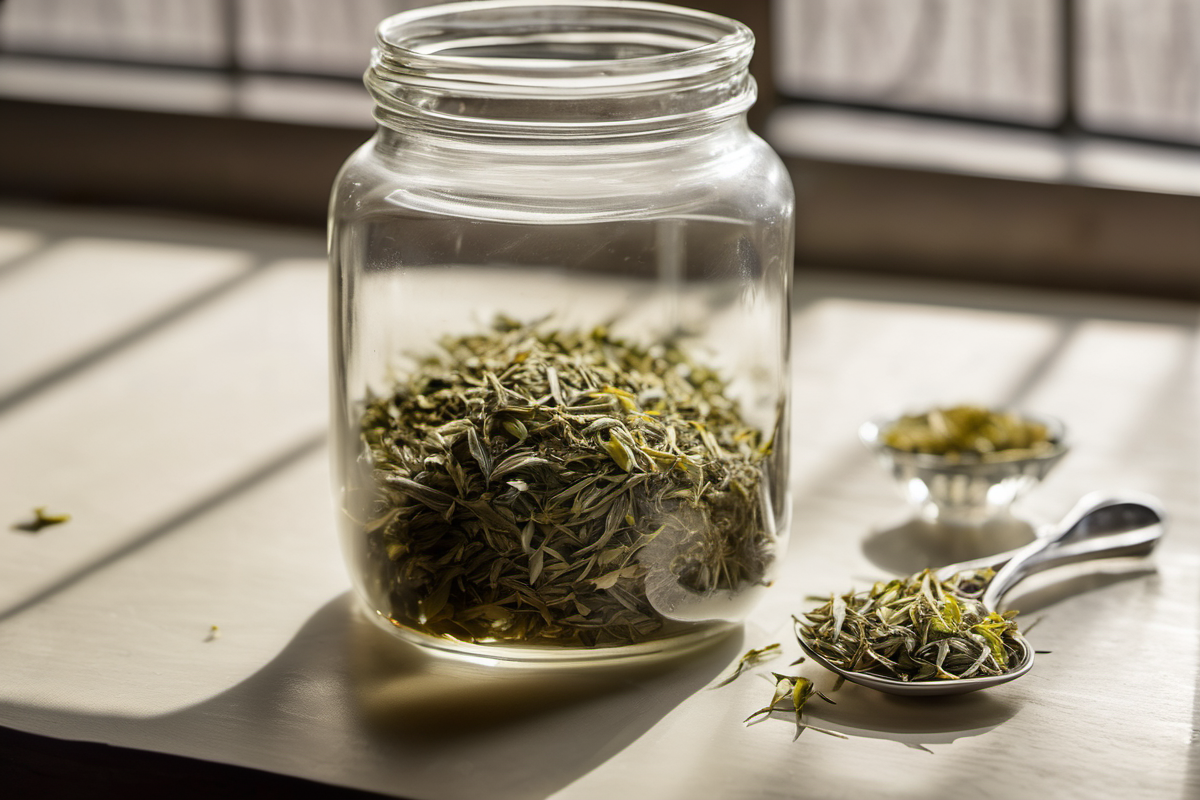
Silver Needle(白毫银针, “Baihao Yinzhen”)is China’s most famous white tea — and one of the most forgiving teas to brew. The leaves are unopened buds covered in silver down, and the flavor is naturally sweet, soft, and almost impossible to ruin badly.
This guide shows you exactly how to brew Silver Needle at home, the right water temperature and leaf ratio, why white tea is more forgiving than most beginners think, and how to coax out the tea’s signature honey-melon sweetness through both Western and gongfu methods.
If you’re new to white tea, start with our complete Chinese tea brewing guide and our white tea introduction — then come back here for the Silver Needle specifics.
What Is Silver Needle?
Silver Needle is a minimally processed white tea made exclusively from the single, unopened terminal bud of the tea plant, harvested during a narrow window in early spring — typically late March to early April in Fujian Province, southeastern China $TRAE_REF. Each bud is covered in dense, silvery-white down(pekoe / baihao), which gives the tea its name and its unmistakable visual character.
There are two main production regions, and they produce subtly different styles:
| Region | Cultivar | Flavor |
|---|---|---|
| Fuding(福鼎) | Fuding Da Bai(Big White) | Clean, crystalline sweetness, light vegetal freshness, floral honey |
| Zhenghe(政和) | Zhenghe Da Bai | More intense floral, deeper body, sometimes a “rice broth” note |
Both are legitimate Silver Needle; Fuding is more common in the international market, and Zhenghe tends toward more aromatic complexity $TRAE_REF. For beginners, the difference is minor — both are excellent.
How Silver Needle Is Made
White tea is the least processed of all Chinese tea categories. After picking, the buds go through just two steps:
- Withering — spread on bamboo trays or in sun and indoor air for 1–3 days. The buds slowly lose moisture and undergo very mild natural oxidation, developing the tea’s characteristic pekoe aroma and sweetness $TRAE_REF.
- Drying — gentle heat to stabilize moisture and fix the flavor.
That’s it. No pan-firing (like green tea), no rolling (like oolong), no oxidation control (like black tea). The simplicity of processing is what gives Silver Needle its delicate, naturally sweet flavor.
Flavor Profile
Good Silver Needle tastes:
- Sweet and clean — honey, fresh hay, dried apricot, light melon or honeydew
- Floral — sometimes orchid, sometimes a faint rose
- Vegetal but not grassy — fresh pea, sweet corn, never lawn clippings
- Soft mouthfeel — almost silky, no astringency
- Lingering finish — a gentle, long hui gan(returning sweetness)in the throat
Compared to green tea, Silver Needle is less vegetal and more honeyed. Compared to oolong, it’s less aromatic and more mineral. Compared to black tea, it’s lighter-bodied and lower in caffeine.
Quick Answer: How to Brew Silver Needle
If you only have 30 seconds:
- Water temperature: 85–95°C / 185–203°F(flexible — Silver Needle is forgiving)
- Western ratio: 1.5–2 g per 250 ml
- Western steep time: 3 minutes, 2–3 infusions
- Gongfu ratio: 5 g per 100 ml
- Gongfu steep time: 30–45 seconds first steep, add 10–15 seconds each round
- Vessel: Glass cup, porcelain gaiwan, or Yixing(if dedicated to white tea)
- Re-steeps: 3 in Western, 8–12 in gongfu
Now let’s go deeper.
What You Need
| Item | Why It Matters | Budget Option |
|---|---|---|
| Glass cup or porcelain gaiwan(100–150 ml) | Glass lets you watch the silver buds unfurl; porcelain is neutral and clean | Any clear glass mug or 100 ml gaiwan |
| Variable-temp kettle OR a kettle with patience | White tea is forgiving, but cooler water brings out the sweetness | Boil, then wait 1–2 minutes before pouring |
| Scale(0.1 g precision) | Silver Needle buds are light and fluffy — easy to under-dose | Any kitchen scale |
| Filtered or spring water | White tea is sensitive to water quality | Brita pitcher or spring water |
Unlike green tea, Silver Needle is very forgiving — even slightly off-temperature water produces a good cup, not a bitter one. This is one of the main reasons white tea is recommended for beginners $TRAE_REF.
Method 1: Western(Glass Cup or Teapot)
The simplest way to enjoy Silver Needle. Works well at home, in the office, or anywhere you have hot water and a vessel.
Step 1: Warm the Vessel
Pour hot water into the glass or teapot, swirl, discard. Quick and optional.
Step 2: Add the Leaves
Use 1.5–2 g per 250 ml(about 1 heaped teaspoon). Silver Needle buds are very light — 2 g looks like almost nothing in the pot, but the buds expand dramatically when water hits them.
Step 3: Pour Water at 85–90°C
If your kettle only boils, wait 1–2 minutes before pouring. Don’t rest too long — unlike green tea, Silver Needle benefits from hotter water than you might expect. The buds have a thick down layer that protects them from heat.
Step 4: Steep 3 Minutes
3 minutes for the first infusion, add 30 seconds each subsequent round. Silver Needle is harder to over-brew than most teas; even 5 minutes produces a drinkable cup, just a stronger one.
Step 5: Re-steep 2–3 Times
Silver Needle gives 2–3 good infusions in Western brewing. The first is sweetest; by the third, the flavor is fading.
Method 2: Gongfu(Recommended for Best Flavor)
Gongfu brewing is where Silver Needle really shines — it gives you 8–12 infusions with the tea’s flavor evolving across each round. The buds are too delicate and valuable to be wasted on a single 3-minute Western brew.
Step 1: Warm the Gaiwan
Pour hot water into the empty gaiwan, swirl, discard.
Step 2: Add the Leaves
Use 5 g per 100 ml of water $TRAE_REF. Silver Needle buds are light and fluffy, so 5 g fills the vessel much more than you’d expect. Don’t worry — that’s correct.
Step 3: The Optional Rinse
Some gongfu brewers skip the rinse for white tea; others do a quick 3–5 second rinse to wake the buds. With Silver Needle the rinse is optional — try it both ways and see which you prefer. If you do rinse, use water at the same temperature and pour it off immediately.
Step 4: First Steep
Pour water at 85–95°C / 185–203°F over the leaves, cover, and steep for 30–45 seconds $TRAE_REF.
Pour completely into a fairness pitcher or directly into cups. White tea is forgiving, but you still want to pour every drop out between infusions to keep the extraction clean.
Step 5: Repeat
Add 10–15 seconds to each subsequent steep. A typical progression:
| Steep | Time | What You Should Taste |
|---|---|---|
| 1 | 30–45 sec | Light, sweet, fresh hay, delicate floral |
| 2 | 45–60 sec | Honey emerges, melon, fuller body |
| 3 | 60–75 sec | Sweetest point, hui gan builds |
| 4 | 75–90 sec | Mineral depth, soft, lingering |
| 5–7 | 90–120 sec | Mellow, smooth, sweet |
| 8–12 | 120–180 sec | Final rounds — clean, lightly sweet |
Quality Silver Needle easily gives 8–12 gongfu infusions; premium aged Silver Needle can stretch to 15+ $TRAE_REF. When the cup starts tasting thin or the buds have fully opened and lost their silvery luster, you’ve reached the end.
The Three Most Common Mistakes
Using Water That’s Too Cool
Beginners often assume white tea needs green-tea temperatures(70–80°C)because it’s “delicate.” That’s a myth — Silver Needle buds are protected by a thick layer of pekoe down, and they actually need hotter water than green tea to extract properly. Water at 70°C gives you a thin, watery cup that doesn’t unlock the tea’s depth. Use 85–95°C and you’ll taste the difference immediately $TRAE_REF.
Too Little Leaf
Silver Needle is expensive, so beginners under-dose to “save” the tea. But under-dosing produces a weak cup that doesn’t show what Silver Needle can do. Use a scale the first few times; 5 g per 100 ml looks like a lot, but the buds expand to fill the vessel.
Steeping Too Short
White tea doesn’t extract quickly like green tea. A 10-second gongfu steep on Silver Needle produces a weak, underwhelming cup. Give it 30–45 seconds minimum for the first infusion; you can always shorten if it turns out too strong for your taste.
How to Tell Good Silver Needle from Bad
When you open the bag:
- Dry buds should be plump, straight, and densely covered in silver-white down. Brown, yellow, or thin buds indicate poor quality, oxidation, or age.
- Aroma should be sweet, fresh, and slightly vegetal — honey, hay, fresh melon. Avoid teas that smell stale, musty, or like fish (marine / damp storage).
- Buds should be whole, not broken or powdery. A few broken tips are normal; mostly broken buds suggest rough handling.
- Color should be uniform silver-gray to pale greenish-yellow. Patchy or reddish buds indicate overheating during drying.
Silver Needle is best within 18–24 months of harvest for the freshest flavor, but aged Silver Needle(陈年白茶, “old white tea”)is a separate category with its own appeal — deeper, more medicinal, like a soft aged pu-erh in flavor profile. If you see Silver Needle labeled “5 years aged” or similar, it’s a different drinking experience $TRAE_REF.
How to Store Silver Needle
White tea is the only tea that genuinely improves with age — under the right conditions. Both fresh and aged Silver Needle benefit from:
- Seal airtight between sessions — the original foil pouch works, but a tin with a tight lid is better
- Keep in a cool, dark, dry place — a cupboard or cellar, not a countertop
- Keep away from strong odors — white tea is highly absorbent
- Maintain stable temperature and humidity — fluctuations cause the tea to lose flavor and develop off-notes
- For aged Silver Needle:some collectors use dedicated clay jars or vacuum-sealed bags
Do NOT refrigerate Silver Needle, even though some sources suggest it for green tea. Refrigeration introduces moisture cycles and food odors that ruin white tea faster than age alone.
For broader storage principles across all six tea types, see our Chinese tea storage guide.
FAQ
How many times can you steep Silver Needle?
Gongfu-brewed Silver Needle gives 8–12 infusions with quality leaves; aged Silver Needle can stretch to 15+. Western-brewed gives 2–3 infusions. Add 10–15 seconds to each gongfu steep.
What temperature should I use for Silver Needle?
85–95°C / 185–203°F. Don’t be afraid of hotter water — the buds are protected by their down layer. If you don’t have a variable-temp kettle, boil and wait 1–2 minutes before pouring.
Is Silver Needle the same as white tea?
Silver Needle is a white tea — specifically, the top tier of the white tea category. “White tea” is the broad category covering Silver Needle, White Peony (Bai Mu Dan), Shou Mei, and Gong Mei. Silver Needle is made only from unopened buds; the others use buds + leaves.
How much caffeine does Silver Needle have?
Silver Needle contains roughly 15–30 mg of caffeine per cup — the lowest-caffeine of all Chinese tea categories $TRAE_REF. It’s an excellent choice for late afternoon or early evening drinking, and it’s traditionally recommended for people sensitive to caffeine.
Can you make iced Silver Needle?
Yes, and it’s excellent. Use 5 g per 500 ml of cold filtered water, refrigerate 6–8 hours, and strain. The result is a clean, slightly sweet, low-bitterness iced tea with delicate floral notes. Cold-brewed Silver Needle is widely considered the best way to experience fresh Silver Needle’s purity.
Why is Silver Needle so expensive?
Authentic Silver Needle uses only the unopened terminal bud — one per shoot, picked by hand in a narrow window each spring. The yield per bush is tiny compared to teas that pick bud-plus-leaves. Add the labor-intensive hand-picking and the fact that buds must be undamaged to command premium prices, and you get one of the most expensive Chinese teas per kilogram.
What’s the difference between Silver Needle and White Peony?
Both are white teas, but they use different plant material:
- Silver Needle(白毫银针) — single unopened bud only, highest grade, sweetest, most delicate
- White Peony / Bai Mu Dan(白牡丹) — bud + 1–2 young leaves, fuller body, more vegetal, less expensive
Silver Needle is the “champagne” of white tea; White Peony is the everyday version. If you’re new to white tea, start with White Peony for everyday drinking and Silver Needle for special occasions.
Further Reading
- How to Brew Chinese Tea(Complete Guide) — the foundational method
- Chinese Tea Brewing Temperature Guide — a complete reference for all six tea types
- What Is White Tea? — context on the broader white tea category
- How to Use a Gaiwan — if you’re gongfu brewing
- Gongfu Tea Ceremony: Step-by-Step — the broader tradition
- How Many Times Can You Steep Chinese Tea? — what to expect across tea types
- How to Store Chinese Tea — white tea ages differently from pu-erh
- Best Gaiwan for Beginners — choosing your first gaiwan
1 thought on “How to Brew Silver Needle(白毫银针)Tea:Beginner-Friendly Gongfu Method”