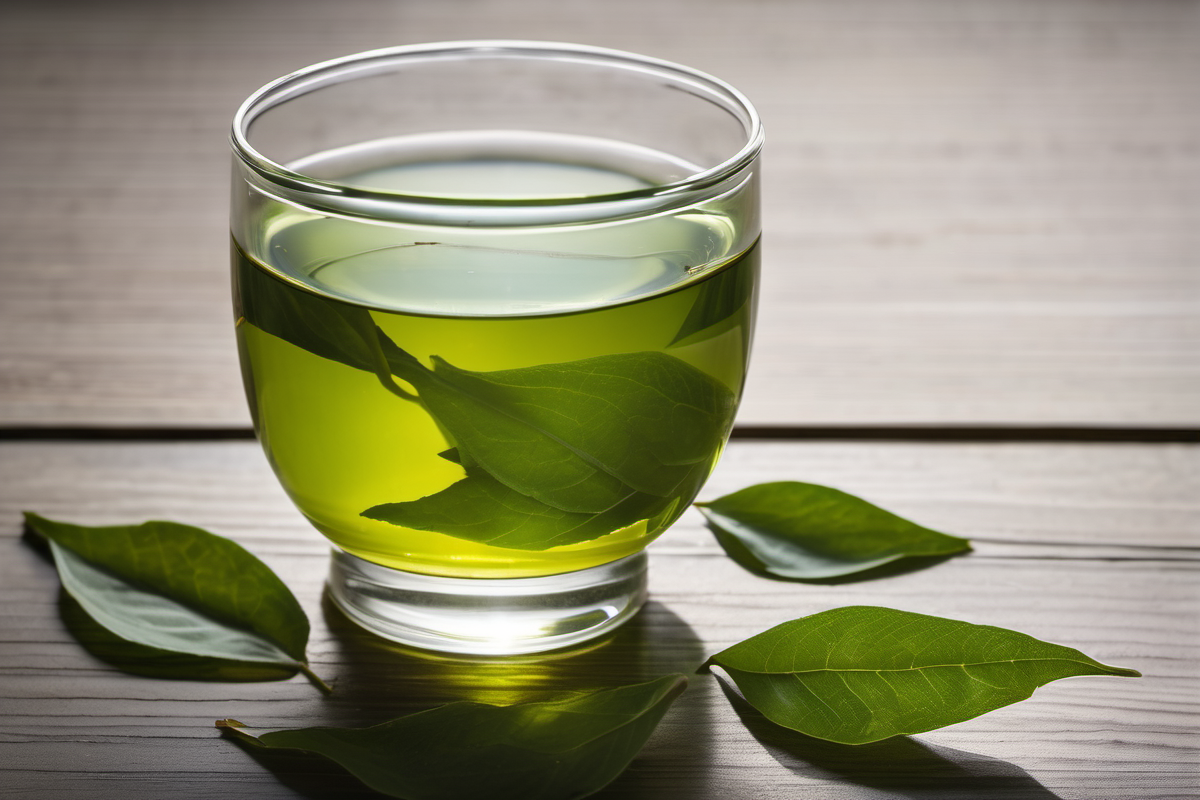
Longjing(龙井, “Dragon Well”)is China’s most famous green tea — and one of the easiest to ruin with a kettle of boiling water. The leaves are flat, tender, and unoxidized, which means they show off spectacularly when brewed right and turn bitter almost instantly when brewed wrong.
This guide shows you exactly how to brew Longjing at home using two methods: the traditional Chinese glass-cup method, and the gongfu method for when you want to explore more of the tea’s depth. You’ll learn the right water temperature, leaf ratio, steep time, and the small mistakes that turn a great Longjing into a dull cup.
If you’re new to green tea, start with our complete Chinese tea brewing guide and our brewing temperature chart — then come back here for the Longjing specifics.
What Is Longjing?
Longjing is a pan-fired green tea grown around West Lake(西湖)in Hangzhou, Zhejiang Province, eastern China. The name “Dragon Well” comes from a spring in the area that’s said to have once been home to a dragon; the tea grown near it inherited the name $TRAE_REF.
What makes Longjing recognizable in the cup is its flat, sword-shaped leaf — a shape that’s made entirely by hand. After picking, the leaves are pressed against a hot wok by the tea master’s bare palm, killing the enzymes that would oxidize the leaf while shaping it into the smooth, flat needles Longjing is famous for $TRAE_REF.
Flavor Profile
Good Longjing tastes:
- Nutty — chestnut, toasted almond, sometimes a hint of buttery sweetness
- Vegetal but not grassy — think sweet pea, fresh corn, or steamed greens, not lawn clippings
- Sweet and clean finish — no bitterness, no harshness
- Lingering “hui gan” — a gentle returning sweetness that builds across sips
This is a distinctly different profile from Japanese green tea (which leans marine and umami) or green teas that are steamed instead of pan-fired.
Grades and Harvest Timing
Longjing quality varies enormously, and the single biggest factor is when it’s picked:
| Grade | Harvest | Flavor | Price Range |
|---|---|---|---|
| Pre-Qingming(明前, before April 5) | Earliest buds only | Delicate, sweet, vegetal | $$$ (premium) |
| Yu Qian(雨前, before April 20) | Bud + 1 leaf | More body, fuller nutty flavor | $$ (mid-range) |
| Post-Guyu / summer-picked | Later flushes | Larger leaves, less aromatic, sometimes astringent | $ (everyday) |
“Pre-Qingming Longjing” (明前龙井) commands the highest prices — the earliest buds are tiny, tender, and produce the sweetest tea. If you’re buying for everyday drinking, Yu Qian(雨前)offers the best balance of quality and price $TRAE_REF.
A Note on Authenticity
Authentic West Lake Longjing(西湖龙井)comes from a designated protected area around West Lake and is one of China’s most counterfeited teas. Much of what sells as “Longjing” outside China is grown in nearby Zhejiang provinces (Qiantang Longjing or Yuezhou Longjing) — still good tea, but legally a different product. For more on this, see our types of Chinese tea guide.
Quick Answer: How to Brew Longjing
If you only have 30 seconds:
- Water temperature: 75–85°C / 167–185°F(do NOT use boiling water)
- Glass cup ratio: 3 g per 150 ml(about 1 heaping teaspoon)
- Glass cup steep time: 1.5–2 minutes
- Gongfu ratio: 3–4 g per 100 ml
- Gongfu steep time: 30–45 seconds first steep, 20–30 seconds each subsequent round
- Vessel: Tall glass cup(traditional)or porcelain gaiwan
- Re-steeps: 2–3 in glass, 4–6 in gongfu
Now let’s go deeper.
What You Need
| Item | Why It Matters | Budget Option |
|---|---|---|
| Tall glass cup(150–200 ml) | The traditional vessel — shows off the flat leaves “dancing” as they steep | Any clear glass mug or pitcher |
| Porcelain gaiwan(100 ml) | If you prefer gongfu — neutral, retains heat well | Standard porcelain gaiwan |
| Kettle with temperature control OR a kettle and a way to let water cool | Boiling water scalds green tea; you need 75–85°C | Boil, then wait 2–3 minutes before pouring |
| Scale(0.1 g precision) | Green teas are fluffy and hard to eyeball | Any kitchen scale |
| Filtered or spring water | Hard or chlorinated water mutes the delicate aromatics | Brita pitcher or spring water |
The glass cup is the classic way to drink Longjing. As the leaves steep, they slowly sink and unfurl in the water, creating a beautiful “tea dance” that you can watch through the glass. It’s half visual, half flavor — and it’s why a tall glass is the traditional vessel $TRAE_REF.
For deeper exploration, gongfu brewing in a porcelain gaiwan gives you more infusions and a cleaner expression of the tea’s evolving flavor.
Method 1: Glass Cup(Traditional)
This is how most Chinese people drink Longjing at home, in restaurants, and at tea houses. It’s the simplest method and the most forgiving.
Step 1: Warm the Glass
Pour a small amount of hot water into the glass, swirl, and discard. This is less critical with a thin glass, but it’s a good habit.
Step 2: Add the Leaves
Use 3 g of leaf per 150 ml of water(about 1 heaping teaspoon)$TRAE_REF. Longjing leaves are flat and relatively dense, so 3 g will fill about a quarter of the glass — that’s correct.
Step 3: Pour Water at the Right Temperature
This is the single most important step. Use 75–85°C / 167–185°F, not boiling.
If your kettle only boils, wait 2–3 minutes after the boil stops bubbling. Water that’s just been poured off the boil is too hot (around 95–100°C); after 2 minutes it’s roughly 80°C, which is in Longjing’s sweet spot $TRAE_REF.
Pour the water in a gentle, slow stream from a height — this aerates the water slightly and helps the leaves dance as they hit it.
Step 4. Steep and Watch
Let it steep 1.5–2 minutes for the first infusion. As the leaves sink and the liquor turns pale yellow-green, you’re watching the visual signature of Longjing — flat green leaves suspended in clear, jade-colored water.
Drink it directly from the glass once the leaves have settled (or sip it through the leaves — Chinese tradition allows both).
Step 5. Re-steep
Add 30–45 seconds to each subsequent steep. Longjing gives 2–3 good infusions in a glass cup before the flavor fades. By the third steep, the leaves are exhausted — don’t push beyond that.
Method 2: Gongfu in a Gaiwan
If you want to explore more of Longjing’s depth, gongfu brewing gives you 4–6 infusions with cleaner separation between each one. It works especially well with higher-grade Longjing where you want to taste the subtle differences between rounds.
Step 1: Warm the Gaiwan
Pour hot water into the empty gaiwan, swirl, discard. This warms the porcelain so the water temperature doesn’t drop on contact.
Step 2: Add the Leaves
Use 3–4 g per 100 ml of water. The slightly higher ratio than glass-cup brewing compensates for the smaller volume and faster steeps.
Step 3: Pour and Steep
Pour water at 80–85°C / 176–185°F, cover, and steep for 30–45 seconds for the first infusion. Pour completely into a fairness pitcher or cups.
Step 4: Repeat
Add 10–15 seconds to each subsequent steep. A typical progression:
| Steep | Time | What You Should Taste |
|---|---|---|
| 1 | 30–45 sec | Nutty, sweet, fresh pea, light chestnut |
| 2 | 45–60 sec | Sweeter, fuller body, buttery |
| 3 | 60–75 sec | Vegetal deepens, “hui gan” builds |
| 4 | 75–90 sec | Clean, mineral, light sweetness |
| 5–6 | 90–120 sec | Final rounds — flat, slightly sweet |
Premium Longjing gives 4–6 gongfu infusions; mass-market lots typically give 3–4.
The Three Most Common Mistakes
Water Too Hot
This is the #1 Longjing killer. Boiling water(100°C)scalds the delicate leaves, releasing bitter tannins and muting the chestnut sweetness. If you remember nothing else from this guide, remember: 75–85°C, never boiling. A variable-temp kettle is the single best upgrade you can make for any green tea.
Too Little Leaf
Longjing leaves look like “a lot” in the glass, which makes beginners under-dose. Three grams in a 150 ml glass is correct; less and you’ll get a thin, watery cup with no body. Use a scale the first few times.
Steeping Too Long
Green teas extract quickly and have nowhere to “hide” their tannins the way oolongs do. Beyond 2 minutes in a glass cup, you’re pulling out bitterness. Set a timer the first few times — it’s easy to forget about Longjing because it steeps so gently.
How to Tell Good Longjing from Bad
When you open the bag:
- Dry leaf should be uniform, flat, smooth, and yellow-green — not brown, broken, or powdery. Color varies slightly by grade (pre-Qingming is paler; Yu Qian is greener).
- Aroma should be clean and toasty — chestnut, fresh hay, light butter. Avoid teas that smell grassy, fishy (marine), or like burnt popcorn (over-roasted).
- Single芽 leaves are highest grade — one bud, no opened leaves. 一芽一叶 (one bud + one young leaf) is the standard for premium Yu Qian. Larger leaves with stems indicate later, cheaper picking $TRAE_REF.
- Wet leaf should be whole, soft, and still flat — not curled, broken, or yellowed.
Longjing is best within 12 months of harvest. Like all green teas, it loses aromatic complexity quickly — pre-Qingming tea drunk in May is dramatically more flavorful than the same tea drunk the following January.
How to Store Longjing
Green tea is more perishable than any other tea type — Longjing especially so, because it’s pan-fired (not baked) and the surface oils that carry aroma degrade fast. To keep it fresh:
- Seal airtight immediately after each use — the original foil pouch with a clip works; better is a tin with a tight seal
- Refrigerate for longer storage (more than a month) — this is the one tea where the fridge is appropriate
- Keep away from light, heat, and strong odors — never next to spices, coffee, or the stove
- Bring to room temperature before opening if refrigerated — opening a cold tin in warm, humid air creates condensation on the leaves, which ruins them
- Buy small amounts frequently rather than stockpiling — Longjing is not a tea to age
For broader storage principles across all six tea types, see our Chinese tea storage guide.
FAQ
How long should you steep Longjing?
1.5–2 minutes in a glass cup for the first infusion; add 30–45 seconds each round. In gongfu, start at 30–45 seconds and add 10–15 seconds per round. Don’t push beyond 3 infusions in a glass or 5–6 in gongfu.
What temperature should I use for Longjing?
75–85°C / 167–185°F. Never boiling. If you don’t have a variable-temp kettle, boil and wait 2–3 minutes before pouring.
Can you brew Longjing with a gaiwan instead of a glass?
Yes. A porcelain gaiwan works well for gongfu brewing and gives you more infusions. The traditional glass cup is half visual, half flavor — but if you prefer gongfu, you’ll get a slightly cleaner expression of the tea’s evolving flavor.
Is Longjing caffeinated?
Yes — Longjing contains roughly 25–35 mg of caffeine per cup, similar to other green teas and about a third of a cup of coffee $TRAE_REF. It’s the lowest-caffeine Chinese tea category, fine for morning and early afternoon.
What’s the difference between Longjing and Bi Luo Chun?
Both are famous Chinese green teas, but they taste quite different:
- Longjing — flat leaves, pan-fired, nutty, chestnut, sweet
- Bi Luo Chun(碧螺春) — tiny spiral-rolled leaves, lighter body, more floral and fruity (orchid, stone fruit)
Longjing is grown in Hangzhou; Bi Luo Chun comes from Suzhou. Both are pan-fired but the leaf shape, region, and flavor profile differ substantially. See our types of Chinese tea guide for the broader picture.
Can you make iced Longjing?
Yes, and it’s spectacular. Longjing is one of the best green teas for cold brewing: use 5 g per 500 ml of cold filtered water, refrigerate 6–8 hours, and strain. The result is a clean, sweet, low-bitterness iced tea with no astringency. You can also brew hot and pour over ice, but cold-brewed is generally smoother.
Why is Longjing so expensive?
Authentic West Lake Longjing from a good harvest (especially pre-Qingming) is one of the most labor-intensive teas in the world. Picking is done by hand one bud at a time, and pan-firing is also done by hand — a skilled tea master can only process a few hundred grams per day. Pre-Qingming harvests are tiny (the bushes produce very few first-flush buds), which drives prices up. Off-grade or out-of-region “Longjing” is much cheaper and still good, but it’s not the same product as authentic 西湖龙井.
Further Reading
- How to Brew Chinese Tea(Complete Guide) — the foundational method every Chinese tea drinker should know
- Chinese Tea Brewing Temperature Guide — a complete reference for all six tea types
- How to Use a Gaiwan — if you’re gongfu brewing
- Types of Chinese Tea: Complete Guide — context on all six tea categories
- Best Gaiwan for Beginners — choosing your first gaiwan
- How to Buy Chinese Tea (Beginner’s Guide) — buying tips for Longjing specifically
- How to Store Chinese Tea — green tea storage is different from pu-erh
- What Is White Tea? — for contrast with Longjing’s pan-fired character