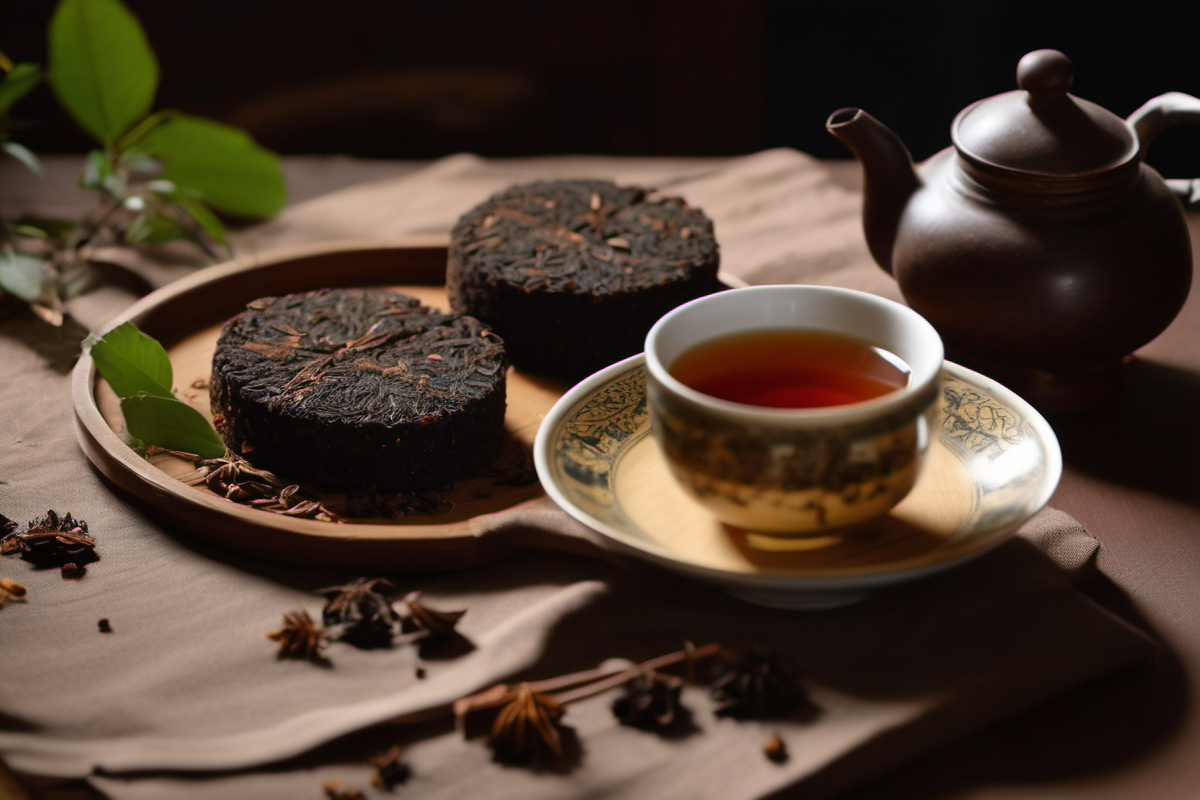
Pu-erh is the most unusual tea in the world — a fermented, aged tea that improves with time, like wine. If you’ve only drunk green or black tea, pu-erh is a completely different experience.
This guide explains what pu-erh tea is, the difference between its two types, and what makes it so special.
What Is Pu-erh Tea?
Pu-erh (普洱) is a fermented tea from Yunnan province in southwestern China. What makes it unique is post-fermentation — after the leaves are processed, beneficial microbes continue to ferment them over time, transforming the flavor. This is why pu-erh, unlike other teas, improves with age.
The Two Types of Pu-erh
| Sheng (Raw) Pu-erh | Shou (Ripe) Pu-erh | |
|---|---|---|
| Process | Slowly fermented and aged naturally | Accelerated fermentation (developed in 1970s) |
| When young | Floral, grassy, slightly astringent | Dark, earthy, smooth |
| When aged | Deep, complex, mellow | Richer and smoother |
| Color | Light amber to golden | Dark red-brown |
Quick guide: want something ready to drink now? Choose shou. Want to age tea and watch it evolve over years? Choose sheng.
Why Is Pu-erh Pressed Into Cakes?
Pu-erh is traditionally pressed into cakes (bing), bricks, or tuo (bowl) shapes. This compacts the leaves for storage and aging — a pu-erh cake can be stored and aged for decades, gaining value and depth like a fine wine.
What Does Pu-erh Taste Like?
- Shou pu-erh: earthy, woody, smooth, with notes of dark chocolate and damp forest floor.
- Aged sheng pu-erh: complex — can be sweet, floral, fruity, or woody, with a lingering “hui gan” (returning sweetness) in the throat.
Pu-erh is an acquired taste for some — but many tea lovers consider it the deepest, most rewarding tea there is.
How to Brew Pu-erh
Pu-erh is best brewed gongfu style with boiling water (200–212°F) and short steeps. It’s always rinsed once or twice first, and good pu-erh can be steeped 10+ times. See our full pu-erh brewing guide for details.
How to Store Pu-erh
Store pu-erh in a cool, dry, odor-free place with a little airflow — away from light, moisture, and strong smells. Stored well, sheng pu-erh ages beautifully for decades. See our pu-erh storage guide.
Bottom line: pu-erh is tea’s answer to wine — fermented, aged, and endlessly fascinating. If you want to try something truly different, start with a good shou pu-erh.
1 thought on “What Is Pu-erh Tea? (Beginner’s Guide)”