Category: Tea Types (3) + Buying & Storage (5)
Tags: chinese tea immune diet, tea and food pairing, immune support food, tea polyphenols absorption, vitamin c tea, iron tea absorption, gut health diet, chinese tea meals, meal pairing tea, tea nutrition
If you’ve seen “tea + immunity foods” claims, you’ve noticed the trend: pair green tea with citrus, drink matcha with turmeric, eat berries with your oolong. Some of this is real — tea compounds and certain nutrients genuinely work better together. Some is oversold.
This guide is what I’d send a friend who wants to use tea as part of an immune-supporting eating pattern. We’ll cover which food-and-tea pairings have evidence, which don’t, what to avoid, and a sample day’s immune-supporting tea-and-meal plan.
The Quick Answer
The most evidence-backed Chinese tea + food combinations for immune support are green tea + vitamin C-rich foods (citrus, berries, kiwi), pu-erh + fatty foods (helps fat metabolism), and ginger tea + most meals (anti-inflammatory). The pairing isn’t magic — it just makes the most of what’s in tea.
The most important thing for immune health isn’t a specific food-and-tea pairing. It’s the basics: a varied diet rich in whole foods, adequate protein, fruits and vegetables, regular meals, sleep, and stress management. Tea and food choices support this foundation.
What’s Actually Going On: 3 Mechanisms
1. Bioavailability Synergy
Some tea compounds absorb better when consumed with specific foods:
- EGCG + vitamin C: Modest improvement in EGCG bioavailability
- Iron + vitamin C + tea timing: Iron from plant sources absorbs better with vitamin C, but tea tannins reduce iron absorption (separate by 1 hour)
- Curcumin + black tea: Curcumin from turmeric absorbs better with piperine (black pepper) and may have interactions with tea compounds
2. Complementary Mechanisms
Some foods and teas work through different but complementary mechanisms:
- Tea polyphenols + dietary antioxidants: Different compound classes, additive effect
- Tea prebiotics + dietary fiber: Both feed beneficial gut bacteria
- Tea anti-inflammatory + omega-3 anti-inflammatory: Different pathways, additive
3. The Meal Context
Tea timing relative to meals matters:
- With meals: Modest additional benefit on post-meal glucose and lipid metabolism
- 1 hour before meals: Better for some teas (green tea EGCG effect on incoming carbs)
- 1 hour after meals: Better for some teas (avoid iron interference)
- Between meals: Best for “iron-safe” drinking
For the broader view of tea compounds and health, see our is Chinese tea good for you guide.
The Best Tea + Food Pairings for Immune Support
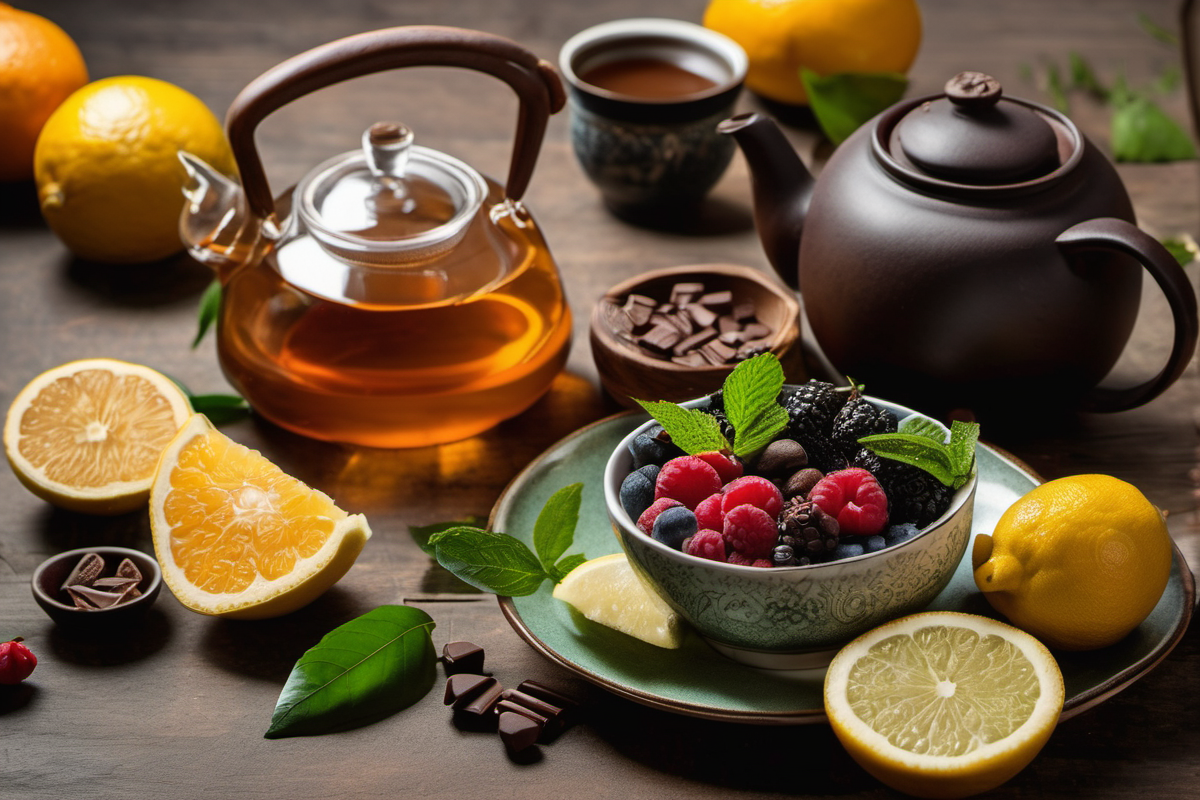
1. Green Tea + Citrus (Vitamin C Source)
Why it works:
– Vitamin C modestly enhances EGCG bioavailability
– Citrus adds its own antioxidants
– The combination is more refreshing than green tea alone
– Vitamin C supports immune function independently
How to pair:
– 1 cup green tea + half a lemon (squeeze after cooling below 70°C)
– Add citrus slices to cold-brewed green tea
– Pair green tea with kiwi, orange, or grapefruit (vitamin C-rich foods)
Caveat: Don’t add sugar. The natural citrus flavor is enough.
2. Matcha + Berries (Anthocyanins)
Why it works:
– Berries (blueberries, blackberries, strawberries) are rich in anthocyanins
– Combined with matcha’s EGCG and L-theanine, broad antioxidant coverage
– Berries also have vitamin C
– The pairing works well in smoothies
How to pair:
– Matcha smoothie: 1g matcha + 1 cup berries + milk (or dairy-free milk) + ice
– Berry + matcha overnight oats
– Pair as part of breakfast
3. Green Tea + Dark Chocolate (Polyphenols)
Why it works:
– Both have flavonoids, different compound profiles
– Dark chocolate (70%+) has modest cardiovascular benefits
– The combination is satisfying
How to pair:
– 1 square dark chocolate with your afternoon green tea
– Skip if you’re caffeine-sensitive (chocolate has some caffeine)
4. Ginger Tea + Most Meals (Anti-Inflammatory)
Why it works:
– Ginger has strong evidence for anti-inflammatory effects
– Works through different pathways than tea polyphenols
– Anti-nausea evidence is particularly strong
– TCM has paired ginger with meals for centuries
How to pair:
– Fresh ginger tea with or after heavy meals
– Ginger + green tea + honey for sore throat
– Ginger tea + dark leafy greens (both have anti-inflammatory compounds)
5. Pu-erh + Fatty Foods (Lipid Metabolism)
Why it works:
– Theabrownins in ripe pu-erh affect lipid metabolism
– Combined with omega-3-rich foods (fatty fish, walnuts, flax), broad lipid support
– TCM tradition of pu-erh with dim sum (fried foods) supports this
How to pair:
– Ripe pu-erh with fatty foods (dim sum, grilled meats, fried rice)
– Pu-erh + walnuts as a snack combination
– Pu-erh + grilled fish
6. White Tea + Honey (Antimicrobial)
Why it works:
– White tea has the highest in vitro antimicrobial activity
– Honey has modest antimicrobial and soothing properties
– The combination is soothing for sore throat
– Real but mostly for comfort, not cure
How to pair:
– Warm white tea + 1 tsp honey (added after cooling below 70°C)
– White tea with manuka honey for stronger antimicrobial effect
– During cold/flu season, a comfort beverage
Tea + Food Pairings to Avoid
1. Strong Tea + Iron-Rich Meal
Result: Tea tannins reduce non-heme iron absorption by 50%+ when consumed with iron-rich plant foods (lentils, dark leafy greens, beans)
Fix: Separate tea from iron-rich meals by at least 1 hour; pair iron foods with vitamin C sources instead
For more on this, see our chinese tea during pregnancy guide which discusses iron absorption in detail.
2. Sweetened Bubble Tea + Healthy Meal
Result: 30-50g of sugar in bubble tea offsets the nutritional benefit of any healthy meal
Fix: Order unsweetened tea or skip sweetened versions
3. Very Hot Tea + Hot Spicy Foods
Result: Can irritate the stomach lining and trigger reflux in some people
Fix: Drink tea warm, not scalding; separate from very spicy meals by 30-60 min
4. Caffeinated Tea + Sleep-Impacting Foods
Result: Caffeine + high-sugar foods can both impair sleep, which is the foundation of immune function
Fix: Caffeine-free tea in the evening, regardless of meal
5. Green Tea + Very Fatty Foods (Specific Concern)
Result: Some evidence that green tea EGCG absorption is reduced when consumed with very high-fat meals
Fix: Drink green tea 30-60 min before fatty meals, or after the meal settles
The Daily Immune-Supporting Tea + Meal Plan
Sample Day
- Morning (7-9 AM): Water + light breakfast (avoid tea with iron-rich breakfasts)
- Mid-Morning (10 AM): 1 cup green tea + handful of berries (vitamin C pairing)
- Lunch (12-1 PM): 1 cup oolong gongfu with lunch (4-5 steeps over 30 min). Skip if lunch is very iron-rich (lentils, leafy greens).
- Mid-Afternoon (3 PM): 1 cup white tea + 1 square dark chocolate (or honey + warm water)
- Dinner (6-7 PM): 1 cup pu-erh with dinner (especially good with fatty foods)
- Evening (9 PM): Caffeine-free chamomile + honey (cold/flu season)
Alternative Pattern (if you skip the morning tea)
- Mid-Morning (10 AM): Green tea + berries
- Lunch: Oolong gongfu
- Mid-Afternoon: White tea
- Dinner: Pu-erh
What’s Actually Realistic
The tea-and-food synergy is real but modest:
- Real but modest: Vitamin C + tea polyphenols, anti-inflammatory pairings
- Mostly placebo: “Superfood” combinations and exotic pairings
- Oversold: Claims that specific pairings “boost” or “amplify” immunity dramatically
The biggest gains in immune health come from:
- A varied diet: 5+ servings of fruits and vegetables daily
- Adequate protein: 1-1.5 g/kg body weight
- Whole foods: Minimally processed foods as the foundation
- Sleep: 7-9 hours consistently
- Exercise: 30 min daily moderate activity
- Stress management: Chronic stress suppresses immune function
Tea and specific pairings support this. They don’t substitute for it.
Common Mistakes
Mistake 1: Drinking Tea With Iron Supplements or Iron-Rich Meals
Result: Significantly reduced iron absorption
Fix: Separate by 1+ hour; pair iron with vitamin C, not tea
Mistake 2: Adding Sugar to Tea
Result: Sugar suppresses immune function temporarily, adds calories, worsens blood sugar control
Fix: Drink tea plain, with lemon, or with non-caloric sweetener
Mistake 3: Expecting Specific Pairings to “Cure” Anything
Result: Disappointment, distraction from real foundations
Fix: Specific pairings are small additions to a healthy eating pattern, not cures
Mistake 4: Drinking Sweetened Tea Regularly
Result: Sugar effects overwhelm tea benefits
Fix: Unsweetened is best for immune health
Mistake 5: Drinking Too Much Tea
Result: Excess caffeine and tannins can impair sleep and digestion
Fix: 3-4 cups per day is the sweet spot
Special Considerations
If You Have Iron Deficiency
- Separate tea from iron-rich meals and supplements by 2 hours
- Pair iron with vitamin C, not tea
- Don’t stop drinking tea if you enjoy it — just time it correctly
- See our chinese tea during pregnancy guide for iron-related advice
If You Have a Sensitive Stomach
- Avoid strong tea with heavy or spicy meals
- Drink tea 1+ hour after meals, not with
- Choose lighter teas (white, aged white, light green brewed cool)
If You’re Following a Specific Diet
- Mediterranean: Tea pairs well; use pu-erh or green with fish/legumes
- Vegetarian/Vegan: Be mindful of tea-iron interference; separate tea from legume/leafy greens
- Low-carb/Keto: Tea fits; skip sweeteners entirely
- DASH diet (for blood pressure): Tea is supportive, complement to DASH
For more on tea and specific health conditions, see our chinese tea for blood sugar and chinese tea and heart health guides.
Frequently Asked Questions
Does tea pair well with healthy foods?
Generally yes. The main caveat is tea + iron-rich foods (reduce absorption) and tea + sugary foods (negate benefits).
Should I drink tea before or after meals?
It depends on the meal:
– Before (30-60 min): Better for green tea’s effect on incoming carbs
– With meal: Oolong/pu-erh tradition, modest additional benefit
– After (1+ hour): Best if meal is iron-rich
Does citrus (vitamin C) really help EGCG absorption?
Modestly, yes. Vitamin C improves bioavailability of some tea polyphenols. Add citrus to cooled green tea, don’t add it to very hot tea (heat degrades vitamin C).
What about adding turmeric to tea?
Curcumin (from turmeric) has anti-inflammatory properties. Adding turmeric + black pepper to tea (golden milk-style) is fine, but the evidence is mostly from turmeric supplements, not tea + turmeric food pairings.
Can I drink tea with supplements?
Depends on the supplement:
– Iron: Separate by 2 hours
– Vitamin C: Fine together
– Multivitamin with iron: Separate tea by 2 hours
– Probiotics: Fine together (different mechanisms)
Should I drink tea before or after exercise?
- 30-60 min before: Modest fat oxidation boost, sustained energy
- After: Rehydration + modest recovery support
- During long workouts: For sustained energy
Is matcha + berries a real immune boost?
The combination is real — both have different antioxidant compounds. The “boost” is modest, additive, and cumulative. Not a magic combination.
Can I drink tea with every meal?
Up to 3-4 cups per day is fine for most people. The meal timing matters:
– Breakfast: Avoid with iron-fortified cereals
– Lunch/dinner: Most pairings work
– Snack: Avoid with iron supplements
Is pu-erh + dim sum traditional for a reason?
Yes. The fat content of dim sum pairs well with pu-erh’s lipid-metabolism effects. The TCM observation predates modern science by centuries.
Final Thoughts
Tea and food pairings are a small piece of the immune-supporting puzzle. The biggest gains come from a varied diet rich in whole foods, sleep, exercise, and stress management. Specific tea-and-food pairings add modest additive benefit on top of that foundation.
Realistic framing: tea + good food = good for you. Specific “superfood” pairings aren’t magic. Consistency over years matters more than any specific combination.
For the broader view of how tea fits into a healthy lifestyle, see is Chinese tea good for you.
FDA disclaimer: This article is for informational purposes only and does not constitute medical advice. The statements regarding Chinese tea and immune-supporting diet have not been evaluated by the Food and Drug Administration. Chinese tea is not intended to diagnose, treat, cure, or prevent any condition. Immune health depends on many factors; please consult qualified healthcare providers for personalized advice.