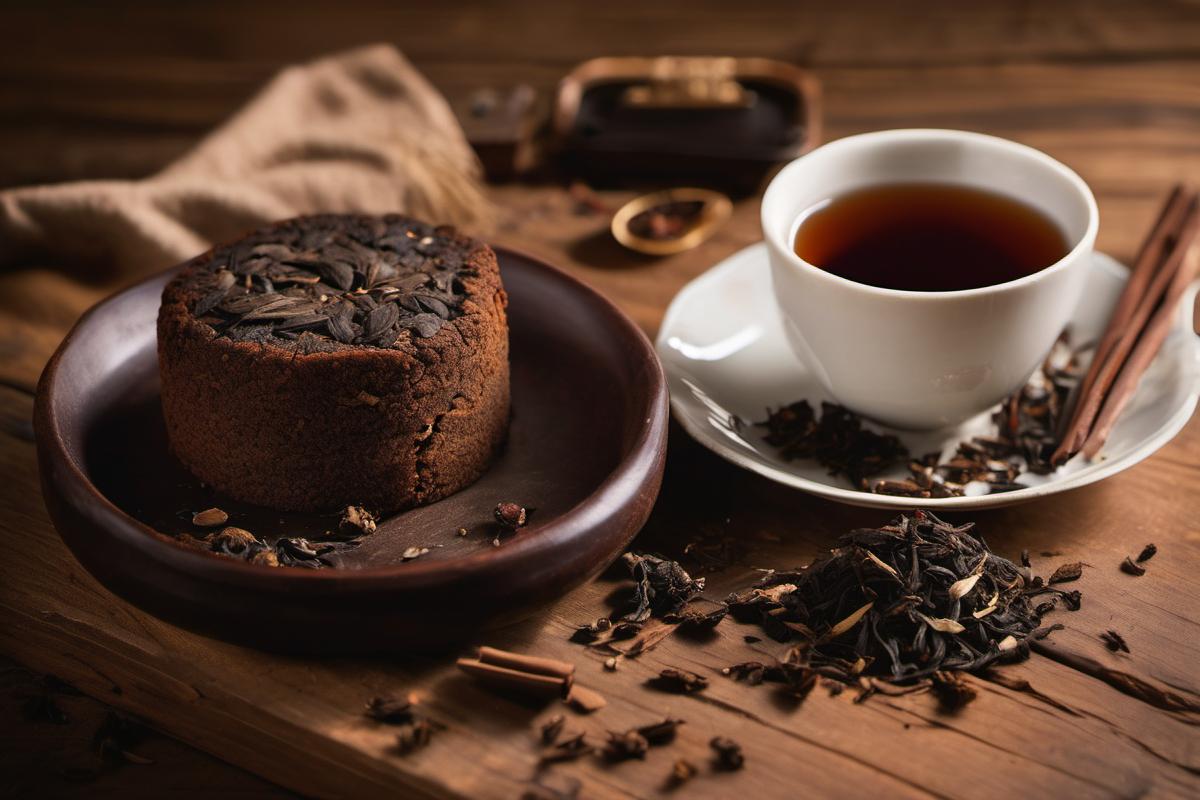
Pu-erh is China’s most unique tea — a fermented, aged tea with deep, earthy flavors that improve with time, like wine. It’s brewed differently from most teas, and getting it right unlocks a whole world of flavor.
This guide explains what pu-erh is and how to brew it properly.
What Is Pu-erh Tea?
Pu-erh (普洱) is a fermented tea from Yunnan province. There are two main types:
- Sheng (raw) pu-erh: the traditional style — slowly fermented and aged over years. Flavor ranges from floral and grassy when young to deep and complex when aged.
- Shou (ripe) pu-erh: accelerated fermentation (developed in the 1970s) — dark, earthy, and smooth, ready to drink immediately.
Pu-erh is traditionally pressed into cakes, bricks, or tuo (bowl) shapes, though loose-leaf pu-erh is also common.
What Makes Pu-erh Brewing Different?
Pu-erh is a dark, aged, fermented tea, so it’s brewed like other dark teas:
- Boiling water: 200–212°F (95–100°C) — pu-erh can handle full boiling.
- Always rinse first: pu-erh benefits from 1–2 quick rinses to “wake” the compressed or aged leaves and wash away any dust.
- Short steeps, many infusions: best brewed gongfu style, with 10–30 second steeps.
How to Brew Pu-erh Tea (Gongfu Style)
- Warm the teaware: rinse the gaiwan and cups with hot water.
- Break off the right amount: about 5–7 g for a 100 ml gaiwan. Use a pu-erh knife/pick to pry leaves off a cake carefully.
- First rinse: pour boiling water over the leaves and pour off immediately.
- Second rinse (optional): repeat — especially for aged or tightly compressed pu-erh.
- First infusion: steep 10–20 seconds, then pour out completely.
- Repeat: add 5–10 seconds per infusion. Good pu-erh can be steeped 10+ times.
Western-Style Pu-erh (Simpler Method)
If you don’t have gongfu equipment:
- Use about 1 teaspoon per 8 oz of water.
- Rinse the leaves once with boiling water.
- Steep 2–4 minutes in boiling water.
- Re-steep 2–3 times.
How to Store Pu-erh
Pu-erh is one of the few teas that improves with age — but only if stored correctly:
- Keep it away from strong odors, light, and moisture.
- Store in a breathable wrapper (the original paper is fine) in a cool, dry place.
- Avoid airtight containers for long-term aging — pu-erh needs a little airflow.
Bottom line: rinse it, use boiling water, and steep it short — pu-erh rewards the gongfu approach with rich, evolving flavors across many infusions.
1 thought on “How to Brew Pu-erh Tea”