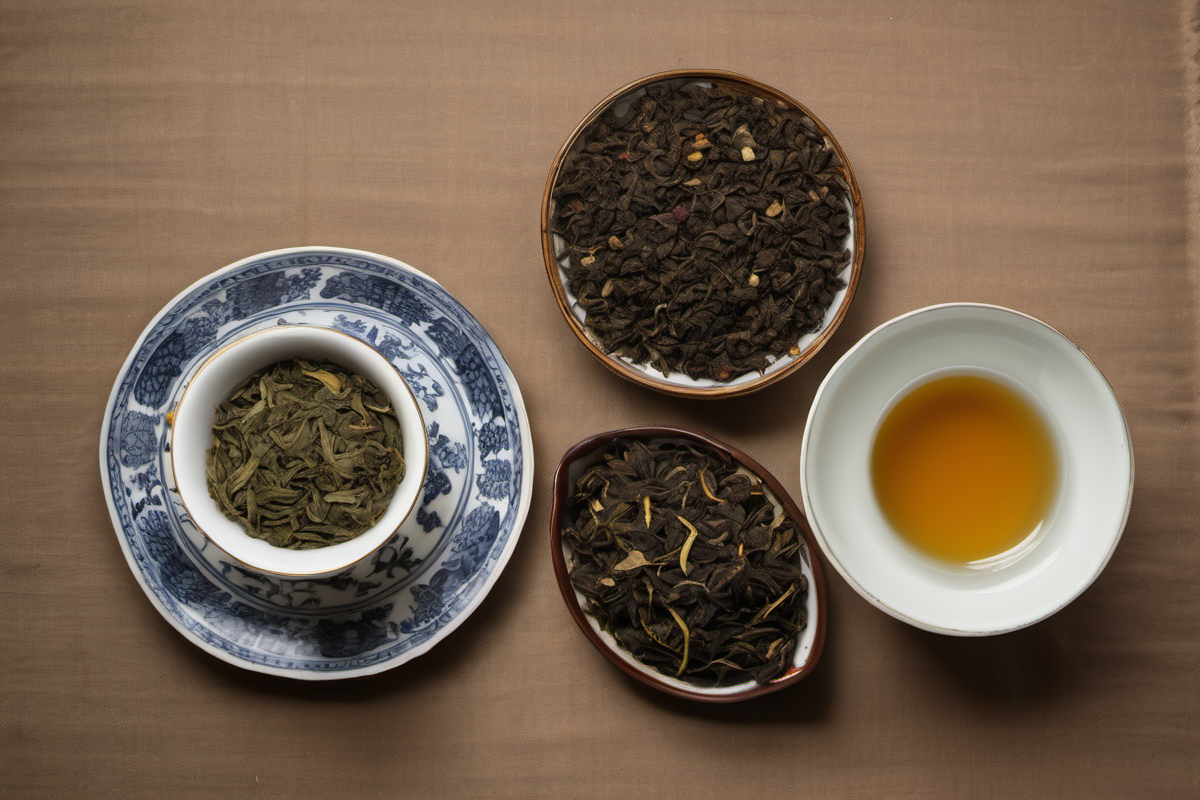
Pu-erh is the only tea that gets better with age — but it comes in two very different forms. Raw pu-erh(sheng, 生普)is the traditional, slowly-aged tea that needs years or decades to reach its potential. Ripe pu-erh(shou, 熟普)is the modern, engineered shortcut — pile-fermented in 45–60 days to mimic the character of aged raw pu-erh.
Both come from the same Yunnan tea leaves. Both are pressed into cakes, bricks, or loose form. Both can age well. But they taste different from the moment you brew them, and they age in different directions.
This guide walks you through exactly how they’re different — processing, flavor, brewing, aging, price — and gives you a clear answer on which one to try first.
If you’re new to pu-erh, start with our complete pu-erh guide and our pu-erh introduction, then come back for the comparison.
The 30-Second Answer
| Pick this | If you want… |
|---|---|
| Raw pu-erh (sheng) | A bright, sometimes bitter tea that changes dramatically with age — vegetal and floral when young, deep and woody after 10–20 years. Best for drinkers who want to invest in a cake and watch it evolve. |
| Ripe pu-erh (shou) | A smooth, earthy, dark tea ready to drink now — no waiting required. Best for drinkers who want pu-erh’s depth and “tea stomach” comfort without the years-long aging requirement. |
If you’re new to pu-erh, start with ripe (shou). It’s forgiving, immediately drinkable, and gives you the smooth, earthy flavor most people associate with pu-erh without the bitterness that turns beginners off raw pu-erh. Move to raw pu-erh when you want to explore aging or want a brighter, more vegetal cup.
Side-by-Side Comparison
| Trait | Raw pu-erh (Sheng) | Ripe pu-erh (Shou) |
|---|---|---|
| Chinese name | 生茶 / 青饼 | 熟茶 |
| Pronunciation | shēng chá / qīng bǐng | shóu chá |
| Invented | Traditional (centuries old) | 1973 (modern) |
| Processing | Sun-dried mao cha, then steam-pressed | Mao cha + 45–60 day wet-pile fermentation (wo dui) |
| Microbial activity | Slow, natural over years | Fast, accelerated in weeks |
| Color of dry leaf | Green to dark brown (varies with age) | Dark brown to black |
| Liquor color when young | Pale yellow-green | Deep reddish-brown |
| Liquor color when aged 15+ years | Deep amber-orange | Slightly lighter, smoother |
| Flavor when young | Vegetal, floral, often bitter and astringent | Earthy, smooth, woody, low bitterness |
| Flavor when aged | Honey, dried fruit, camphor, deep wood | Smoother, more rounded, but stable |
| Astringency | Moderate to high (decreases with age) | Very low |
| Caffeine | 30–70 mg per cup | 30–70 mg per cup |
| Aging potential | High (20+ years for premium cakes) | Low (mostly stable after a few years) |
| Best water temperature | 95–100°C / 203–212°F | 95–100°C / 203–212°F |
| Gongfu infusions | 8–15+ (often improves across session) | 8–15+ |
| Beginner price (USD) | $20–60 for 357g cake | $15–40 for 357g cake |
| Premium price (USD) | $100–1000+ per cake (vintage years) | $50–300 per cake |
What Both Pu-erhs Have in Common
Before the differences, here’s what raw and ripe pu-erh share:
- Origin: Both come from Camellia sinensis var. assamica (large-leaf) tea plants grown in Yunnan Province, southwestern China. Other regions now produce pu-erh-style tea, but Yunnan is the protected origin.
- Form: Both are commonly pressed into cakes (bing cha, 饼茶, 357g), bricks (zhuan cha, 砖茶), tuos (bowl-shaped), or sold as loose leaf.
- Microbial fermentation: Both undergo post-production fermentation, which is what gives pu-erh its distinctive earthy depth. The difference is when and how fast — raw ferments naturally over years; ripe is fermented in weeks.
- Aging: Both can age, though raw pu-erh has much greater aging potential.
If you’re completely new to pu-erh, our complete pu-erh brewing guide covers the brewing basics that apply to both.
How They’re Processed Differently
This is the heart of the difference. The two teas share the same raw material — “mao cha”(毛茶),the sun-dried, unpressed green tea — but diverge at this point.
Raw Pu-erh (Sheng) Processing
- Picking — large-leaf assamica cultivar from Yunnan
- Withering and pan-firing — like green tea, to stop oxidation
- Rolling — shapes the leaf
- Sun-drying — produces the mao cha(毛茶),the “rough tea” that is the common base for both raw and ripe pu-erh
- Steam-pressing — the mao cha is steamed and pressed into cakes, bricks, or tuos
- Slow natural fermentation — over months, years, decades, the cake slowly ferments in storage, gradually developing deeper, mellower flavors
The key word is slow. Raw pu-erh is essentially green tea that’s been pressed into a cake and left to age. The “fermentation” is microbial activity happening inside the cake over years, not weeks.
Ripe Pu-erh (Shou) Processing
- Steps 1–4 — same as raw pu-erh, producing mao cha
- Wet-pile fermentation (wo dui, 渥堆) — the mao cha is piled in large heaps (often 1+ ton), sprayed with water, and covered. Over 45–60 days, microbial activity heats the pile to 50–65°C and drives a rapid, controlled fermentation that mimics what would otherwise take decades of aging $TRAE_REF.
- Drying — the pile is broken up and dried
- Sorting and pressing — the fermented mao cha is steamed and pressed into cakes or sold as loose ripe pu-erh
The invention of ripe pu-erh (1973, by the Kunming Tea Factory) was driven by demand: aged raw pu-erh was becoming rare and expensive, and the fermentation shortcut made the pu-erh flavor profile available to ordinary drinkers within months instead of decades $TRAE_REF.
Flavor Profile: A Direct Taste Comparison
Raw Pu-erh (Sheng) Tastes Like
- When young (1–5 years): vegetal, grassy, sometimes floral, with notable bitterness and astringency. The tea can feel “green” — bright, slightly sharp, sometimes hard to love if you expect dark tea smoothness.
- When middle-aged (5–15 years): bitterness softens, honey and stone fruit emerge, the body becomes richer, huigan(returning sweetness)develops.
- When aged (15+ years): deep amber liquor, layered honey and dried fruit, hints of camphor and aged wood, soft astringency, very long finish.
The raw pu-erh experience is about change over time. A 5-year-old raw pu-erh and a 20-year-old raw pu-erh taste like two completely different teas.
Ripe Pu-erh (Shou) Tastes Like
- Always: deep, dark, smooth, earthy — not bitter. Notes of damp earth, forest floor, dark wood, dried dates, sometimes a hint of mushroom.
- Body: thick, velvety, almost creamy mouthfeel.
- Astringency: very low — almost none.
- Aroma: rich, deep, sometimes called “camphor-like” in aged examples.
Ripe pu-erh tastes the same way whether it’s 1 year old or 15 years old — the wet-pile fermentation has already done most of the “aging” work. Further aging smooths it slightly but doesn’t transform it like raw pu-erh $TRAE_REF.
The Honest Difference
Raw pu-erh is a journey: you buy a cake, you drink it over years, and you watch it transform. The bitterness and astringency are part of the early experience and soften with age.
Ripe pu-erh is an arrival: it’s already “aged” when you buy it, and it gives you the deep, smooth, earthy pu-erh flavor immediately.
Neither is “better.” They serve different purposes $TRAE_REF.
Brewing Comparison
Both teas are gongfu-brewed at similar parameters, but young raw pu-erh needs a bit more care.
| Brewing Parameter | Raw (Sheng) | Ripe (Shou) |
|---|---|---|
| Water temperature | 95–100°C / 203–212°F | 95–100°C / 203–212°F |
| Gongfu ratio | 6–8 g per 100–150 ml | 6–8 g per 100–150 ml |
| Rinse | Yes (2 quick rinses) | Yes (1–2 quick rinses — wake and clean) |
| First steep | 10–15 sec (young) / 8–10 sec (aged) | 10–15 sec |
| Subsequent adds | +5–10 sec | +5–10 sec |
| Vessel | Porcelain gaiwan or Yixing dedicated to pu-erh | Yixing dedicated to pu-erh, or porcelain gaiwan |
| Total infusions | 10–20+ (especially aged) | 10–15+ |
| Best for Western brewing | Aged raw pu-erh | Ripe pu-erh (more forgiving) |
Young raw pu-erh is the most likely tea to give beginners a bad first experience if brewed too strong — 8 g of young sheng in a 100 ml gaiwan with boiling water for 30 seconds is genuinely astringent. Start lighter (5–6 g) and shorter, and scale up once you know the cake.
Ripe pu-erh is much more forgiving — bitterness is essentially absent, so even an over-steeped cup is rarely unpleasant. This is another reason ripe pu-erh is friendlier for newcomers.
Aging: The Biggest Practical Difference
Raw Pu-erh Aging
Raw pu-erh is one of the few teas that genuinely improves with age, sometimes dramatically. The transformation happens inside the cake, where slow microbial activity (similar to cheese aging) reshapes the flavor over years:
- 0–5 years: bright, vegetal, often bitter
- 5–10 years: bitterness fades, honey emerges, body fills out
- 10–20 years: deep amber liquor, dried fruit, wood, huigan
- 20+ years: collector-grade, complex, layered, often very expensive
This is why pu-erh enthusiasts buy whole cakes and store them — they’re investing in the aging process, not just drinking tea. For storage principles see our pu-erh storage guide.
Ripe Pu-erh Aging
Ripe pu-erh has limited aging potential. The wet-pile fermentation has already done most of the transformation. After that:
- 1–5 years: smooth, ready to drink
- 5–15 years: very slightly smoother, more integrated
- 15+ years: largely stable; some high-quality aged shou develops complexity, but most doesn’t transform the way raw pu-erh does
For most drinkers, ripe pu-erh is a “drink now” tea, not an “age and watch” tea $TRAE_REF.
Price and Value
Both teas span a wide range, but the drivers of price differ.
Raw Pu-erh Pricing
- Young, daily drinking (current production, big factory): $15–40 per 357g cake
- Mid-range, named production (smaller factory, single mountain): $50–150 per cake
- Aged, named vintage (5–15 years, known production): $100–500 per cake
- Premium aged (15+ years, famous recipes, known storage): $500–5,000+ per cake
- Vintage and legendary (e.g., 1950s–1980s Red Label, Green Label): auction prices, $10,000+
Ripe Pu-erh Pricing
- Daily drinking grade (large factory, modern production): $10–30 per 357g cake
- Mid-range (small factory, single mountain): $40–100 per cake
- Premium ripe (carefully fermented, blended from aged mao cha): $100–300 per cake
Ripe pu-erh is generally cheaper than raw pu-erh because the fermentation shortcut removes the need for years of storage investment. Premium ripe exists but tops out at much lower prices than premium raw $TRAE_REF.
Which One Should You Try First?
Try Ripe Pu-erh First If…
- You’re new to pu-erh and want to learn what “pu-erh flavor” means without the bitterness of young raw
- You drink tea in the evening or are caffeine-sensitive — ripe is gentler
- You want a smooth, comforting daily drinker
- You want pu-erh’s reputed “tea stomach” comfort (digestion aid) without aging
- You prefer dark, earthy flavors over bright, vegetal ones
Recommended: A mid-range daily-drinking ripe pu-erh from a reputable vendor. Aim for $15–30 per cake. Dayi (Menghai Tea Factory) ripe cakes are an industry standard, well-made and affordable.
Try Raw Pu-erh First If…
- You already enjoy green tea, white tea, or other bright, vegetal teas
- You’re willing to invest in a cake and watch it age (or buy mid-aged pu-erh)
- You like the idea of a tea that changes over years
- You’re willing to accept bitterness as part of the experience, especially early on
- You want the highest potential for collector-grade tea
Recommended: A 5–10 year old raw pu-erh cake from a known region (Menghai, Lincang, or Xishuangbanna). Mid-aged gives you the best of both worlds — complexity without excessive bitterness.
The Honest Truth
Most pu-erh drinkers end up drinking both, often in different contexts. Ripe for everyday comfort; raw for special sessions and aging projects. There’s no rule against having one of each.
Storage Comparison
Both teas benefit from proper storage, but the rules differ slightly.
| Storage rule | Raw (Sheng) | Ripe (Shou) |
|---|---|---|
| Airtight? | No — needs some air exchange for aging | Yes — once fermentation is complete, air accelerates flavor loss |
| Humidity | 60–75% ideal | Below 65% (excess humidity promotes mold) |
| Temperature | Stable room temperature (18–25°C) | Stable room temperature |
| Light | Dark | Dark |
| Odors | Keep away from strong smells | Keep away from strong smells |
| Best container | Paper-wrapped in a tong (bamboo basket) | Sealed bag or jar after opening |
| Aging timeline | Years to decades | Months to a few years |
For full storage principles, see our pu-erh storage guide.
Common Confusions Cleared Up
Is Ripe Pu-erh “Fake” Pu-erh?
No. Ripe pu-erh is officially recognized as pu-erh by the Chinese national standard (GB/T 22111-2008). It uses the same Yunnan large-leaf tea, the same microbial fermentation (just accelerated), and is pressed into the same cake forms. It’s a legitimate category, not a counterfeit. Some raw-pu-erh purists prefer raw, but that’s a matter of taste, not legitimacy.
Is Raw Pu-erh Just “Aged Green Tea”?
Functionally, yes — the mao cha used to make raw pu-erh is sun-dried green tea, and the cake ages through microbial activity. But the aging process produces chemical changes (polyphenol transformation, microbial metabolite buildup) that make aged raw pu-erh taste completely unlike fresh green tea. Calling aged raw pu-erh “just green tea” misses the point.
Why Is Ripe Pu-erh Sometimes Called “Shu” and Sometimes “Shou”?
“Shou” (熟) is the modern, official Pinyin spelling meaning “cooked” or “ripe.” “Shu” (熟) is a common variant transliteration of the same character. They’re the same word. Both appear on Western tea packaging.
Can You Drink Pu-erh on an Empty Stomach?
Ripe pu-erh is generally considered gentle on the stomach and is traditionally drunk to aid digestion after heavy meals. Raw pu-erh, especially young raw pu-erh, can be harsh on an empty stomach for some drinkers. If you have a sensitive stomach, start with ripe, drink it with or after food, and see how you respond.
FAQ
Is ripe pu-erh caffeinated?
Yes — both raw and ripe pu-erh contain roughly 30–70 mg of caffeine per cup, similar to black tea and a bit higher than green tea $TRAE_REF. If you’re caffeine-sensitive, drink earlier in the day.
Which is better for weight loss or digestion?
Traditional Chinese tea culture credits both pu-erhs with digestive benefits, but ripe pu-erh is more commonly cited for “warming the stomach” and aiding digestion of fatty foods. Ripe pu-erh’s smooth, low-tannin profile is gentler on the stomach, which is why it’s a popular after-meal tea in Yunnan and Hong Kong. Scientific evidence is limited for any specific weight-loss claim.
How can I tell if a raw pu-erh cake is well-stored?
Look for:
– Clean smell — no mold, no off-notes, no wet-cardboard or chemical smell
– Firm but not rock-hard — slightly pliable leaves
– Visible leaf integrity — buds and whole leaves, not dusty or broken
– Reputable vendor — buy from sellers with storage information and reviews
Bad storage shows up first as off-flavors, then as visible mold. If the cake smells off when you break off a piece, don’t drink it.
Is ripe pu-erh “fermented” and raw pu-erh “not”?
Both are fermented. Raw pu-erh ferments naturally over years; ripe pu-erh ferments rapidly in weeks. The microbial communities and chemistry differ, but the underlying process — microbial transformation of the tea — is shared. Calling raw pu-erh “unfermented” is incorrect.
Why do some ripe pu-erhs taste like fish or compost?
Poor fermentation or poor storage produces off-flavors — sometimes described as “fishy” (酸), “compost-like” (堆味), or sour. These are signs of either under-fermented, over-fermented, or wet-stored ripe pu-erh. Properly fermented, well-stored ripe pu-erh should taste earthy and clean, never sour or rotten $TRAE_REF.
Can you blend raw and ripe pu-erh?
Yes — some drinkers blend them. A common ratio is 30% young raw + 70% ripe to get brightness with body. There are also factory blends that mix raw and ripe mao cha before pressing. If you try blending yourself, start with small amounts to see what you like.
How long does it take for raw pu-erh to “open up” after pressing?
Freshly pressed raw pu-erh needs 2–3 months of airing out before it brews cleanly. The steam used in pressing leaves residual moisture and a “green steamed” flavor. Reputable vendors usually air the cakes for several months before selling them. If you press your own, give the cake time in a paper bag or breathable container before drinking.
Further Reading
- What Is Pu-erh Tea? (Beginner’s Guide) — the broader category
- How to Brew Pu-erh Tea — the full brewing method
- Best Pu-erh Tea for Beginners — what to buy first
- How to Store Pu-erh Tea — aging principles
- How to Buy Chinese Tea (Beginner’s Guide) — buying tips for pu-erh specifically
- Types of Chinese Tea: Complete Guide — pu-erh in the broader context
- How to Brew Chinese Tea (Complete Guide) — foundational method
1 thought on “Raw vs Ripe Pu-erh: What’s the Difference, and Which Should You Drink?”