Category: Tea Types (3) + Buying & Storage (5)
Tags: da hong pao vs rou gui, wuyi rock tea, wuyi oolong, big red robe, rou gui cinnamon tea, yancha, wuyi tea comparison, chinese oolong comparison, rock tea vs
If you’ve shopped for Chinese oolong, you’ve probably seen Da Hong Pao (Big Red Robe) and Rou Gui (Cinnamon) sitting next to each other on the shelf. They’re both Wuyi rock teas (yancha), they’re both partially oxidized, but they taste nothing alike and they suit different drinkers. Picking one without knowing the difference is like choosing between a Bordeaux and a Burgundy without knowing you prefer one.
This guide is what I’d send a friend who’s been drinking one and is curious about the other, or who wants to buy one but isn’t sure which to start with. We’ll cover the production differences, the flavor profiles, who each tea suits, and how to choose between them.
The Quick Answer
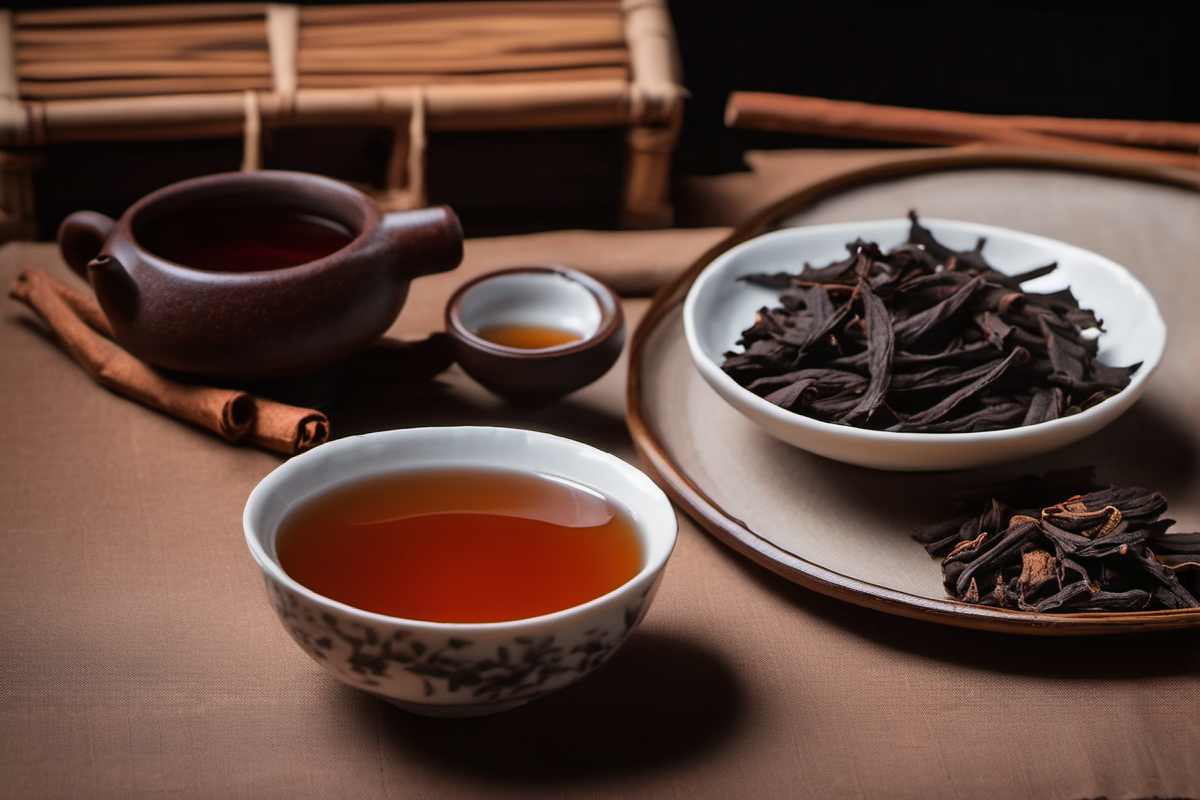
Da Hong Pao is the historic flagship of Wuyi — bold, complex, with a distinctive rocky mineral character and notes of roasted caramel, dark fruit, and a long mineral finish. Rou Gui is its sibling — also rocky and roasted, but with a distinctive cinnamon-and-clove spice note that’s unmistakable once you taste it.
If you’re new to Wuyi rock teas and want one to start with: Rou Gui is more approachable (sweeter, more obviously flavored, easier to recognize). If you already like yancha and want more depth and complexity: Da Hong Pao is the deeper choice.
For the broader context of how these fit into Wuyi tea culture, see our how to brew Tieguanyin and chinese tea ceremony etiquette — though those focus on lighter oolong, the brewing principles overlap.
Where They Come From
Both teas are grown in the Wuyi Mountains (武夷山) of northern Fujian Province, China — a UNESCO World Heritage Site known for its dramatic cliffs, mineral-rich soil, and hundreds of distinct rock tea cultivars.
Wuyi’s terroir is the key. The combination of:
– Rocky, mineral-rich soil (the tea bushes grow in crevices between rock formations)
– Misty, mountain microclimate
– Distinct seasonal rhythm (cool winters, warm summers)
– Centuries of cultivar selection by tea masters
…produces the distinctive “yan yun” (岩韵, rock rhyme) flavor that’s the signature of all Wuyi teas. Da Hong Pao and Rou Gui share this base character but express it differently.
Da Hong Pao and Rou Gui come from the same region but historically from different cultivars:
– Da Hong Pao: Originally from a specific mother tree (which no longer commercially exists), now blended from multiple cultivars to recreate the original flavor profile
– Rou Gui: From the Rou Gui cultivar (literally “cinnamon”), which is widely grown in Wuyi
Today, both are produced from various cultivars in the Wuyi region, but their flavor profiles remain distinct.
How They’re Made
Both teas follow the standard Wuyi yancha process, but with different timing and roast levels.
The Wuyi Yancha Process (Both Teas)
- Plucking: Hand-picked in late April to early May, standard one bud with 2-3 leaves
- Withering: Outdoor sun withering, then indoor withering to soften the leaves
- Bruising (摇青): Repeated gentle shaking and resting in bamboo trays — this is what produces the partial oxidation. Longer bruising = more oxidation.
- Fixing (杀青): Pan-heated to stop oxidation
- Rolling: Hand-rolled or machine-rolled into twisted strips
- Roasting (烘焙): The defining Wuyi step — charcoal or electric roasting in stages over 1-3 months, sometimes longer
The roast is where Da Hong Pao and Rou Gui diverge most. Rou Gui typically gets a lighter, less aggressive roast that preserves its aromatic spiciness. Da Hong Pao often gets a heavier, longer roast that develops its caramel and mineral character.
Flavor Profile Comparison
Da Hong Pao (Big Red Robe)
Aroma: Roasted, complex, with notes of dark caramel, burnt sugar, dried longan, wood, and mineral.
Taste:
– First impression: Bold, warm, full-bodied
– Mid-palate: Roasted caramel, dark fruit (think dates or dried plum), wood
– Mineral: Distinctive “yan yun” — wet rock, slate, sometimes described as “smoky without smoke”
– Finish: Long, with lingering caramel and mineral notes; a slight sweet aftertaste
– Body: Heavy, coating, almost chewy in the best versions
Roast level: Medium-heavy to heavy. Most commercial Da Hong Pao is charcoal-roasted 2-3 times over 60-90 days.
Strength: Bold, layered, the most “complex” of the two. Pairs with rich food (red meat, dark chocolate, aged cheese).
Rou Gui (Cinnamon)
Aroma: Distinctive cinnamon, clove, allspice, with underlying notes of stone fruit and wood.
Taste:
– First impression: Sweet, spicy, warm
– Mid-palate: Clear cinnamon bark character, with supporting notes of clove, allspice, dried apricot
– Mineral: Wuyi yang yan yun, but lighter than Da Hong Pao — more “stream” than “slate”
– Finish: Sweet and long, with lingering cinnamon and a slight cooling sensation
– Body: Medium-full, slightly less heavy than Da Hong Pao
Roast level: Light to medium. Commercial Rou Gui is often lightly roasted to preserve its aromatic spice.
Strength: Distinctive, immediately recognizable flavor. Pairs with sweet and savory foods alike (curry, pork, pastries, sweet potato).
Side-by-Side Flavor Comparison
| Aspect | Da Hong Pao | Rou Gui |
|---|---|---|
| Dominant note | Roasted caramel | Cinnamon spice |
| Aroma | Dark, complex, woody | Sweet, spicy, distinctive |
| Body | Heavy, coating | Medium-full, slightly lighter |
| Roast level | Medium-heavy to heavy | Light to medium |
| Mineral feel | Slate, dense | Stream, lighter |
| Sweetness | Caramel, brown sugar | Spicy-sweet, almost like cinnamon candy |
| Finish | Long, mineral-heavy | Long, sweet-spicy |
| Astringency | Low to medium | Low |
| Caffeine | Medium (30-50 mg) | Medium (30-50 mg) |
Who Each Tea Suits
Choose Da Hong Pao If You…
- Like complex, layered flavors (aged cheese, single malt whisky, dark chocolate)
- Want the most “Wuyi” of Wuyi teas — the bold mineral and roast character
- Are pairing with rich foods (red meat, stews, strong cheeses)
- Are already a yancha drinker and want to deepen
- Have patience for brewing gongfu (Da Hong Pao rewards attention)
- Prefer fewer steeps but more concentrated flavor
Choose Rou Gui If You…
- Are new to Wuyi rock teas and want an accessible entry
- Like sweet-spicy flavors (chai, baked goods, pumpkin pie spice)
- Want a tea that pairs with versatile foods (sweet and savory)
- Prefer a tea that holds up to multiple steeps (Rou Gui often gives 8-10 quality steeps)
- Like the ritual of brewing (Rou Gui rewards gongfu but also brews well western)
- Want a tea that’s immediately recognizable (the cinnamon note is unmistakable)
Brewing Comparison
Da Hong Pao Brewing
Gongfu (recommended):
– Teaware: Yixing or porcelain gaiwan, 100-150 ml
– Water: 100°C (full boil)
– Leaf: 5-7g per 100 ml
– First steep: 15-20 seconds
– Subsequent: add 10-15 seconds each
– Total steeps: 6-8
Western:
– Teaware: 500 ml ceramic teapot
– Water: 95-100°C
– Leaf: 4-5g per 500 ml
– Steep: 3-4 minutes
– Re-steep: 2-3 times
Rou Gui Brewing
Gongfu (recommended):
– Teaware: Yixing or porcelain gaiwan, 100-150 ml
– Water: 95-100°C
– Leaf: 5-6g per 100 ml
– First steep: 15-20 seconds
– Subsequent: add 10-15 seconds each
– Total steeps: 8-10 (Rou Gui often gives more steeps than Da Hong Pao)
Western:
– Teaware: 500 ml ceramic teapot
– Water: 95-100°C
– Leaf: 4g per 500 ml
– Steep: 3-4 minutes
– Re-steep: 3-4 times
For the full brewing mechanics, see our how to brew Chinese tea guide.
Food Pairings
Da Hong Pao Pairings
- Red meat: Smoked brisket, grilled steak, braised lamb
- Dark chocolate: 70%+ chocolate, especially with chili
- Aged cheese: Aged gouda, sharp cheddar
- Roasted nuts: Walnuts, pecans
- Smoked fish: Smoked salmon, smoked trout
Rou Gui Pairings
- Asian savory: Char siu, Chinese roast duck, pork belly
- Sweet baked goods: Cinnamon rolls, apple pie, gingerbread
- Curry dishes: Massaman, panang, tikka masala
- Sweet potato: Roasted, in desserts, in soups
- Asian desserts: Mooncakes, red bean paste, almond cookies
- Coffee-flavored anything: Tiramisu, affogato
Price Comparison
Both are mid-to-high-priced teas. Real Wuyi yancha commands premium prices because of the terroir and labor-intensive process.
| Quality tier | Da Hong Pao (50g) | Rou Gui (50g) |
|---|---|---|
| Commercial / blend | $15 – $30 | $12 – $25 |
| Mid-tier single-origin | $30 – $80 | $25 – $70 |
| Premium single-origin | $80 – $200 | $70 – $180 |
| Competition / vintage | $200 – $1000+ | $180 – $800+ |
Note: Most “Da Hong Pao” sold outside China is actually a blend of cultivars designed to recreate the original flavor. Pure single-cultivar Da Hong Pao is rare and expensive. Rou Gui is more often sold as a single-cultivar tea.
How to Spot Good Quality
For Both Teas
- Leaf appearance: Tight, twisted strips with consistent size and color
- Aroma: Roasted, complex, not smoky or burnt
- Wet leaf: Should unfurl to whole leaves, not broken bits
- Liquor color: Deep amber to reddish-brown, clear and bright
- Buy from: Reputable importers who name the specific Wuyi village or producer
For Da Hong Pao Specifically
- Look for producers who name the original cultivar blend
- Avoid very cheap Da Hong Pao (likely heavily blended or fake)
- Best lots have a complex aroma that changes across multiple steeps
For Rou Gui Specifically
- The cinnamon note should be clear and natural, not artificial
- Good Rou Gui has a sweet-spicy balance — too much sweetness or too much spice suggests quality issues
- Premium Rou Gui comes from specific Wuyi villages (like Hui Yuan Keng, Niu Lan Keng, Ma Tou Yan)
Common Mistakes
With Da Hong Pao
- Buying cheap Da Hong Pao that’s heavily blended or fake. Real Wuyi has a clear cost floor
- Using too much water temperature in Western brewing. Da Hong Pao can take full boil, but boiling water without proper steeping time creates bitterness
- Not giving it enough steeps — Da Hong Pao rewards 6-8 steeps but is often only brewed 2-3 times
With Rou Gui
- Expecting the cinnamon to be like food cinnamon — the Rou Gui note is more like cinnamon bark (woody, complex) than ground cinnamon (sweet, simple)
- Brewing too hot in Western — Rou Gui is more aromatic at slightly lower temperatures
- Choosing Rou Gui just because it’s cheaper — Rou Gui is a different tea, not a budget Da Hong Pao. Choose the one whose flavor profile suits you.
Frequently Asked Questions
Is Da Hong Pao a black tea or oolong?
Oolong. The “red” in “Big Red Robe” refers to the color of the brewed liquor and the dried leaf, not the tea class. Wuyi yancha is partially oxidized, placing it in the oolong class. Same for Rou Gui.
Why is Da Hong Pao so famous?
Da Hong Pao is the most historically famous Wuyi rock tea, with documentation going back to the Ming dynasty. The original mother tree was so valuable that Nixon-era diplomatic gifts included small amounts of it. Today, Da Hong Pao is more of a flavor profile than a single tea — most “Da Hong Pao” is a blend of Wuyi cultivars.
Is Rou Gui the same as cinnamon tea?
In flavor profile, yes — Rou Gui literally means “cinnamon.” The spice note is unmistakable once you’ve tasted it. But Rou Gui is a true tea (Camellia sinensis), not a tisane. If you want the spice note, Rou Gui is the only way to get it in a true Chinese tea.
Can I drink these every day?
Yes. Both are excellent daily yancha choices. The caffeine content is moderate (30-50 mg per cup), so most people can drink 3-4 cups per day without issue.
Are Da Hong Pao and Rou Gui from the same plant?
No, they’re different cultivars (or cultivar combinations in the case of Da Hong Pao). They’re grown in the same Wuyi region and made with the same yancha process, but the tea bushes themselves are different.
Is one more expensive than the other?
Generally similar, though Da Hong Pao often commands a slight premium due to brand recognition and historical reputation. Premium single-origin Rou Gui can be just as expensive as premium Da Hong Pao.
Should I drink these hot or cold?
Hot is the standard. Wuyi yancha is brewed at high temperatures and the roasted character develops with heat. Cold-brewing is possible but doesn’t showcase the typical character.
How do I know if my Da Hong Pao is real?
Most commercial “Da Hong Pao” outside China is a blend designed to recreate the original flavor — this is widely accepted in the tea world. If you want pure single-cultivar Da Hong Pao, expect to pay $100+ per 50g and buy from a specialty importer.
A Side-by-Side Tasting Plan
If you want to compare them properly:
- Day 1: Buy 25g of each from a reputable importer
- Day 2: Brew both gongfu, side by side, in identical teaware
- Day 3: Western-brew both, in identical teapots
- Day 4: Try each with food — sweet for Rou Gui, rich for Da Hong Pao
- Day 5: Pick your favorite, buy a larger tin
This gives you a real sense of the difference and helps you choose based on your palate.
Final Thoughts
Da Hong Pao and Rou Gui are both expressions of Wuyi yancha at its finest, but they express it differently. Da Hong Pao is the bold, complex flagship with deep caramel and mineral character. Rou Gui is the sweet-spicy cousin with the unmistakable cinnamon note that’s approachable from the first cup.
If you’re new to Wuyi, start with Rou Gui. If you’ve been drinking yancha for a while and want to go deeper, give Da Hong Pao a serious try. Either way, you’re drinking some of the most terroir-driven tea in the world.
For the broader context of Chinese oolong and how these teas fit in, see our what is oolong tea guide and our how to brew Tieguanyin for the brewing fundamentals.
FDA disclaimer: This article is for informational purposes only and does not constitute medical advice. The statements regarding Chinese tea and health have not been evaluated by the Food and Drug Administration. Chinese tea is not intended to diagnose, treat, cure, or prevent any disease.