Sidebars: chinese tea menopause
Category: Tea Types (3)
Tags: chinese tea menopause, menopause tea, hot flashes tea, menopause sleep tea, menopause mood, soy isoflavones tea, chinese tea estrogen, bone density tea, sleep menopause, herbal tea menopause
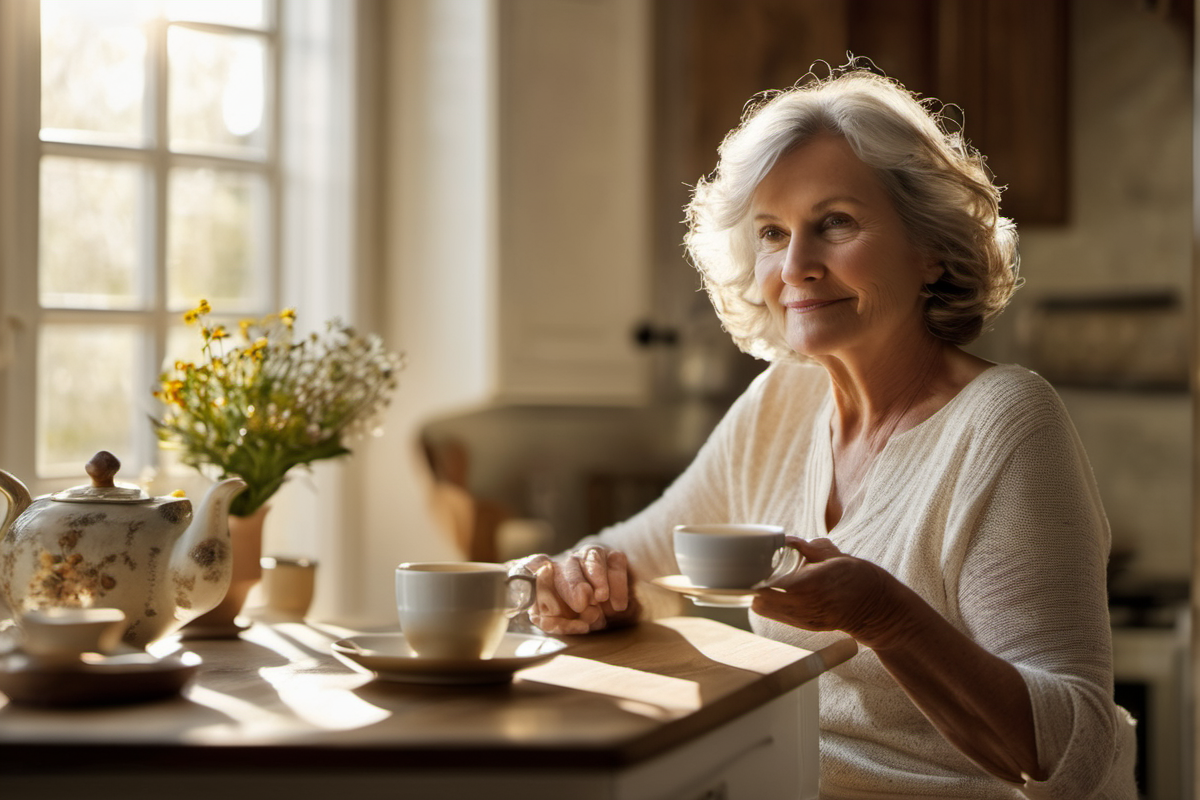
If you’re going through menopause and wondering whether Chinese tea can help — or whether you should be drinking it at all — the answer is: yes, with care. Some Chinese teas have evidence for specific menopause symptoms, while others (high-caffeine, very hot, or combined with certain medications) deserve a second look.
This guide is what I’d send a friend who’s navigating perimenopause or menopause and wants to use tea as part of their toolkit. We’ll cover which teas have evidence for specific symptoms, what the realistic effects look like, the menopause angle, and what to avoid.
The Quick Answer
The Chinese teas with the best evidence for menopause symptom support are green tea (EGCG + L-theanine), white tea (low caffeine, gentle), oolong (especially GABA-rich for anxiety/mood), and chamomile herbal blends for sleep. The menopause angle is the most researched for hot flashes and bone health.
The important framing: tea is one tool among many. Hormone therapy, regular exercise, sleep hygiene, and stress management all matter more than any single tea. Tea supports these foundations; it doesn’t replace them.
What’s Specifically Going On in Menopause
Menopause is the natural transition (typically ages 45-55) when menstrual cycles end. The hormonal shifts (declining estrogen and progesterone) cause symptoms that vary widely:
| Symptom | Prevalence | Severity range |
|---|---|---|
| Hot flashes | 75-80% of women | Mild-moderate to severe |
| Night sweats | Often co-occurs with hot flashes | Disrupts sleep |
| Sleep disruption | Up to 60% | Mild to significant |
| Mood changes | 40-50% (anxiety, irritability) | Mild to clinical |
| Bone density loss | All post-menopausal women | Slow, cumulative |
| Cardiovascular changes | All post-menopausal women | Slow, modifiable |
| Cognitive changes | Variable | Often mild |
Tea can play a role in several of these — with realistic expectations.
The 4 Best Chinese Teas for Menopause Symptoms
1. Green Tea (EGCG + L-Theanine + Caffeine Sweet Spot)
Why it’s good for menopause:
– EGCG may support bone health via effects on osteoblasts (bone-building cells), though evidence in humans is mixed
– L-theanine supports calm focus and may help with the anxiety and cognitive changes some women experience
– Moderate caffeine can combat the fatigue that often comes with sleep issues
– Antioxidants support cardiovascular health, which becomes a greater concern post-menopause
Caffeine caveat: If hot flashes are worsened by caffeine (some women find this), switch to lower-caffeine white tea.
Brewing: 80°C water, 1-3 minutes western, or gongfu 20-30 seconds.
For the broader context of green tea health, see our is Chinese tea good for you guide.
2. White Tea (Lowest Caffeine, Gentle)
Why it’s good for menopause:
– Lowest caffeine of true teas — ideal if you’re sensitive to caffeine (which often worsens hot flashes)
– High antioxidant capacity — same compounds as green tea, less aggressive extraction
– Mild flavor that’s well-tolerated when other flavors feel unappealing
Brewing: 80°C water, 2-3 minutes western.
For more on white tea, see our how to brew Silver Needle.
3. GABA-Rich Oolong (Mood + Anxiety)
Why it’s good for menopause:
– GABA supports calm, may help with the mood changes that come with hormonal shifts
– L-theanine smooths the caffeine curve
– The ritual of brewing is calming and gives you a daily anchor
Brewing: 90°C water, gongfu 20-30 seconds first steep, 5-7 steeps.
For more on GABA oolong, see our chinese tea for anxiety guide.
4. Chamomile + Rooibos (Caffeine-Free Evening)
Why they’re good for menopause:
– Sleep support — chamomile and rooibos both have evidence for relaxation and sleep
– No caffeine — won’t worsen hot flashes or disrupt sleep
– Hot drink ritual — helps with evening wind-down
Brewing: 95°C water, 5-7 minutes western.
What the Research Actually Shows
Hot Flashes
| Approach | Evidence | What it actually does |
|---|---|---|
| Green tea | Weak | No clear effect; caffeine may worsen |
| Black tea | Weak | No clear effect |
| Sage tea | Moderate | Modest reduction in frequency/severity |
| Phytoestrogenic foods (soy, flax) | Moderate | Some reduction in frequency |
Tea alone isn’t going to eliminate them. Lifestyle factors (avoiding triggers like alcohol and hot drinks), HRT for moderate-to-severe symptoms, and stress management are more effective.
Bone Health
| Approach | Evidence | What it actually does |
|---|---|---|
| Green tea | Mixed in humans; positive in rats | Modest support; not a substitute for calcium/vitamin D |
| Black tea | Mixed | Modest |
| Soy isoflavones | Moderate in Asian populations | More relevant than tea |
Realistic expectation: Tea may contribute a small fraction of bone health support, but it’s not a substitute for adequate calcium, vitamin D, weight-bearing exercise, and medical treatment when indicated.
Sleep
| Approach | Evidence | What it actually does |
|---|---|---|
| Chamomile (caffeine-free) | Moderate | Modest improvement in sleep quality |
| L-theanine (in green/white tea) | Moderate | Calming without sedation |
| Valerian root | Strong (herbal, not Chinese tea) | Significant for some people |
| Hot drink ritual | Anecdotal but real | Calming pre-sleep routine |
Mood
| Approach | Evidence | What it actually does |
|---|---|---|
| GABA oolong | Modest | Subjective calm |
| L-theanine | Moderate | Calm focus |
| Exercise + therapy | Strong | Best evidence for menopause-related mood changes |
Cardiovascular
| Approach | Evidence | What it actually does |
|---|---|---|
| Green tea | Strong | Modest reduction in LDL, modest BP reduction |
| Black tea | Moderate | Similar effects, slightly smaller |
| Oolong | Moderate | Comparable to green |
For a deeper dive into how tea compounds affect cardiovascular markers, see our caffeine in Chinese tea guide.
What to Avoid
1. Very Hot Tea (if Hot Flashes Are Severe)
Why: Drinking very hot beverages can trigger hot flashes in some women.
Fix: Drink warm (not scalding) tea. Let it cool 2-3 minutes before sipping.
2. High-Caffeine Teas in the Afternoon/Evening
Why: Caffeine’s half-life is 5-6 hours. Caffeine in the afternoon disrupts sleep, which worsens every other menopause symptom.
Fix: Last caffeinated cup before 2 PM. Evening cups should be caffeine-free (chamomile, rooibos, peppermint, decaffeinated green).
3. Green Tea Extract at High Doses
Why: Concentrated green tea extract (above 800 mg EGCG) has rare but serious liver toxicity risk. The risk may be elevated in women on certain medications or with existing liver conditions.
Fix: Stick to brewed tea. Avoid concentrated extracts without medical supervision.
4. Tea That Interferes With Medications
Some medications have specific interactions with tea:
– Thyroid medication (levothyroxine): Tea can reduce absorption. Take medication 1+ hour before tea
– Iron supplements: Tea tannins reduce non-heme iron absorption. Separate by 1+ hour
– Estrogen: Iron is needed for some menopausal treatments; separate from tea
– Blood pressure medication: Caffeine can interfere with some BP drugs
Talk to your OB-GYN or pharmacist about your specific medications.
Building a Daily Tea Practice for Menopause
Morning (Energy + Focus)
- 1 cup green or oolong tea (medium caffeine, L-theanine)
- 80-95°C water depending on tea
- Drink between 7-9 AM
- Skip on an empty stomach if you get nausea
Mid-Morning (Optional Second Cup)
- 1 cup white tea (lower caffeine)
- Helps with focus without overdoing caffeine
Afternoon (Energy Pick-Me-Up)
- 1 cup green or oolong
- Before 2 PM to protect sleep
Evening (Wind-Down)
- Caffeine-free only (chamomile, rooibos, peppermint, decaf green)
- 1-2 hours before bed
- Skip if you’re getting night sweats and find hot drinks triggering
A Sample 7-Day Menopause Tea Plan
- Day 1: 2 cups green tea (morning, early afternoon), 1 cup chamomile (evening)
- Day 2: 1 cup oolong (morning), 1 cup white tea (mid-morning), 1 cup rooibos (evening)
- Day 3: 1 cup green tea (morning), 1 cup rooibos (evening)
- Day 4: Same as Day 1
- Day 5: 1 cup oolong (morning), 1 cup white tea (mid-morning), 1 cup chamomile (evening)
- Day 6: 1 cup green tea (morning), 1 cup white tea (mid-morning), 1 cup rooibos (evening)
- Day 7: 1 cup oolong (morning), 1 cup rooibos (evening)
Weekly rotation: 5 days with morning caffeinated tea, 7 days with evening caffeine-free options.
Frequently Asked Questions
Is green tea good for menopause?
Modestly, yes. Green tea has antioxidants, L-theanine, and modest caffeine that may help with several menopause symptoms. It’s not a substitute for HRT or other treatments, but it’s a useful part of a comprehensive approach.
Does tea help with hot flashes?
Limited evidence. Some women find that hot beverages trigger hot flashes; others find cool or warm tea helpful. The evidence is mixed.
Can I drink Chinese tea while on hormone therapy?
Generally yes, but check with your doctor. Some HRT medications interact with caffeine or other compounds. Separate tea from medication by at least 1 hour.
Is caffeine bad during menopause?
It depends. Caffeine can worsen hot flashes in some women, disrupt sleep (which worsens everything), and interact with some medications. But moderate caffeine (200-300 mg/day) is generally OK if it doesn’t worsen your specific symptoms.
Which tea is best for menopause mood?
GABA-rich oolong has the best evidence for calm focus. White tea and chamomile are good evening options for sleep and mood stability.
Does Chinese tea help with bone density?
Modest evidence. Green tea may support osteoblast activity, but it’s not a substitute for adequate calcium, vitamin D, weight-bearing exercise, and medical treatment when indicated.
Can I drink tea if I have hot flashes triggered by heat?
Drink warm (not hot) tea. Skip the boiling-water steeps. Let your tea cool for 2-3 minutes before sipping.
Does tea help with menopause-related sleep disruption? The pieces are:
- Caffeine timing (last cup before 2 PM)
- Evening caffeine-free herbal ritual
- The soothing routine itself
Should I take green tea extract instead of drinking tea?
No, brewed tea is safer. High-dose extracts have rare liver toxicity. Stick to brewed tea in moderate amounts.
Can tea replace hormone replacement therapy?
No. Tea supports overall health and may modestly help some symptoms, but it’s not a substitute for HRT or other evidence-based treatments when indicated.
Final Thoughts
Tea is one tool in your menopause toolkit, not the whole toolkit. The biggest gains come from the basics: HRT if appropriate, regular exercise, sleep hygiene, stress management, and a healthy diet. Tea can complement all of these without interfering.
Choose low-caffeine options if hot flashes are an issue, switch to caffeine-free evening options for sleep support, and enjoy the daily ritual as part of your overall self-care practice.
For the broader context of how tea fits into a healthy lifestyle at every life stage, see is Chinese tea good for you.
FDA disclaimer: This article is for informational purposes only and does not constitute medical advice. The statements regarding Chinese tea and menopause have not been evaluated by the Food and Drug Administration. Chinese tea is not intended to diagnose, treat, cure, or prevent any condition. Menopause is a natural transition that may benefit from medical support; please consult your OB-GYN or qualified healthcare provider for personalized advice.