Category: Tea Types (3)
Tags: chinese tea mood, mood tea, calming tea, GABA oolong mood, l-theanine mood, tea ritual wellbeing, depression tea, anxiety mood tea, content tea, tea mental health
If you’ve ever noticed that a regular tea ritual improves your mood — even before the caffeine kicks in — you’ve experienced something real. Tea compounds do affect mood, but the mechanisms are more nuanced than “tea makes you happy.”
This guide is what I’d send a friend who wants to use tea as part of a mood-supporting routine. We’ll cover the L-theanine and GABA effects, the often-underestimated ritual effect, what the research says about mood disorders, and what to skip.
The Quick Answer
Tea compounds (L-theanine, GABA, low-dose caffeine) genuinely support calm, alert mood, but the strongest effect comes from the ritual itself — slow, deliberate brewing with attention. Regular tea drinkers report better mood than non-drinkers in observational studies, but the effect is modest.
For practical use: choose a tea you enjoy, brew it slowly, drink it without screens. The mood benefits come from the combination of compounds and ritual, not from any single molecule.
What’s Actually Happening: 4 Mechanisms
1. L-Theanine and Calm Focus
L-theanine’s effect on alpha brain waves is the most reproducible mood benefit of any tea compound:
- Increases 8-13 Hz alpha brain wave activity (associated with meditation, calm alertness)
- Modulates GABA (calming neurotransmitter)
- Modulates serotonin and dopamine (mood regulation)
- Reduces cortisol (stress hormone) in some studies
Net effect: Subjective calm, content, focused mood. Not sedation.
2. GABA from Specific Teas
Standard tea has very little GABA, but specially processed GABA-rich teas (mostly anaerobic / nitrogen-infused oolong) have significantly more:
- Modest blood pressure reduction
- Subjective calm reported in multiple small studies
- May interact with gut GABA receptors
Caveat: The magnitude of effect is modest. Most GABA in tea doesn’t cross the blood-brain barrier efficiently.
3. The Caffeine Effect (at the Right Dose)
Caffeine’s mood effects are dose-dependent:
- Low-moderate (50-150 mg): Improved mood, alertness, energy
- High (300+ mg): Anxiety, jitteriness, mood worsening
- Sweet spot: 100-200 mg spread across the day
Net effect: Moderate caffeine in tea supports positive mood. Excess caffeine worsens mood.
For more on caffeine effects, see our caffeine in Chinese tea guide.
4. The Ritual Itself
This is the most underrated mechanism, and it’s real.
The slow, deliberate process of brewing tea:
– Activates the parasympathetic nervous system (“rest and digest”)
– Shifts attention away from worry or rumination
– Creates predictability in a daily routine
– Provides sensory engagement (smell, warmth, taste)
– Becomes a meditation when done with attention
Net effect: Real mood benefit that’s hard to quantify in studies but obvious in practice.
For more on the GABA oolong specifically, see our chinese tea for anxiety guide.
The 4 Best Chinese Teas for Mood
1. GABA-Rich Oolong (Best for Calm Mood)
Why: Combines GABA’s calming effects with L-theanine and caffeine in a moderate, balanced ratio.
Effect: Subjective calm within 30-60 minutes of drinking. Best for people whose mood is affected by anxiety or stress.
Brewing: 90°C water, gongfu 30 seconds first steep, 5-7 steeps.
2. Light Oolong (Tieguanyin, Dancong) — The Mood Default
Why: Balanced L-theanine + caffeine, smooth flavor, the ritual of gongfu brewing itself. Many tea drinkers find light oolong the most “mood-friendly” daily tea.
Effect: Calm, alert mood throughout the day. The multiple steeps keep the ritual engaging.
Brewing: 90-95°C water, gongfu 20-30 seconds first steep, 5-7 steeps.
3. Matcha (Sustained Calm Focus)
Why: Highest L-theanine per serving plus caffeine in optimal ratio. Smooth focus without jitter.
Effect: Sustained calm mood for 2-4 hours. Good for work that requires focus without stress.
Brewing: 70-80°C water, 1-2g matcha, whisk and drink within 30 minutes.
4. White Tea (Gentle, Low-Caffeine)
Why: Lowest caffeine, gentle on the nervous system, good for sensitive individuals. The ritual is gentle too.
Effect: Mild mood support, suitable for daily long-term use
Brewing: 80°C water, 3-4 minutes western
What Tea Doesn’t Do
Marketing claims that have weak or no evidence:
- “Cures depression”: No tea cures clinical depression
- “Replaces therapy or medication”: Clinical mood disorders need professional care
- “Eliminates anxiety”: May help mild anxiety; clinical anxiety needs other treatment
- “Boosts happiness”: Effects are modest, not dramatic
- “Works immediately”: Some effects are acute, others build over weeks
What the Research Actually Shows
| Claim | Evidence | What it actually means |
|---|---|---|
| “Calming tea” | Strong for L-theanine | Modest acute calming effect |
| “Improves mood” | Moderate observational | Real but modest effect |
| “Reduces anxiety” | Modest | Some evidence for mild anxiety, less for clinical |
| “Helps depression” | Weak | Tea may help mood generally; not a treatment |
| “GABA oolong effects” | Modest | Real subjective calming |
| “Ritual effect” | Anecdotal but real | Hard to quantify but obvious in practice |
For the broader view of tea and overall health, see our is Chinese tea good for you guide.
Building a Daily Tea Practice for Mood
The Mood-Supporting Ritual
- Brew slowly: Don’t rush. The brewing is part of the benefit.
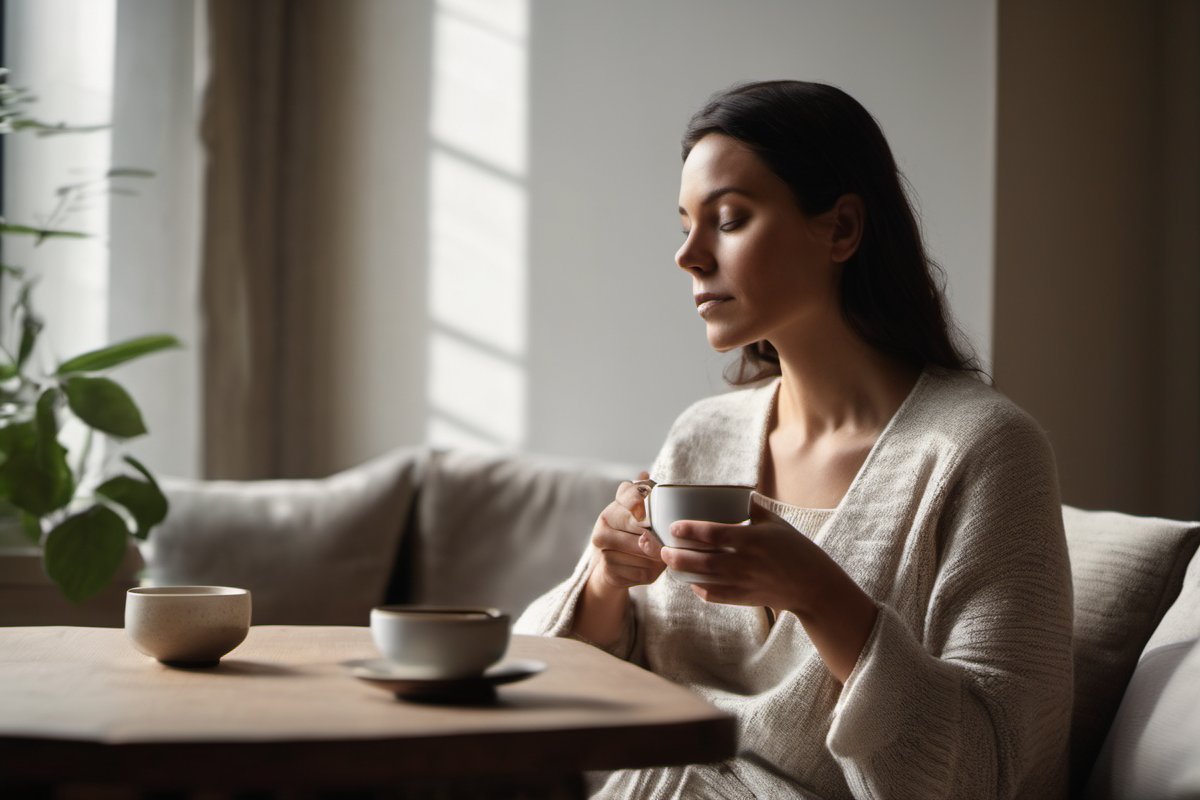
- Sit with the cup: Don’t drink standing up. Sit, look at the cup, smell it.
- Drink without screens: Phone away. TV off. Just you and the cup.
- Notice the warmth: Feel the cup in your hands, the steam on your face.
- Notice the flavor: Take 3-5 minutes to drink a single cup. Savor.
- Repeat daily: Consistency matters. A daily ritual compounds over weeks and months.
Sample Day
- 9:30 AM: Morning matcha or green tea, brewed with attention
- 12:30 PM: Lunch + light oolong gongfu (4 steeps over 30 minutes)
- 4:00 PM: Afternoon white tea or GABA oolong
- 8:00 PM: Caffeine-free herbal (chamomile, rooibos) before bed
When Tea Isn’t Enough
If you have persistent low mood, anxiety, or other mental health concerns:
- Tea is supportive, not treatment: For clinical depression, anxiety disorders, bipolar disorder, or other mental health conditions, please see a qualified professional
- Don’t substitute for therapy: Therapy (especially CBT) has strong evidence for mood disorders
- Don’t substitute for medication: If you’re on psychiatric medication, don’t stop or substitute tea without consulting your prescriber
- Reach out: If you’re in crisis, please contact a mental health crisis line
For more on anxiety specifically, see our chinese tea for anxiety guide.
Special Considerations
If You Have Depression
- Light oolong and matcha have the best evidence for mood support
- Combine with other supports: exercise (strongest evidence), sleep hygiene, social connection
- Don’t self-medicate with caffeine: Excess caffeine worsens mood in depression
- Get professional help: Depression is treatable; you don’t have to manage alone
If You Have Anxiety
- GABA oolong and white tea are gentlest options
- Limit caffeine: Excess caffeine worsens anxiety
- Avoid very hot tea: Can trigger physiological stress response
- Combine with proven supports: breathing exercises (4-7-8 technique), therapy if needed
If You Have ADHD or Mood Disorders on Medication
- Talk to your doctor: Some psychiatric medications interact with tea compounds
- Caffeine can amplify stimulant medications: Adjust accordingly
- L-theanine may complement some medications: But don’t substitute
Common Mistakes
Mistake 1: Drinking Tea While Distracted
Result: The mood benefit of the ritual is lost
Fix: Set aside 10-15 minutes for tea without screens
Mistake 2: Overdoing Caffeine
Result: Anxiety, jitteriness, mood worsening
Fix: Stay under 200-300 mg total caffeine, last cup before 2 PM
Mistake 3: Treating Tea as Therapy Substitute
Result: Delayed care for clinical conditions
Fix: Tea is supportive. See professionals when needed.
Mistake 4: Noticing No Immediate Effect
Result: Giving up after a few cups
Fix: The ritual effect builds over weeks. Acute effects are modest.
Mistake 5: Drinking Unsweetened Tea and Not Enjoying It
Result: Forcing yourself to drink tea you don’t enjoy
Fix: Tea doesn’t have to be plain. Add honey, lemon, ginger — whatever helps you enjoy it.
Frequently Asked Questions
Which Chinese tea is best for mood?
GABA oolong has the strongest evidence for acute mood support. Light oolong is the most versatile daily choice. Matcha is best for sustained calm focus.
Can tea help with depression?
Modestly, as part of a comprehensive approach. Tea alone doesn’t treat clinical depression. Combine with professional care.
Can tea reduce anxiety?
For mild anxiety, yes — L-theanine and the ritual effect are real. For clinical anxiety, see a professional.
Does tea make you happier?
Not directly, but the ritual and compounds can support a calmer, more content mood state.
Is chamomile or peppermint tea good for mood?
Both have modest evidence for calming effects. They’re good caffeine-free options.
Should I drink tea when feeling down?
If you enjoy tea, yes — the ritual can be a small comfort. If tea doesn’t appeal when you’re down, skip it. Don’t force it.
Can tea replace my antidepressants?
No. Don’t stop or change medication without consulting your prescriber. Tea can be a complement.
How often should I drink tea for mood?
Daily if you enjoy it. Consistency matters more than quantity.
Is matcha good for mood?
Yes — the L-theanine + caffeine combination is the best-studied combination for calm focus. Mood benefits are real.
Does adding honey help with mood?
Honey has modest soothing properties. Adding it to tea makes tea more enjoyable, which itself supports the ritual benefit.
Final Thoughts
Tea is one of the most accessible, daily mood-supporting practices available. The combination of L-theanine + caffeine + ritual effect is real, well-documented, and accessible. Choose a tea you enjoy, brew it slowly, and make it a daily practice.
The biggest gains come from the basics: sleep, exercise, social connection, stress management. Tea supports these. It doesn’t replace them.
For the broader view of tea and overall health, see is Chinese tea good for you.
FDA disclaimer: This article is for informational purposes only and does not constitute medical advice. The statements regarding Chinese tea and mood have not been evaluated by the Food and Drug Administration. Chinese tea is not intended to diagnose, treat, cure, or prevent any condition. If you have persistent mood concerns, please consult a qualified mental health professional.