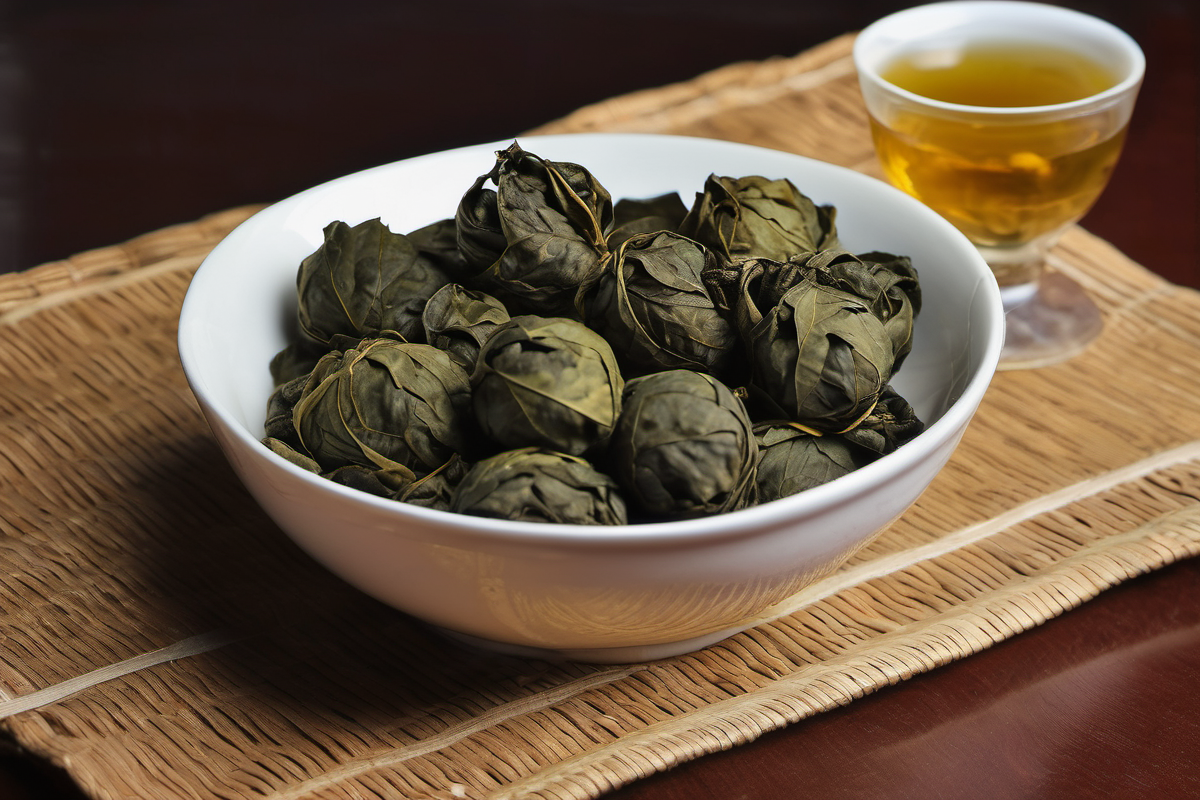
Tieguanyin(铁观音, “Iron Goddess of Mercy”)is one of China’s most famous oolong teas — and one of the easiest to brew badly. Too-hot water burns the delicate floral aromas; too little leaf leaves you with a thin, watery cup that tastes of nothing in particular.
This guide walks you through exactly how to brew Tieguanyin at home, whether you prefer gongfu-style short steeps in a small vessel or the convenience of a Western mug. You’ll learn the right water temperature, leaf-to-water ratio, steep times, how many infusions to expect, and the small adjustments that make Tieguanyin’s signature floral-honey character actually show up in the cup.
If you’re new to Chinese tea, start with our complete Chinese tea brewing guide, then come back here for the Tieguanyin-specific details.
What Is Tieguanyin?
Tieguanyin is a partially oxidized oolong from Anxi County in Fujian Province, southeastern China. Its name — “Iron Goddess of Mercy” — comes from the Buddhist bodhisattva Guanyin, and the legend says a poor farmer dedicated the tea to her after the plant rescued his family from hardship $TRAE_REF. Today it sits on China’s UNESCO Intangible Cultural Heritage list and is one of the two most famous Chinese oolongs alongside Da Hong Pao $TRAE_REF.
What sets Tieguanyin apart is its aroma: a striking floral-fruity character often described as orchid(兰花香, lan hua xiang), with a creamy, almost buttery texture and a long, sweet aftertaste called huigan(回甘, “returning sweetness”)that arrives in the throat well after you swallow $TRAE_REF.
Two Main Styles
You’ll encounter two styles in the market, and they brew slightly differently:
| Style | Chinese Name | Roast Level | Flavor | Best For |
|---|---|---|---|---|
| Green-fresh(清香) | Qing Xiang | Light or unroasted | Bright, floral, orchid, creamy, vegetal | Beginners; showing off Tieguanyin’s pure floral character |
| Traditional roasted(浓香) | Nong Xiang | Heavily roasted | Ripe fruit, caramel, toasted nuts, deeper body | Oolong drinkers who like darker, roasted teas $TRAE_REF |
This guide focuses on the modern green-fresh style, which is what most international vendors sell and what most beginners start with. If you have the roasted version, brew it the same way but lean toward the higher end of the temperature range(95°C / 203°F)for the first steep.
Quick Answer: How to Brew Tieguanyin
If you only have 30 seconds, here’s the short version:
- Water temperature: 90–95°C / 194–203°F
- Gongfu ratio: 5–7 g per 100–120 ml
- Gongfu steep time: 10–20 seconds for the first steep, add 5–10 seconds each round
- Western ratio: 3–4 g per 250 ml
- Western steep time: 2–3 minutes
- Re-steeps: 6–10 in gongfu, 2–3 in Western
- Vessel: Gaiwan or porcelain teapot
Now let’s go deeper.
What You Need
| Item | Why It Matters | Budget Option |
|---|---|---|
| Gaiwan(100–150 ml)or porcelain teapot | Neutral material shows Tieguanyin’s aroma cleanly; porcelain doesn’t absorb flavor | Any 100 ml porcelain gaiwan |
| Kettle with temperature control | Different teas need different temperatures; boiling water is too hot for most oolongs | Boil, then wait ~1 minute before pouring |
| Scale(0.1 g precision) | Gongfu ratios are precise — eyeballing leads to inconsistent cups | Any kitchen scale |
| Filtered water | Chlorinated tap water mutes aroma | Brita pitcher or spring water |
| Fairness pitcher(chahai) | Evenly distributes each infusion across cups | Optional for solo drinking |
For Tieguanyin specifically, porcelain is preferable to Yixing clay. Tieguanyin’s whole appeal is its delicate floral aroma, and a Yixing pot seasons itself over time — meaning it eventually takes on the flavor of whatever tea you brew most in it, which mutes the subtle florals you’re trying to taste $TRAE_REF. A porcelain gaiwan or pot keeps every infusion neutral so you can actually taste the tea. See our best gaiwan for beginners guide if you don’t own one yet.
Step-by-Step: Gongfu Method
The gongfu method — high leaf ratio, short steeps, many infusions — is the best way to taste Tieguanyin’s full range of flavor. Each steep reveals something different: bright florals first, deeper honey and stone fruit later, with that signature huigan sweetness building underneath.
1. Warm the Vessel
Pour hot water into your empty gaiwan or teapot, swirl, and pour it off into the cups. This does two things: it warms the porcelain so the water temperature doesn’t drop when it hits the leaves, and it wakes up the empty vessel so it’s ready to receive the tea.
2. Add the Leaves
Use 5–7 g of leaf per 100–120 ml of water $TRAE_REF. This is roughly 1 g per 15–20 ml — much more than a Western cup. Don’t worry if it looks like “too much” tea; that’s the point. Tieguanyin leaves are tightly rolled into small balls and open up dramatically when water hits them, so 7 g of dry leaf fills a 100 ml gaiwan more than you’d expect.
3. The Rinse(Optional but Recommended)
Pour water over the leaves to cover them, then immediately pour it off and discard — about 3–5 seconds total. This “rinse” or “awakening” step is traditional with rolled oolongs and pu-erh. It does two things: washes off any dust from shipping and storage, and starts to unfurl the tightly rolled leaves so the first real steep extracts evenly $TRAE_REF.
Skip the rinse if you’re in a hurry — Tieguanyin is forgiving enough that a missed rinse won’t ruin the cup.
4. First Steep
Pour water at 90–95°C / 194–203°F over the leaves, cover, and steep for 10–15 seconds. Set a timer the first few times — it’s easy to over-brew without one.
Pour completely into a fairness pitcher or directly into cups. Don’t leave any water sitting on the leaves between steeps; continued contact with water extracts bitterness.
5. Repeat
Add 5–10 seconds to each subsequent infusion. A typical progression:
| Steep | Time | What You Should Taste |
|---|---|---|
| 1 | 10–15 sec | Bright floral, orchid, light body |
| 2 | 15–20 sec | Floral deepens, first hints of honey |
| 3 | 20–30 sec | Creamy, fuller body, sweetness building |
| 4 | 30–40 sec | Honey, stone fruit, huigan very visible |
| 5–7 | 40–60 sec | Deeper, riper notes; sweetness lingers |
| 8–10 | 60–90 sec | Final rounds; still sweet but lighter |
Quality Tieguanyin comfortably gives 7–10 gongfu infusions; premium lots can stretch to 12+ $TRAE_REF. When the cup tastes thin or the leaves have fully opened and lost their structure, you’ve reached the end.
Step-by-Step: Western Method
If you only have a mug and no scale, the Western method works fine — you’ll get fewer infusions, but the cup will still be good.
- Ratio: 3–4 g per 250 ml (about 1 heaped teaspoon)
- Temperature: 90–95°C / 194–203°F
- Steep time: 2–3 minutes for the first infusion
- Re-steeps: 2–3; add 30–60 seconds each round $TRAE_REF
To keep the leaves out of the way, use an infuser basket or brew directly in a small pot and pour through a strainer. Don’t leave the leaves sitting in water between cups — pour every drop out and let them rest.
The Two Most Common Mistakes
Water Too Hot
Boiling water(100°C / 212°F)scalds Tieguanyin’s delicate florals and pushes out bitterness and astringency. If your kettle only boils, let the water rest about 1 minute after boiling — that brings it down to roughly 90–95°C, right in the sweet spot for Tieguanyin. A variable-temp kettle is the single best upgrade you can make for brewing any Chinese tea.
Too Little Leaf
Tieguanyin leaves are tightly rolled and deceptively small. Two grams in a 250 ml mug looks like almost nothing — but that’s exactly the wrong amount. With too little leaf, you extract mostly water and not enough of the actual compounds that carry aroma and flavor, leaving you with a thin, weak cup that “doesn’t taste like Tieguanyin.” Use a scale the first few times and you’ll quickly learn what 5 g looks like in your hand.
Gongfu vs. Western: Which Should You Use?
| Gongfu | Western | |
|---|---|---|
| Ratio | High(1 g per 15–20 ml) | Low(1 tsp per 250 ml) |
| Steep time | Short(10–30 sec) | Long(2–5 min) |
| Infusions | 7–10+ | 2–3 |
| Vessels | Gaiwan, small teapot | Mug, large teapot |
| Best for | Tasting Tieguanyin’s full aromatic range | Convenience, daily drinking, office |
If you want to really understand Tieguanyin, brew gongfu at least once — the layered progression of flavors across 8+ infusions is the whole point of this tea. For everyday drinking, Western is fine. Many people own both a gaiwan for weekends and a simple infuser mug for weekdays.
If you’re choosing your first setup, our essential teaware for gongfu tea guide covers the minimum you actually need.
How to Tell Good Tieguanyin from Bad
When you open the bag:
- Dry leaf should look tightly rolled into small, heavy pellets. Loose, fully-open leaves mean the tea was stored too long or processed poorly.
- Aroma should hit you immediately — orchid, cream, fresh hay, ripe fruit. If the dry leaf smells flat or papery, the tea is past its prime.
- Wet leaf should be whole and intact after brewing, not broken or powdery. Damaged leaves release astringency and taste dull.
- The liquor should be bright, clear, and luminous — pale gold for green-fresh style, deeper amber for roasted. Cloudy or dull liquor is a red flag.
Tieguanyin is best within 12–18 months of harvest. Anxi teas, like all Chinese greens and light oolongs, lose aromatic complexity as they age.
How to Store Tieguanyin
Light and air are the enemies. To keep your Tieguanyin fresh:
- Seal it airtight between uses — the original foil pouch with a clip works; better is a small tin or canister with a tight lid
- Keep it away from light — a cupboard, not a countertop
- Keep it away from heat, moisture, and strong odors — never next to the stove or in the fridge door
- Do NOT refrigerate, even though some packaging suggests it. Moisture cycles and food odors will ruin the tea faster than age alone
For broader storage guidance covering pu-erh and other teas, see our pu-erh storage guide — the same principles apply.
FAQ
How many times can you steep Tieguanyin?
Gongfu-brewed Tieguanyin gives 7–10 infusions with quality leaves, and premium lots can stretch to 12+. Western-brewed Tieguanyin gives 2–3 infusions. Add 5–10 seconds to each gongfu steep, or 30–60 seconds for Western, until the cup starts tasting thin.
Can you brew Tieguanyin with boiling water?
You can, but you shouldn’t. Boiling water(100°C)extracts too much tannin and burns off Tieguanyin’s floral aromatics, leaving you with a bitter, dull cup. Use 90–95°C instead. If you don’t have a variable-temp kettle, boil and wait ~1 minute.
Is Tieguanyin the same as oolong tea?
Tieguanyin is an oolong — a specific cultivar and style of oolong from Anxi, Fujian. “Oolong” is the broad category covering many teas; Tieguanyin is one of its most famous members. Other well-known oolongs include Da Hong Pao, Dong Ding, and Dongfang Meiren.
What’s the difference between Tieguanyin and Da Hong Pao?
Both are famous Chinese oolongs, but they taste quite different:
- Tieguanyin — light, floral, orchid, creamy, sweet finish(huigan)
- Da Hong Pao — dark, roasted, ripe fruit, caramel, mineral “rock rhyme”(yan yun)
Tieguanyin comes from Anxi in southern Fujian; Da Hong Pao comes from the Wuyi Mountains in northern Fujian. See our comparison guide for a full side-by-side.
Is Tieguanyin caffeinated?
Yes — Tieguanyin contains roughly 30–50 mg of caffeine per cup, similar to green tea and about half a cup of coffee $TRAE_REF. It’s moderate, not high — perfectly fine for most people to drink in the morning and early afternoon.
Do I need to rinse Tieguanyin before drinking?
A quick rinse(3–5 seconds of water poured on and off)is traditional with Tieguanyin because the leaves are tightly rolled and benefit from being “awakened.” It’s not strictly required, but it improves the first real infusion. Skip it if you’re in a hurry.
Further Reading
- How to Brew Chinese Tea(Complete Guide) — the foundational method every Chinese tea drinker should know
- Gongfu Tea Ceremony: Step-by-Step — the broader tradition this brewing style comes from
- How to Use a Gaiwan — the most versatile beginner vessel
- Best Gaiwan for Beginners — what to buy if you’re starting out
- Tieguanyin vs Da Hong Pao: Which Oolong Is Right for You? — once you’ve tried Tieguanyin, here’s its famous sibling
- What Is Oolong Tea? — context on the broader category
- Chinese Tea Brewing Temperature Guide — a complete reference for all six tea types
- How Many Times Can You Steep Chinese Tea? — what to expect across tea types
2 thoughts on “How to Brew Tieguanyin(铁观音):Gongfu & Western Method”