Category: Tea Types (3) + Brewing (2)
Tags: chinese tea energy, energy tea, caffeine tea, matcha energy, green tea energy, oolong energy, tea vs coffee energy, sustained energy tea, l-theanine caffeine, energy without crash
If you’ve ever had the “coffee crash” — that afternoon energy dip after a strong morning cup — you’ve experienced what tea is designed to avoid. Tea has roughly half the caffeine of coffee, plus L-theanine, which together produce sustained energy without the spike-and-crash.
This guide is what I’d send a friend who wants to use tea for daily energy but doesn’t want the coffee roller-coaster. We’ll cover which Chinese teas give the best sustained energy, the L-theanine + caffeine science, optimal timing, and how to build an energy-supporting tea routine.
The Quick Answer
The Chinese teas with the best energy profile are matcha (whole-leaf powdered green tea), green tea, light oolong, and GABA oolong. All four combine L-theanine + caffeine in favorable ratios that produce sustained energy for 2-4 hours without the coffee crash.
The mechanism is well-established: L-theanine smooths caffeine’s effects, increases alpha brain wave activity, and reduces the jitteriness that comes from caffeine alone. The result is steady energy without the spike-and-crash of coffee.
For practical use: 1-2 servings in the morning and early afternoon, before 2 PM (to protect sleep). Don’t expect miracles — tea enhances a foundation of good sleep, regular meals, and movement.
The Science of Tea Energy vs Coffee Energy
The caffeine content is similar between tea and coffee per cup, but the energy profile is fundamentally different.
Coffee’s Energy Profile
- Caffeine: 95-200 mg per cup (depending on brew method)
- L-theanine: Essentially zero (coffee doesn’t contain meaningful L-theanine)
- Energy pattern: Sharp spike, ~30-60 min peak, then decline over 2-4 hours, often with a “crash”
- Side effects: Jitteriness, anxiety in sensitive individuals, heart rate increase
Tea’s Energy Profile
- Caffeine: 25-70 mg per cup (lower than coffee)
- L-theanine: 5-50 mg per cup (depending on tea type and brew)
- Energy pattern: Smoother rise, sustained 2-4 hour plateau, gentle decline
- Side effects: Far less jitteriness; smooth focus
Why the Difference
L-theanine is the key. It doesn’t replace caffeine — it modulates it:
- Increases alpha brain wave activity (relaxed alertness)
- Reduces caffeine’s stimulatory jitteriness
- Doesn’t reduce caffeine’s alertness effects
- Modulates GABA and dopamine for mood balance
The L-theanine + caffeine ratio is approximately 2:1 in most teas, which is the optimal ratio for sustained calm energy.
The 4 Best Chinese Teas for Sustained Energy
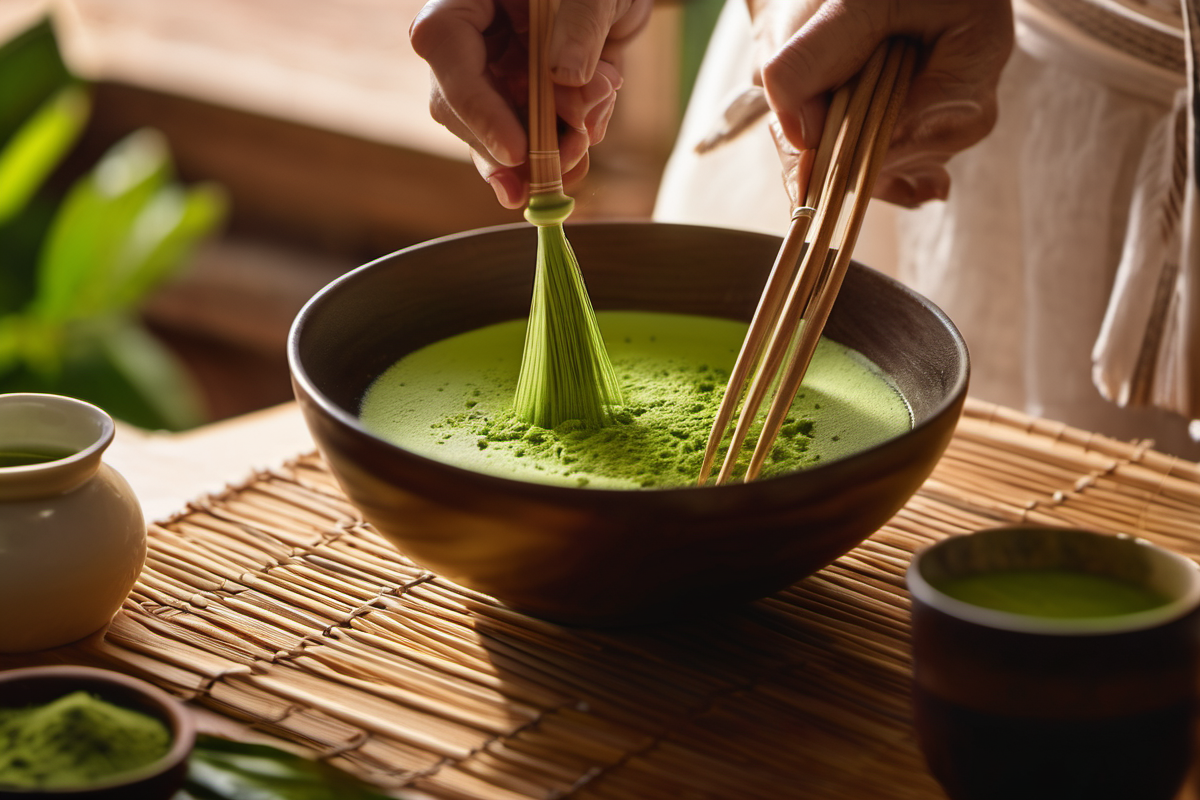
1. Matcha (Highest L-Theanine Per Serving)
Why: Whole-leaf consumption means you get 5-10x the L-theanine of steeped tea. A typical serving has 30-50 mg L-theanine and 35-70 mg caffeine.
Effect: Sustained energy for 3-4 hours, with calm focus rather than jittery alertness.
When: Mid-morning (10 AM). One serving is plenty.
How to make:
– 1-2g matcha powder
– 70-80°C water (NOT boiling — boiling makes it bitter)
– Whisk with bamboo chasen or small frother
– Drink within 30 minutes
2. Green Tea (Balanced Default)
Why: Good L-theanine to caffeine ratio (1.5-2:1), moderate caffeine for alertness, well-studied cognitive effects.
Effect: Sustained energy for 2-3 hours. Milder than matcha but longer-lasting.
When: Mid-morning (9-11 AM). Second cup possible at 1-2 PM if you tolerate caffeine well.
How to make:
– 3g tea leaves per 250 ml
– 80°C water
– 1-2 minutes western, or gongfu 20-30 seconds first steep
For more on green tea, see our how to brew Longjing guide.
3. Light Oolong (Tieguanyin, Dancong) — Smooth Sustained
Why: Mid-range L-theanine, mid-range caffeine, plus the smooth flavor profile and ritual of gongfu brewing. The brewing process itself is energizing.
Effect: Sustained energy for 2-3 hours. More “smooth” than matcha — better for creative work than high-intensity cognitive tasks.
When: Mid-morning. Multiple short steeps over 30-60 minutes extend the energy state.
How to make:
– 5-7g leaves per 100 ml gaiwan
– 90-95°C water
– 20-30 seconds first steep, +10-15 seconds each subsequent
4. GABA-Rich Oolong (Calm Energy)
Why: Combines GABA’s calming effects with L-theanine and caffeine. Best for energy when you’re also dealing with stress or anxiety (which interferes with energy).
Effect: Calmer sustained energy than regular oolong. Good for work that requires steady attention under mild stress.
When: Same as light oolong. Particularly useful mid-afternoon when energy is flagging.
What About Black Tea and Pu-erh for Energy?
Black tea and pu-erh have higher caffeine than green/white/oolong, but lower L-theanine (amino acid content decreases with oxidation/fermentation).
| Tea | Caffeine | L-theanine | Energy profile |
|---|---|---|---|
| Matcha | High | High | Sustained calm focus |
| Green tea | Medium | High | Sustained, mild |
| Light oolong | Medium | Medium | Sustained, smooth |
| GABA oolong | Medium | Medium | Sustained, calming |
| Black tea | High | Low | Alert but jittery (closer to coffee) |
| Pu-erh | High | Low | Alert but less smooth than green tea |
If you want pure caffeine kick without much L-theanine: black tea or pu-erh. But expect more coffee-like effects.
If you want sustained calm energy: green tea, light oolong, or matcha.
For more on caffeine amounts across tea types, see our caffeine in Chinese tea guide.
Optimal Timing for Energy
When matters as much as what:
Morning (Wake-Up Window)
- First 30 min: cortisol is naturally high. Caffeine is less effective against high cortisol.
- 60-90 min after waking: cortisol drops. Caffeine is most effective here.
- Best first tea: 9-10 AM, not immediately upon waking.
Midday
- Second cup window: 1-3 PM for an afternoon pickup.
- Don’t go past 2 PM: caffeine’s half-life is 5-6 hours. Caffeine at 2 PM affects sleep at midnight.
Duration of Energy by Tea
| Tea | Caffeine | Duration |
|---|---|---|
| Matcha | 35-70 mg | 3-4 hours |
| Green tea | 25-40 mg | 2-3 hours |
| Light oolong | 30-50 mg | 2-3 hours |
| Black tea | 40-70 mg | 2-3 hours (with more crash) |
| Pu-erh | 30-70 mg | 2-3 hours |
Sample Daily Energy Routines
Routine A: Light User
- 10:00 AM: 1 cup green tea
- 2:00 PM: Last caffeine for the day (optional 1 cup white tea)
- After 2 PM: water, herbal, decaf only
Routine B: Moderate User
- 9:30 AM: 1 cup matcha or strong green tea
- 1:00 PM: 1 cup light oolong
- After 2 PM: caffeine-free
Routine C: Heavy User (Switching from Coffee)
- 8:30 AM: 1 cup strong green tea (instead of morning coffee)
- 11:00 AM: 1 cup light oolong
- 2:00 PM: 1 cup black tea or pu-erh (last caffeine)
- After 2 PM: caffeine-free
Routine D: Worker (Long Focus)
- 9:30 AM: 1 cup matcha (start work block 30 min later)
- 12:30 PM: 1 cup green tea (after lunch, for afternoon block)
- 3:00 PM: 1 cup white tea (gentle boost)
- After 4 PM: caffeine-free
The Bigger Picture: Energy Foundations
Tea is one tool. The biggest energy gains come from:
- Sleep: 7-9 hours consistently. Sleep deprivation is the #1 cause of low energy.
- Movement: Daily 20-30 minute walk. Movement boosts energy more than most realize.
- Nutrition: Adequate protein, hydration, regular meals. Blood sugar swings drain energy.
- Sunlight: Morning sunlight (10-30 min) sets circadian rhythm and boosts daytime alertness.
- Stress management: Chronic stress drains energy reserves.
Tea enhances these. It doesn’t replace them.
What About Pre-Workout Energy?
If you’re using tea as a workout booster:
- Matcha or green tea 30-60 min before exercise → mild fat oxidation boost, sustained energy
- Caffeine dose: Aim for 100-200 mg total pre-workout (combining tea + other sources)
- L-theanine: Reduces the jittery spike, gives smoother workout energy
- Note: Tea alone won’t replicate pre-workout supplements. Use it as part of a stack, not as the whole stack.
Common Mistakes
Mistake 1: Drinking Tea on an Empty Stomach
Result: Nausea, stomach upset, especially with strong green or black tea.
Fix: Eat something first. Even a small snack helps.
Mistake 2: Drinking Tea Too Late in the Day
Result: Sleep disruption. Even 100 mg caffeine at 4 PM can disrupt sleep at midnight.
Fix: Last caffeinated tea before 2 PM.
Mistake 3: Expecting Tea to Replace Sleep
Result: Persistent fatigue that tea can’t fix.
Fix: Tea is supportive, not a substitute for sleep. Prioritize sleep first.
Mistake 4: Overdoing Caffeine
Result: Jitteriness, anxiety, crash, eventually adrenal fatigue from chronic overstimulation.
Fix: Stay under 200-300 mg caffeine per day from all sources.
Mistake 5: Choosing the Wrong Tea for the Task
Result: Coffee-strength energy from black tea has more crash; subtle focus from white tea isn’t enough for high-intensity cognitive work.
Fix: Match tea to task (see chart below).
Tea-to-Energy-Need Matching
| Energy need | Best tea | Why |
|---|---|---|
| Wake-up (replacing morning coffee) | Matcha or strong green | Highest caffeine + L-theanine ratio for sustained energy |
| Mid-morning focus | Green tea or oolong | Sustained 2-3 hours, less jitter than coffee |
| Pre-workout | Matcha | Higher caffeine dose, faster onset |
| Afternoon pickup | Light oolong | Gentle boost without sleep disruption |
| Late afternoon (before 2 PM) | White tea | Lower caffeine, gentle boost |
| After 2 PM | Caffeine-free herbal | No energy, no sleep disruption |
Frequently Asked Questions
Which Chinese tea has the most caffeine?
Black tea and pu-erh have the highest caffeine per cup. For sustained calm energy, matcha is the best choice despite slightly lower total caffeine.
Is matcha better than coffee for energy?
Depends. For sustained calm energy, yes. For pure caffeine kick, coffee is stronger. Most people who switch from coffee to matcha say they have more steady energy without the afternoon crash.
How much caffeine is in a cup of Chinese tea?
25-70 mg per cup, depending on tea type. Green and white are lowest (25-40 mg), oolong is medium (30-50 mg), black and pu-erh are highest (40-70 mg).
When should I drink tea for energy?
9-11 AM is optimal. Last caffeinated tea before 2 PM to protect sleep.
Can tea replace coffee?
For most people, yes. Matcha + green tea can replace morning coffee with smoother energy. If you want pure caffeine, a small amount of coffee plus tea can work.
Is it okay to drink 3-4 cups per day?
Yes, that’s a moderate intake. Stay under 200-300 mg total caffeine, which usually equals 3-5 cups per day depending on tea type and brewing.
Can tea give you jitters?
Less than coffee, but possible if you’re caffeine-sensitive or consume too much. If jitters, switch to lower-caffeine options (white tea, aged white) or reduce intake.
What’s the best tea for an afternoon energy slump?
Light oolong or green tea before 2 PM. The L-theanine helps you avoid the post-caffeine crash that often comes with afternoon coffee.
Can I drink tea while pregnant?
See our chinese tea during pregnancy guide — limit caffeine under 200 mg/day and avoid very strong teas.
Is cold brew tea good for energy?
Cold brew extracts less caffeine, so it’s a less effective energy aid. If you want cold tea, brew hot and chill for fuller extraction.
Final Thoughts
Tea is one of the best tools for sustained, crash-free energy — better than coffee for most people who want steady focus across a work day. Matcha is the strongest single choice, with green tea and light oolong as solid alternatives.
The realistic framing: tea enhances a foundation of good sleep, regular meals, and movement. Don’t expect miracles from any tea — expect a modest, reliable boost in sustained energy.
For the broader context of how tea compounds affect energy and focus, see our chinese tea for focus guide and our caffeine in Chinese tea guide.
FDA disclaimer: This article is for informational purposes only and does not constitute medical advice. The statements regarding Chinese tea and energy have not been evaluated by the Food and Drug Administration. Chinese tea is not intended to diagnose, treat, cure, or prevent any condition. Persistent fatigue may have medical causes; please consult a qualified healthcare provider if fatigue is ongoing.