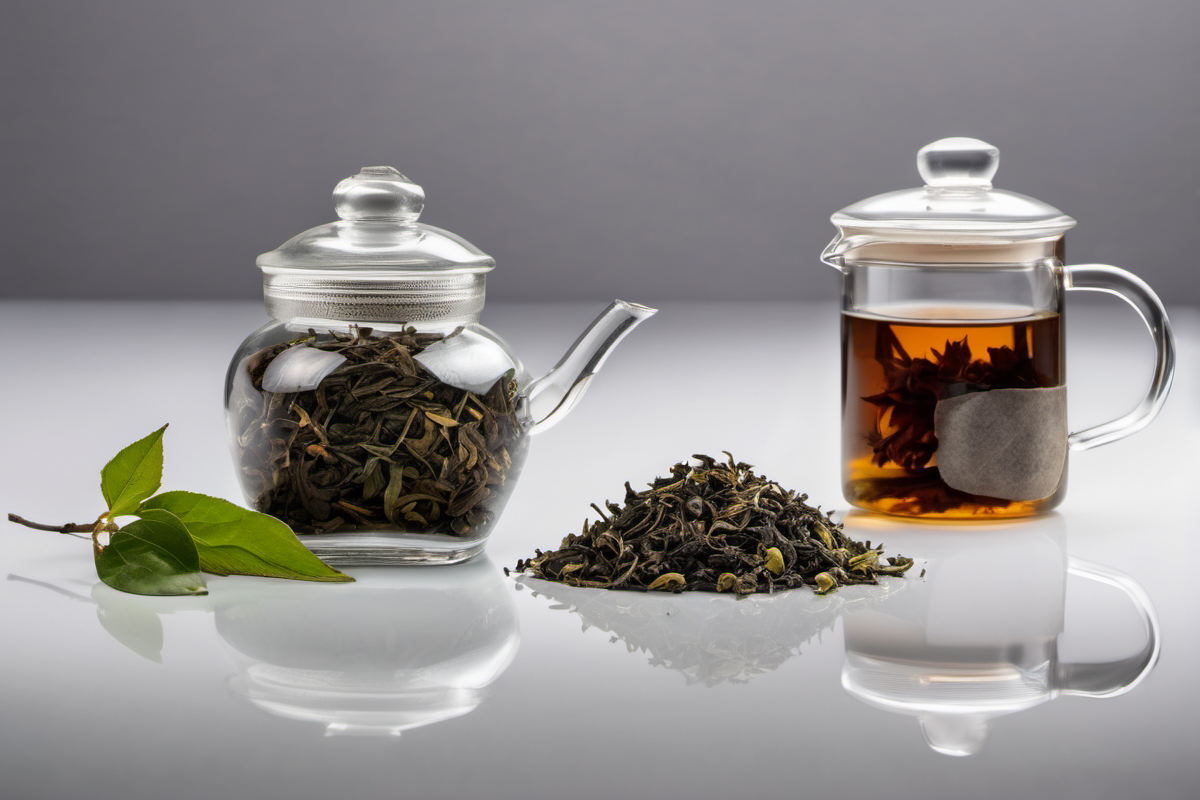
If you’re getting into Chinese tea, one of the first decisions is whether to brew loose leaf or stick with tea bags. The difference is bigger than most people realize.
This guide compares loose-leaf tea and tea bags, and explains why loose leaf is worth the (small) extra effort.
The Key Difference: Leaf Quality
| Loose Leaf | Tea Bags | |
|---|---|---|
| Leaf size | Whole or large leaves | Broken leaves, fannings, dust |
| Flavor | Complex, layered, aromatic | Strong, one-note, often bitter |
| Re-steeps | 2–10+ times | Usually once |
| Cost per cup | Often cheaper per cup | Convenient but pricier per gram of real tea |
Tea bags contain broken leaves and dust, which release everything — flavor and bitterness — into the first steep. Loose leaf releases flavor gradually, giving you a smoother, more nuanced cup and multiple infusions.
Why Loose Leaf Tastes Better
- Whole leaves brew slowly and evenly, without the harshness of dust.
- You control the ratio of leaf to water, temperature, and time.
- You can re-steep — with oolong and pu-erh, the later infusions are often the best.
Is Loose Leaf More Expensive?
Not necessarily. A good loose-leaf tea can be cheaper per cup than premium tea bags — because you can re-steep the same leaves multiple times. The upfront cost per gram is often similar or lower for better quality.
Is It More Work?
Slightly — you’ll need a way to brew it (a gaiwan, teapot, or simple infuser basket) and to measure the leaves. But it takes only a minute or two more, and the improvement in taste is dramatic.
How to Make the Switch
- Start with an infuser basket or a basic gaiwan — no fancy gear needed.
- Buy one good loose-leaf tea in a style you already like (e.g., a black tea if you’re used to English breakfast).
- Follow the basic rules: right temperature, right ratio, short steep.
Bottom line: loose leaf isn’t just for tea snobs — it’s the single biggest upgrade you can make to the taste of your tea, often for less money per cup.