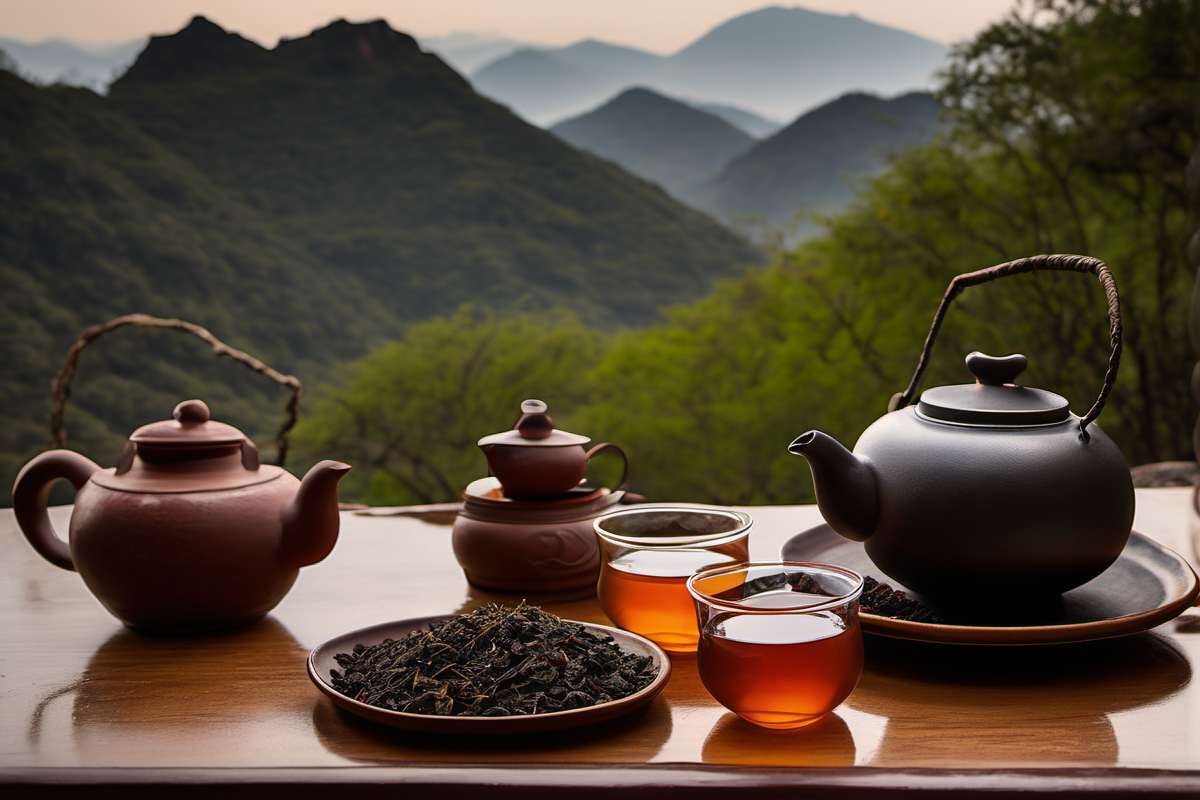
Rou Gui(肉桂,”Cinnamon”)is one of the most famous Wuyi rock oolongs, alongside Da Hong Pao. Where Da Hong Pao is known for deep roasted mineral character, Rou Gui is defined by its signature cinnamon-spice aroma — spicy, warm, woody, and immediately recognizable.
This guide walks you through exactly how to brew Rou Gui at home, the right water temperature and leaf ratio, the gongfu method that brings out its characteristic spice, and how it differs from Da Hong Pao in everyday practice.
If you’re new to Wuyi yan cha in general, start with our how to brew Da Hong Pao guide. For broader oolong context, see our complete oolong brewing guide and our Tieguanyin vs Da Hong Pao comparison.
The 30-Second Answer
- Water temperature: 95–100°C / 203–212°F(rolling boil or just off)
- Gongfu ratio: 6–8 g per 100 ml gaiwan
- First steep: 15–20 seconds(after a quick rinse)
- Subsequent steeps: add 5–10 seconds each round
- Vessel: Porcelain gaiwan, or a Yixing clay teapot dedicated to Wuyi yan cha
- Re-steeps: 8–12+ in gongfu; premium versions can stretch to 15
- Key warning: Under-heated water kills Rou Gui’s spicy aroma. Use near-boiling.
Now let’s go deeper.
What Is Rou Gui?
Rou Gui is a premium Chinese oolong tea from the Wuyi Mountains(武夷山)in northern Fujian Province, southeast China. It’s one of the most celebrated cultivars in the Wuyi yan cha family, and is often called the “Aromatic King”(香气之王)of Chinese oolongs because of its distinctive spicy-sweet aroma $TRAE_REF.
The name literally means “Cinnamon Bark” — and the tea’s signature aroma is unmistakable: warm, woody, cinnamon-like, with notes of allspice and clove layered over deeper mineral and roasted notes. Despite the name, the tea doesn’t taste literally like cinnamon; it smells and tastes like cinnamon bark, with the layered complexity of a real spice rather than the one-note sweetness of cassia powder you’d buy in a supermarket.
Origin and History
The Rou Gui cultivar was originally discovered growing wild in Majia Canyon(马家岩)of the Wuyi Mountains, hence it’s also called “Majia Rock Rou Gui” — one of the most prized sub-types of the cultivar $TRAE_REF. Today, Rou Gui is grown throughout the Wuyi Mountain region and subdivided by production terroir:
| Grade | Chinese | Description |
|---|---|---|
| Zhengyan(正岩) | “True Cliff” | Core Wuyi growing area; best mineral expression; most expensive |
| Banyan(半岩) | “Half Cliff” | Surrounding area; very good; mid-range price |
| Waishan(外山) | “Outside Mountain” | Outer hills; good daily drinker; lower price |
For everyday brewing, Banyan and Waishan Rou Gui give you most of the character at a fraction of Zhengyan price.
How Rou Gui Differs from Da Hong Pao
Rou Gui and Da Hong Pao are both Wuyi yan cha, but they sit at different ends of the spectrum:
| Trait | Da Hong Pao | Rou Gui |
|---|---|---|
| Aroma | Roasted, mineral, complex | Spicy, cinnamon, woody |
| Body | Heavy, full | Full but slightly lighter |
| Signature taste | Yan yun (rock rhyme) — wet stone, slate | Cinnamon / allspice / clove |
| Cultivar | Often a blend (Da Hong Pao is a category, not a single cultivar) | Single cultivar (Cinnamomum camphora var. Rougui) |
| Price range | $40–500+ | $30–300+ |
The famous saying goes: “Da Hong Pao is the King; Rou Gui is the General” 大红袍为王,肉桂为将 — Da Hong Pao defines the regal depth, while Rou Gui commands with bold aromatics $TRAE_REF.
If you’ve tried Da Hong Pao and want to understand Wuyi yan cha’s aromatic side more deeply, Rou Gui is the natural next step.
The Roasting Makes Rou Gui
Like all Wuyi yan cha, Rou Gui undergoes multiple rounds of charcoal roasting(烘焙, hong bei) — typically 2 to 4 sessions spaced weeks apart at descending temperatures (110–140°C) $TRAE_REF. This slow, low-temperature roasting does several things:
- Removes the harsh “green” edge of fresh leaves
- Develops the cinnamon-spicy aroma that defines the cultivar
- Develops mineral, caramel, and dark-fruit notes in deeper roasts
- Stabilizes the tea for long-term storage
The depth of roasting creates several distinct Rou Gui styles:
| Roast level | Character |
|---|---|
| Light roast (轻火) | Lighter body, more floral, brisk, brighter |
| Medium roast (中火) | Balanced spice and roast, the most common style |
| Heavy roast (足火) | Deep, dark, very spicy, long-lasting warmth |
Most Western drinkers encounter medium roast first — it’s the most balanced.
What You Need
| Item | Why | Best choice | Budget option |
|---|---|---|---|
| Yixing clay teapot (100 ml) | Traditional choice; adds warmth and roundness | Dedicated Wuyi yan cha pot | Porcelain gaiwan |
| Variable-temp kettle OR patience | 95–100°C is critical — under-heated water kills aroma | Adjustable kettle | Boil, rest 30 sec |
| Scale (0.1 g) | 6–8 g per 100 ml — needs precision | Small kitchen scale | Pre-measure |
| Fairness pitcher | Evenly distributes each infusion among cups | Glass or porcelain pitcher | Any small pitcher |
| Small tasting cups | 30–60 ml cups ideal | Porcelain cups | Mugs (worse for tasting) |
Clay vs Porcelain for Rou Gui
For Rou Gui, clay is the traditional choice:
- Zhuni (朱泥) — high-fired red clay, brings out spice and warmth
- Hongni (红泥) — softer red clay, more rounded, less intense
- Porcelain gaiwan — neutral, lets you taste the tea cleanly, good for beginners
A Yixing clay teapot dedicated to Wuyi yan cha is the gold standard. The clay is mildly porous and absorbs some of the spicy-roast character across uses, which complements future brews of the same tea family $TRAE_REF.
Important: don’t use the same clay pot for Tieguanyin (floral) and Rou Gui (spicy-roast). The clay will absorb both aromas and muddy future brews. One pot per tea family.
If you’re starting out, porcelain gaiwan is the right choice — see our first gaiwan guide.
Step-by-Step: Gongfu Method (Recommended)
This is the method that brings out Rou Gui’s full character. The key principle: hot water, short steeps, more steepings.
Step 1: Warm Everything
Pour hot water into the gaiwan or teapot, swirl, discard. Then into the cups, swirl, discard. Pre-heating prevents the cold vessel from dropping the water temperature when the leaves hit it.
Step 2: Add the Leaves
Use 6–8 g of leaf per 100 ml of vessel capacity $TRAE_REF. Rou Gui leaves are twisted strips — they’ll look darker than Tieguanyin because of the heavier roasting.
Step 3: The Rinse
Pour water at 95–100°C to cover the leaves, then immediately pour off and discard. The rinse:
- Wakes up the tightly twisted strips so they unfurl properly
- Washes off any residual roasting dust
- Pre-heats the leaves gently
Rinse time: 3–5 seconds — quick.
Step 4: First Steep
Pour 95–100°C water, cover, steep 15–20 seconds. Pour completely into the fairness pitcher, then into cups.
This first steep is typically less aromatic than later rounds — Rou Gui needs a few infusions to fully open up. Don’t judge the tea on the first cup.
Step 5: Subsequent Steeps
Add about 5–10 seconds per round:
| Steep | Time | What you should taste |
|---|---|---|
| 1 (rinsed) | 3–5 sec | Discard |
| 1 (first infusion) | 15–20 sec | Light, balanced, hint of spice |
| 2 | 20–30 sec | Cinnamon spice emerges clearly |
| 3 | 30–40 sec | Full body, spicy-woody character |
| 4 | 40–50 sec | Huigan (returning sweetness) develops |
| 5 | 50–60 sec | Mineral notes (if Zhengyan), deep caramel |
| 6–8 | 60–90 sec | Long, smooth, spicy finish |
| 8–12 | 90–120 sec | Sustained aroma, slow fade |
Quality Rou Gui gives 8–12 infusions; premium Zhengyan versions can stretch to 15 $TRAE_REF. The cinnamon-spice character is present from the second steep onward and gets more pronounced through the middle rounds.
Step 6: Adjust to Your Taste
The table is a starting point. Adjust based on what you’re tasting:
- Weak or thin? Add 5 seconds per round, or use 7–8 g instead of 6
- Sharp or harsh? Drop temperature to 95°C and shorten steeps by 10%
- Spice fading too fast? Keep water at full boil; lower temperatures mute the aroma
Why Hotter Water Matters More for Rou Gui
Rou Gui’s signature cinnamon aroma comes from high-boiling-point volatile compounds — chemicals that only release their full aromatic potential at near-boiling temperatures. Brewing at 85–90°C, the temperature that works for Tieguanyin, mutes the spice by 30–40% in Rou Gui $TRAE_REF.
Practical translation: don’t reduce temperature to “be safe”. Use 95–100°C, and let resting time for first infusion be only 10–15 seconds rather than cutting temperature.
Western Method
For everyday drinking in a mug or small teapot:
- Ratio: 3–4 g per 250 ml
- Water temperature: 95–100°C
- Steep time: 2–3 minutes
- Re-steeps: 2–3 times
You’ll get a satisfying cup but miss the layered progression of gongfu. The third infusion will already be much weaker than the second.
Rou Gui vs Da Hong Pao: Brewing Differences
In practice, the brewing is very similar. The differences show up in the cup:
| Brewing step | Da Hong Pao | Rou Gui |
|---|---|---|
| Temperature | 95–100°C | 95–100°C |
| Ratio (gongfu) | 7–8 g / 100 ml | 6–8 g / 100 ml |
| First steep | 10–15 sec | 15–20 sec |
| Subsequent adds | +5–10 sec | +5–10 sec |
| Re-steeps | 8–12 | 8–12 (premium: 15) |
| What to taste for | Yan yun — wet stone, mineral | Cinnamon / spice — warm, woody |
The differences in brewing are subtle; the differences in flavor are pronounced. If you’re brewing both teas regularly, dedicate separate clay teapots to each — the spicy and mineral characters will contaminate each other if shared.
Common Mistakes
Under-Heated Water
The #1 Rou Gui mistake. If the cinnamon aroma is weak or absent, raise your water temperature to a full boil (100°C) and shorten steeps by 5 seconds to compensate.
Too Long First Steep
Beginners often steep the first infusion 1–2 minutes “to be safe.” For gongfu, this washes out the spice and pulls astringency forward. Start at 15–20 seconds.
Mixing Tea Families in One Clay Pot
Using the same Yixing pot for Tieguanyin (floral) and Rou Gui (spicy) will create flavor confusion over time. One clay pot per tea family.
For full Yixing guidance, see our gaiwan vs teapot comparison.
Brewing Old Rou Gui
Rou Gui’s spice fades significantly after 2+ years in storage. If your Rou Gui tastes flat or papery, it’s likely past prime. Check the harvest date — aim for tea within 18 months of roasting.
For full storage guidance, see our complete storage guide.
Using a Gaiwan for Spicy Oolong Without Knowing Clay’s Effect
Porcelain gaiwans are neutral — they show the tea as it is, without flavor additions. That’s perfect for Tieguanyin (light, floral) but slightly less ideal for Rou Gui, whose character benefits from clay’s softening warmth.
If you’ve been drinking Rou Gui from a porcelain gaiwan and find it good but not exceptional, try the same tea from a Yixing pot. The difference can be dramatic.
How to Tell Good Rou Gui from Bad
When you open the package:
- Dry leaf should be twisted, dark brown-to-black strips (heavier roast = darker); tightly twisted, not loose
- Aroma should hit you immediately — cinnamon, allspice, woody, sometimes a hint of caramel or dried longan. If it smells flat or papery, the tea is past prime or low-quality
- Wet leaf should be whole and intact, not broken or powdery
- Liquor should be deep amber to mahogany — cloudier than lighter oolongs, but never murky
For premium Zhengyan versions, look for:
- Visible wet leaf length (longer = higher grade; Zhengyan leaves are typically 3–5 cm after unfurling)
- Mineral/rock-note complexity alongside the spice (the famous yan yun)
- Long, smooth huigan with no harshness
Storage
Rou Gui is the most stable of all Chinese teas thanks to the heavy roasting:
- Airtight container — tin with rubber seal, or original foil pouch
- Cool, dark, dry — a kitchen cupboard is fine
- No refrigeration — moisture cycles damage roasted teas
- Separate from other teas — its roast aroma can transfer to lighter teas if stored together
Roasted Rou Gui actually improves for the first 6–12 months after roasting, as the roast character settles and the tea becomes more harmonious. Beyond 18–24 months, the spice fades.
For full storage principles, see our complete storage guide.
Common Questions
What’s the Difference Between Rou Gui and Da Hong Pao?
Both are Wuyi yan cha, but:
- Da Hong Pao is a category (often blended from several cultivars) known for deep mineral and roasted character — yan yun, wet stone, slate
- Rou Gui is a single cultivar (Cinnamomum) known for spicy, woody, warm character — cinnamon, allspice, clove
If you love spice → Rou Gui. If you love mineral depth → Da Hong Pao. Both are essential to Wuyi yan cha; serious yan cha drinkers keep both.
How Spicy Does Rou Gui Actually Taste?
Rou Gui’s “cinnamon” is not the sweet, one-note sweetness of cassia powder. It’s more like cinnamon bark — warm, woody, slightly resinous, with multiple aromatic layers underneath. In lighter roasts, the spice is bright and sharp. In heavier roasts, the spice is deeper and more integrated with caramel and roasted notes.
Can I Brew Rou Gui in a Mug?
Yes — see Western method above. You’ll miss the layered progression of gongfu but get a satisfying cup. Rou Gui is actually quite mug-friendly because the heavy roast means it doesn’t turn bitter easily even at longer steeps.
How Much Caffeine Does Rou Gui Have?
Moderate — about 30–50 mg per cup when brewed gongfu. Similar to other oolongs. Fine for morning through afternoon; cut off by mid-afternoon if you’re caffeine-sensitive. For details, see our caffeine guide.
Why Is Some Rou Gui So Much More Expensive?
The biggest price driver is production terroir: Zhengyan (true cliff) Rou Gui from the core Wuyi area can run $100–300+ for 50g; Banyan and Waishan versions of the same cultivar cost $30–80.
Other factors:
- Old tree (老树) Rou Gui — from older, deeper-rooted trees, more complex; commands premiums
- Single-cultivar vs blended — pure Rou Gui is more expensive than blends
- Harvest season — late autumn Rou Gui (“autumn tea”) is prized
For daily brewing, Banyan Rou Gui gives you real cinnamon-spice character at a fraction of Zhengyan price.
Is Rou Gui Suitable for Beginners?
Yes — one of the most beginner-friendly oolongs. The roasting smooths out the leaf’s rough edges, giving a wider margin for brewing error. The signature aroma is also immediately recognizable, so you’ll know whether you like it within a single cup.
What If My Rou Gui Has No Spice Aroma?
If you’ve brewed Rou Gui and don’t smell cinnamon:
- Water temperature too low — use full boil (100°C)
- Old tea — Rou Gui loses aroma after 18–24 months; check the harvest date
- Poor storage — exposure to air, light, or humidity destroys aroma compounds; verify the package is intact
- Wrong tea — some “Rou Gui” sold commercially is actually a blend with very little Rou Gui content; buy from a reputable vendor
Can I Cold Brew Rou Gui?
Yes, and it’s surprisingly good. Use 5 g per 500 ml cold water, refrigerate 6–8 hours, strain. The result is less spicy but smoother — the cinnamon note softens into something more like chai-spice. A great summer option.
For more, see our iced oolong guide.
Should I Use a Gaiwan or a Yixing Teapot?
For beginners: gaiwan. It’s neutral and shows the tea cleanly.
For traditional Wuyi yan cha experience: a Yixing clay pot (zhuni or hongni) dedicated to Wuyi teas brings out the roundness and warmth that’s characteristic of yan cha.
Either works. Rou Gui is forgiving enough that you’ll get a good cup either way.
Further Reading
- How to Brew Da Hong Pao — the roasted rock oolong sister tea
- Tieguanyin vs Da Hong Pao — see the broader oolong spectrum
- How to Brew Oolong Tea — the broader category method
- Gaiwan vs Teapot: Which Should You Buy First? — vessel choice
- How to Choose Your First Gaiwan — buying teaware
- How to Store Chinese Tea — keeping your tea fresh
- How Much Caffeine Is in Chinese Tea? — caffeine numbers
- What Is Oolong Tea? — the broader category context
- How to Brew Chinese Tea (Complete Guide) — the foundational method