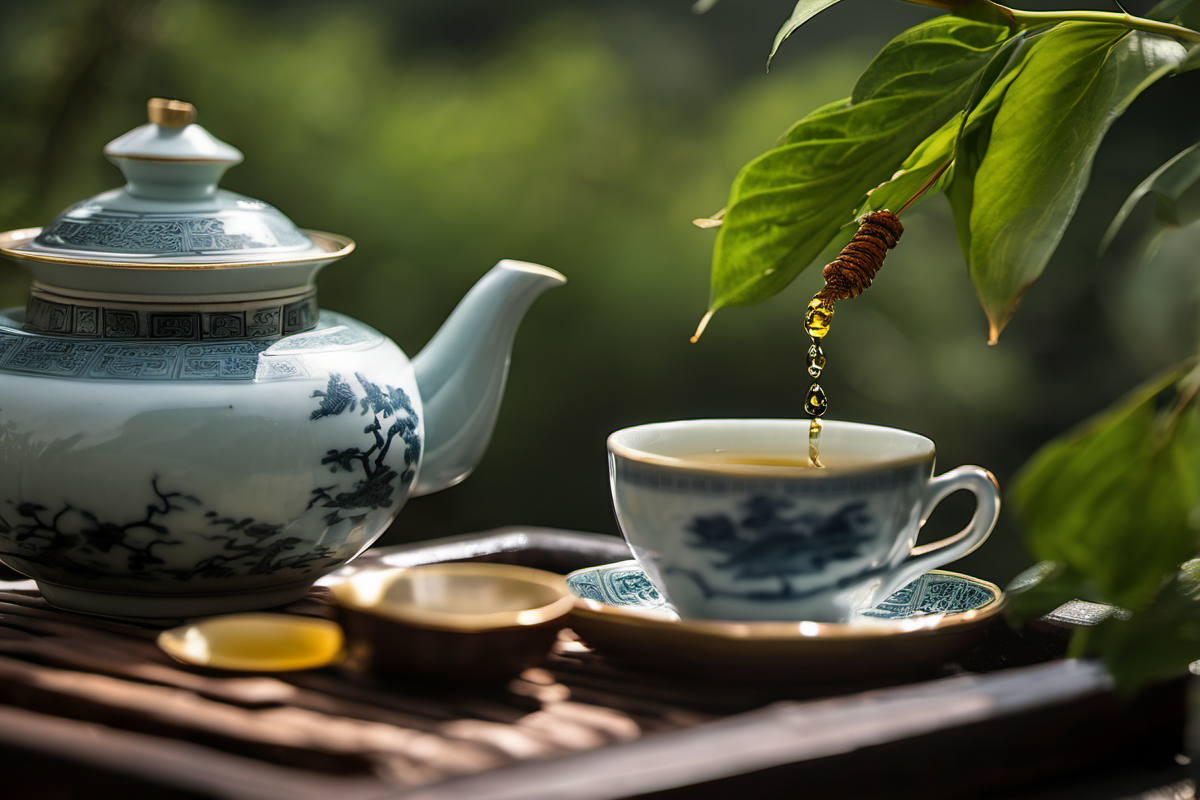
Phoenix Dan Cong(凤凰单丛, “Phoenix Single-Bush”)is the most aromatic oolong tea in the world. Unlike Tieguanyin’s floral-but-balanced character or Da Hong Pao’s deep roasted-mineral, Dan Cong is grown for one reason: fragrance. Some batches smell like orchids, others like peach, others like gardenia, others like cinnamon — and the same plant can produce dozens of distinct aromas depending on how it’s processed.
Brewing Dan Cong is also uniquely demanding. The brewing method is fast, hot, and tight — even 5 seconds too long on an early infusion turns fragrant into astringent. Most Western drinkers give up on Dan Cong because they brew it like Tieguanyin. Don’t make that mistake.
This guide walks you through exactly how to brew Phoenix Dan Cong at home, the rapid gongfu method that brings out its character, and the 10 famous fragrance types (xiangxing) that define this unique Chinese tea category.
If you’re new to oolong in general, start with our complete oolong brewing guide and our Tieguanyin vs Da Hong Pao comparison to understand the category.
The 30-Second Answer
- Water temperature: 95–100°C / 203–212°F(rolling boil or just off)
- Gongfu ratio: 7–8 g per 100 ml gaiwan
- First steep: 5–7 seconds(after a quick rinse)
- Subsequent steeps: add only 2–3 seconds per round
- Vessel: A small porcelain gaiwan (100 ml) — Dan Cong’s aromatic complexity shows best in neutral porcelain
- Re-steeps: 10–15 in gongfu(premium versions can stretch further)
- The key difference: Dan Cong’s first three steeps are very fast — 5 to 12 seconds each. If you brew it like Tieguanyin (15–20 seconds), the cup turns bitter and you’ll think you don’t like it.
Now let’s go deeper.
What Is Phoenix Dan Cong?
Phoenix Dan Cong is a single-bush oolong from the Phoenix Mountains(凤凰山)of Chaozhou, eastern Guangdong Province. It’s been cultivated for over 900 years and is one of China’s most distinct oolong traditions $TRAE_REF.
The name breaks down as:
- 凤凰 (Phoenix) — the mountain range in Chaozhou
- 单丛 (Dan Cong, “single bush”) — historically each famous tree was kept separate and brewed on its own to show its unique character
Unlike most teas where leaves from many bushes are blended, traditional Dan Cong is named by the individual tree or small grove that produced it. A 200-year-old tree on Phoenix Mountain’s Wudong peak might produce only a few kilograms of tea per year, and that tea is called “Wudong Laochun Old Tree” or similar — the tree’s identity becomes the tea’s identity.
The 10 Famous Aroma Types
Dan Cong is classified not by region but by aroma type(香型, xiangxing). The 10 most famous fragrance categories $TRAE_REF:
| # | Aroma type | Chinese | Character | Beginner-friendly? |
|---|---|---|---|---|
| 1 | Honey Orchid | 蜜兰香 (Mi Lan Xiang) | Honeysuckle + honey; classic, balanced | Yes — the “default” Dan Cong |
| 2 | Orchid | 芝兰香 (Zhi Lan Xiang) | Cool, fresh orchid; refined | Yes |
| 3 | Jasmine | 茉莉香 (Mo Li Xiang) | Light, sweet floral | Yes |
| 4 | Magnolia | 玉兰香 (Yu Lan Xiang) | Bright white floral | Yes |
| 5 | Night-Blooming Tuberose | 夜来香 (Ye Lai Xiang) | Heavy white floral | Medium — polarizing |
| 6 | Osmanthus | 桂花香 (Gui Hua Xiang) | Sweet, warm, golden honey notes | Yes |
| 7 | Yellow Gardenia | 黄枝香 (Huang Zhi Xiang) | Bright citrus-peel finish | Yes |
| 8 | Ginger Flower | 姜花香 (Jiang Hua Xiang) | Spicy-warm, unusual | Medium |
| 9 | Almond | 杏仁香 (Xing Ren Xiang) | Nutty, sweet | Yes |
| 10 | Cinnamon | 肉桂香 (Rou Gui Xiang) | Cinnamony, woody (named for similarity, not actual Rou Gui) | Medium |
For beginners, Mi Lan Xiang (蜜兰香, Honey Orchid) is the most accessible. It’s the most widely exported and most representative — sweet, floral, balanced. As you explore, you’ll discover your preferences among the other 9.
Why Dan Cong Is the “Perfume” of Oolongs
The famous saying is that Dan Cong is the “Perfume” of oolong tea$TRAE_REF. The aromatics are remarkably diverse because:
- Single-bush cultivation — each tree has its own aromatic signature
- Heavy oxidation(40–60%)plus light roasting preserves volatile aromatic compounds
- Tropical climate of Chaozhou accelerates aromatic development
- Long, hand-rolled leaves preserve aromatic oils in the leaf
The result is a tea that can genuinely smell like peach, orchid, or honey depending on the specific tree and processing — not metaphorically, but in the literal volatile compounds present.
What You Need
| Item | Why | Best | Budget |
|---|---|---|---|
| Porcelain gaiwan (100–150 ml) | Dan Cong’s aromatics are too delicate for clay to “carry”; porcelain is neutral | Chaozhou-style porcelain gaiwan set | Any 100 ml porcelain gaiwan |
| Variable-temp kettle | 95–100°C is critical | Adjustable kettle | Boil, wait 30 sec |
| Scale (0.1 g) | 7–8 g per 100 ml needs precision | Small kitchen scale | Pre-measure |
| Fairness pitcher | Evenly distributes each fast infusion | Glass or porcelain pitcher | Any small pitcher |
| Small tasting cups | 30–60 ml cups ideal | Porcelain cups | Mugs (worse for tasting) |
Why Porcelain, Not Clay?
Unlike Da Hong Pao and Rou Gui (which benefit from clay’s warming character), Dan Cong is best brewed in porcelain. Clay absorbs aromatic compounds over time, which mutes the very fragrance Dan Cong is famous for $TRAE_REF. A porcelain gaiwan shows the tea as it is — fragrance intact, character clean.
If you only have a clay pot, use it for Dan Cong — it will still be enjoyable. But once you’ve tasted Dan Cong from porcelain, you’ll understand what the clay was hiding.
Step-by-Step: Rapid Gongfu Method (Recommended)
This is the Chaozhou-style gongfu method — different in spirit from the slower brewing you might use for Tieguanyin or Wuyi yan cha. Speed matters because Dan Cong’s tightly-rolled leaves extract aromatic compounds very quickly.
Step 1: Warm Everything
Pour hot water into gaiwan, pitcher, and cups. Swirl, discard. Pre-heating is standard practice.
Step 2: Add the Leaves
Use 7–8 g of leaf per 100 ml of vessel capacity $TRAE_REF. Dan Cong leaves are long, twisted strips — heavier than Tieguanyin even before the weight difference is accounted for by their larger leaf size.
Step 3: The Rinse
Pour water at 95–100°C to cover the leaves, then immediately pour off and discard. The rinse:
- Wakes up the rolled leaves so the first real infusion extracts evenly
- Washes off any residual dust
Rinse time: 3–5 seconds — quick.
Step 4: First Steep
Pour 95–100°C water, cover, steep 5–7 seconds. Pour completely into the fairness pitcher, then into cups.
This first steep is often surprisingly intense — the long, twisted leaves have a lot of aromatic surface area to give up quickly.
Step 5: Subsequent Steeps
Add only 2–3 seconds per round $TRAE_REF. This is the most distinctive feature of Dan Cong brewing — much slower growth in steep time than other teas.
| Steep | Time | What you should taste |
|---|---|---|
| 1 (rinsed) | 3–5 sec | Discard |
| 1 (first infusion) | 5–7 sec | Full aroma, light body, characteristic fragrance |
| 2 | 7–10 sec | Aroma develops further; flavor deepens |
| 3 | 10–12 sec | Body firms up; huigan emerges |
| 4 | 12–15 sec | Body fullest; balance between aroma and taste |
| 5 | 15–20 sec | Mineral depth (high-altitude lots); mellowing aroma |
| 6–8 | 20–30 sec | Sustained character; sweetness continues |
| 8–12 | 30–60 sec | Final rounds; clean, sweet, simple |
| 12–15+ | 60+ sec | Very subtle — only on premium lots |
Quality Dan Cong gives 10–15 infusions. Premium old-tree lots can stretch to 20+ $TRAE_REF.
The character evolution is distinct from other oolongs: aroma dominates the first 4–5 steeps, body and huigan develop from steep 4–8, and the final rounds become a simple clean sweetness.
Step 6: Adjust to Your Taste
The table is a starting point. Adjust based on what you’re tasting:
- Too sharp / astringent? Drop first steep to 3–4 seconds; cut subsequent adds to +1 sec
- Too thin / weak? Increase leaf to 9–10 g, or add 2–3 seconds per round
- Losing aroma? Water temperature too low — bump to full boil (100°C)
- Bitter after 6+ steeps? Likely water too hot overall, or steep too long — try 95°C instead of 100°C
Why Dan Cong Brewing Is So Sensitive
The aromatic compounds in Dan Cong are volatile terpenes and esters — they release quickly and evaporate fast once extracted $TRAE_REF. This creates a paradox:
- Hot water (95–100°C) is needed to extract the aromatics in the first place
- Long steeps cause over-extraction of bitter compounds that overwhelm the delicate aromatics
- Speed is the only way to balance these competing demands
The result is a brewing style that feels counterintuitive to anyone trained on Chinese green tea (slow + cool) or Wuyi yan cha (medium + medium). For Dan Cong, the rule is: as hot as possible, as fast as possible.
If your first infusion is sharp and the third is bitter, you brewed too long. The fix is rarely “brew shorter next time” — it’s “brew all 10 steeps shorter.”
Western Method
For everyday drinking in a mug or small teapot:
- Ratio: 3–4 g per 250 ml
- Water temperature: 95°C
- Steep time: 1–2 minutes
- Re-steeps: 1–2 times
You won’t get the layered aromatic progression of gongfu. The first cup is good; the second cup is mediocre. For Dan Cong specifically, gongfu is really the right way — but if you must mug-brew, use slightly less leaf and shorter steeps than you would for other teas.
Cold Brew
Dan Cong cold brew is genuinely good — and very different from hot:
- 5 g per 500 ml cold water, refrigerate 6–8 hours, strain
- The result is lighter, sweeter, less aromatic than hot — more like a delicate white tea than an oolong
- Citrus and floral notes survive cold extraction better than the deeper roasted notes
A nice summer option. See our iced oolong guide for the general technique.
Common Mistakes
Steeping Too Long
The #1 Dan Cong mistake. Western tea drinkers trained on 2–3 minute steeps will ruin Dan Cong on their first try. The first infusion is 5–7 seconds, not minutes.
If your cup is sharp or bitter, drop the first steep to 3 seconds, then add 1 second per round. Adjust from there.
Using a Clay Teapot
Clay absorbs aromatic compounds, which mutes Dan Cong’s signature fragrance. Use porcelain instead. If you only have clay, that’s OK — the tea is still good — but porcelain will reveal more.
Using Water That’s Too Cool
Like Rou Gui, Dan Cong’s signature aromatics need near-boiling water. 95°C minimum, ideally 100°C. Cooler water means muted fragrance.
Mixing Dan Cong With Other Teas in Storage
The aromatics transfer. Keep Dan Cong sealed and away from heavier teas (pu-erh, smoked Lapsang Souchong).
For full storage guidance, see our complete storage guide.
Judging Dan Cong on the First Cup
Dan Cong’s full character emerges across 5–7 steeps. The first cup alone might seem “thin” or “weak” to drinkers used to Tieguanyin or Da Hong Pao. Judge the tea across 5+ steeps before deciding whether you like it.
Dan Cong vs Other Oolongs: Quick Comparison
| Trait | Tieguanyin | Da Hong Pao | Rou Gui | Dan Cong |
|---|---|---|---|---|
| Origin | Fujian Anxi | Fujian Wuyi | Fujian Wuyi | Guangdong Chaozhou |
| Aroma | Floral, creamy, vegetal | Mineral, roasted | Spicy, cinnamon, woody | Highly aromatic, varies by bush |
| Body | Medium | Heavy | Full | Light to medium |
| Brewing | Gentle (90–95°C, 15–20 sec) | Hot (95–100°C, 10–15 sec) | Hot (95–100°C, 15–20 sec) | Hot, fast (95–100°C, 5–7 sec) |
| Re-steeps | 7–10 | 8–12+ | 8–12+ | 10–15+ |
| Best vessel | Porcelain gaiwan | Yixing clay (roasted) | Yixing clay (roasted) | Porcelain gaiwan (clean) |
| Best for | Floral fans, beginners | Mineral/depth lovers | Spice lovers | Fragrance explorers |
If you’ve been drinking Tieguanyin and want to understand what “fragrance forward” really means, Dan Cong is the natural next step. If you’ve been drinking Da Hong Pao and want a lighter but more aromatic oolong, Dan Cong is also the right next step — different from both ends of the oolong spectrum.
How to Tell Good Dan Cong from Bad
When you open the package:
- Dry leaf should be long, twisted strips, not crushed or powdery
- Aroma should hit you immediately and unmistakably — peach, orchid, gardenia, honey. If you have to sniff hard to find the fragrance, the tea is past prime or low-quality
- Wet leaf should be whole and intact, often 5–10 cm long after unfurling
- Liquor should be golden to amber, clear, aromatic even before sipping
Premium old-tree Dan Cong has:
- More concentrated fragrance — a single brewing room smells like the tea
- Multiple aromatic layers — top notes (orchid), middle (honey), base (mineral)
- Long huigan — sweet aftertaste persists 30+ seconds after swallowing
Storage
Dan Cong’s aromatics are more fragile than Wuyi yan cha’s roast character:
- Airtight container — essential; aromatics transfer and evaporate easily
- Cool, dark, dry — kitchen cupboard is fine
- No refrigeration — moisture cycles damage all teas
- Separately stored from other teas, especially pu-erh and roasted oolongs
- Use within 12–18 months of harvest for peak fragrance
For full storage principles, see our complete storage guide.
Common Questions
What’s the Difference Between Dan Cong and Tieguanyin?
Both are oolongs, but they’re from different regions and have very different characters:
- Tieguanyin — Fujian Anxi; light floral, creamy, vegetal; gentle brewing
- Dan Cong — Guangdong Chaozhou; intensely aromatic (varies by bush); rapid brewing required
If you love Tieguanyin for its gentle sweetness, you’ll love Dan Cong for its aromatic complexity. They’re complementary oolongs.
What Does “Dan Cong” Mean?
单丛 literally means “single bush” — each famous tea comes from a specific tree (or small grove), kept separate, named individually. Some Dan Cong trees are centuries old and named after the family that owns them.
Which Aroma Type Should I Try First?
Mi Lan Xiang (蜜兰香, Honey Orchid) — it’s the most widely exported, most representative, and most balanced. Once you know Mi Lan Xiang well, branch out to the other 9 fragrance types.
How Many Times Can I Re-Steep Dan Cong?
10–15 steeps in gongfu. Quality old-tree Dan Cong can stretch to 20+ steepings. The aromatics fade gradually, not abruptly.
Is Dan Cong High in Caffeine?
Moderate — about 30–50 mg per cup when brewed gongfu. Similar to other oolongs. Fine for morning and afternoon; cut off by mid-afternoon if you’re caffeine-sensitive. For details, see our caffeine guide.
Why Are Some Dan Cong So Expensive?
Three big factors:
- Old tree (老树) — single trees can be 100+ years old; yield is tiny; commands $200–$1000+ per 500g
- High elevation — higher mountain = better aroma but lower yield
- Single-cultivar purity — true single-bush is more expensive than blended
- Famous tree names — some trees are named after families and command premiums
For daily brewing, mid-mountain, blended-but-pure Mi Lan Xiang at $30–60 for 50g gives you 90% of the experience at a fraction of the cost.
What If My Dan Cong Has No Aroma?
If you’ve brewed Dan Cong and don’t smell anything:
- Water too cool — bump to full boil (100°C); the aromatics are volatile and need heat
- Lid not on — fragrance escapes upward; keep the lid on to trap aroma in the gaiwan
- Old tea — Dan Cong loses fragrance after 18–24 months
- Wrong tea — some “Dan Cong” sold commercially is actually a generic oolong with very little Dan Cong character
Can I Cold Brew Dan Cong?
Yes — see cold brew section above. The result is lighter and sweeter, more like a delicate white tea than a typical oolong. A great summer option but loses the signature aromatic complexity.
Should I Use a Gaiwan or a Yixing Teapot?
For beginners: porcelain gaiwan. It’s neutral and shows the tea cleanly.
For traditional Wuyi yan cha (Da Hong Pao, Rou Gui): clay is great. But for Dan Cong specifically, porcelain wins because the fragrance is the whole point and clay would mute it.
What If the Cup Smells Like Fish or Compost?
A “fishy” or “ocean” note in some Dan Cong is not a defect — it’s a characteristic of the Wuyi-style roast (similar to aged oolong), and is more common in old-tree and autumn-harvested batches. If the smell is strong enough to be unpleasant or smells “off,” return the tea.
Further Reading
- How to Brew Oolong Tea — the broader category method
- Tieguanyin vs Da Hong Pao — see the broader oolong spectrum
- How to Brew Tieguanyin — the floral light oolong
- How to Brew Da Hong Pao — the roasted rock oolong
- How to Brew Rou Gui — the cinnamon rock oolong
- How to Brew Dong Ding Oolong — the Taiwanese roasted oolong
- How to Make Iced Oolong Tea — cold brew method
- Gaiwan vs Teapot: Which Should You Buy First? — vessel choice
- How to Store Chinese Tea — keeping your tea fresh
- How Much Caffeine Is in Chinese Tea? — caffeine numbers
- What Is Oolong Tea? — the broader category context
1 thought on “How to Brew Phoenix Dan Cong Oolong (Single-Bush Perfume)”