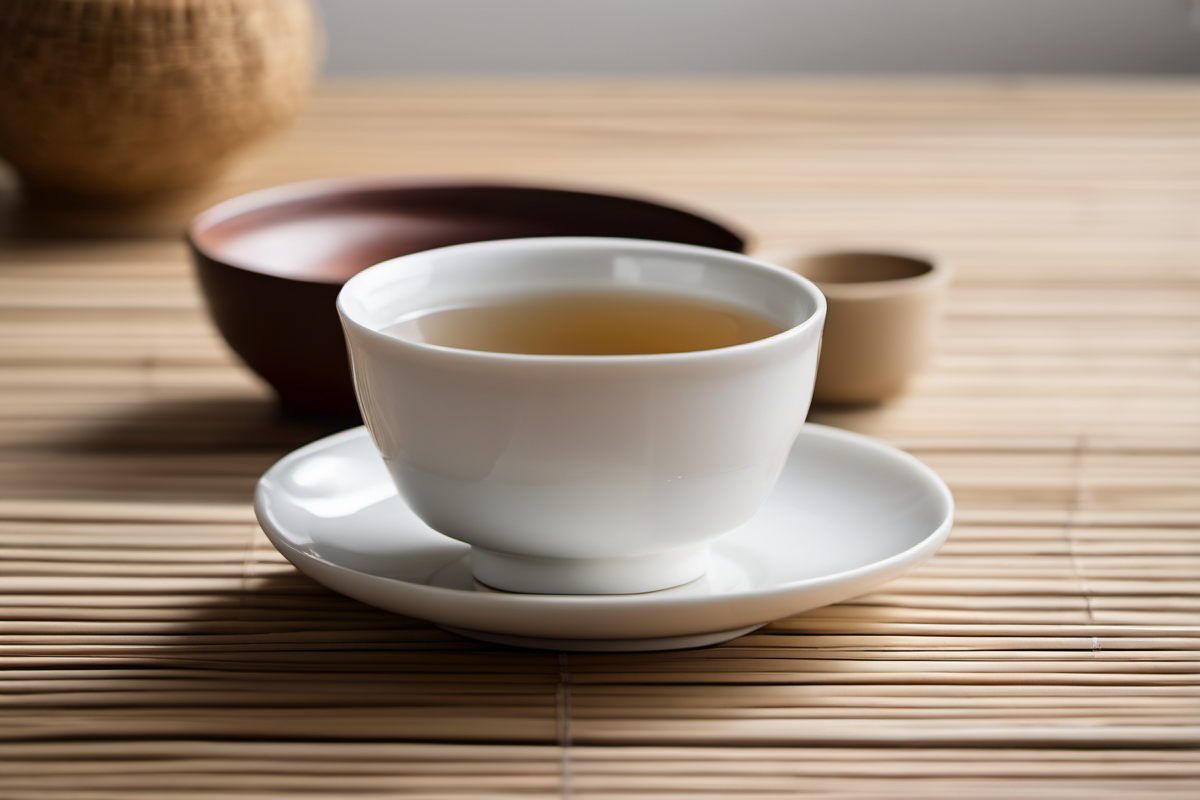
The gaiwan is the most versatile tool in Chinese tea brewing — a simple lidded bowl that can brew any type of tea. It looks intimidating to beginners, but once you learn the grip, it’s easy.
This guide teaches you how to use a gaiwan step by step — without burning your fingers.
What Is a Gaiwan?
A gaiwan (盖碗, “lidded bowl”) has three parts:
- Lid — holds in heat and aroma, and is used to hold back leaves while pouring.
- Bowl — the brewing vessel.
- Saucer — protects your hand from the hot bowl.
Gaiwans come in materials like porcelain, ceramic, and glass. For beginners, white porcelain is best — it’s affordable, doesn’t retain flavors, and lets you watch the leaves.
Why Use a Gaiwan?
- Works with every type of tea.
- Gives you full control over steep time.
- Easy to clean (unlike unglazed clay pots).
- Lets you see the leaves unfurl.
How to Use a Gaiwan (Step by Step)
1. Warm the gaiwan
Pour hot water in, then pour it out. This warms the bowl and prevents the brew temperature from dropping.
2. Add the leaves
For gongfu-style brewing, use about 1 gram per 15–20 ml (5–7 g in a 100 ml gaiwan). For everyday brewing, use less.
3. Add water and cover
Pour water at the right temperature, then set the lid on top — leaving a tiny gap is not needed yet; cover fully while steeping.
4. Steep
Steep for the right time (10–30 seconds for gongfu, longer for Western style).
5. Pour (the key skill)
This is where beginners burn themselves. The correct grip:
- Place your thumb and middle finger on opposite sides of the rim (the lip of the bowl).
- Rest your index finger on top of the lid’s knob, holding the lid in place.
- Lift and tilt the gaiwan, sliding the lid slightly to create a small gap that lets tea out but holds leaves back.
- Pour into your cup or fairness pitcher, then return the gaiwan upright.
Tips to Avoid Burning Your Fingers
- Hold the rim, not the body — the rim cools fastest.
- Don’t fill the gaiwan all the way — leave a little room below the rim.
- Pour with a smooth, confident tilt — hesitating lets heat reach your fingers.
- If it’s too hot, use a gaiwan with a flared rim or hold the saucer beneath.
Gaiwan vs. Teapot: Which Should You Use?
For most people, the gaiwan is the better first purchase — it’s cheaper, more versatile, and easier to clean. A dedicated teapot (like a Yixing clay pot) is nice to have later, once you know which tea you love.
Bottom line: the gaiwan is the one tool every Chinese tea drinker should learn — and once you master the grip, it unlocks gongfu brewing for any tea.
7 thoughts on “How to Use a Gaiwan”