Category: Tea Types (3)
Tags: jasmine tea, jasmine tea guide, how to buy jasmine tea, scented tea, jasmine pearl, jasmine silver needle, jasmine dragon phoenix, chinese jasmine tea, jasmine tea brewing, jasmine tea vs green tea, real jasmine tea, jasmine tea food pairing
If you’ve ever ordered “jasmine tea” from a supermarket and gotten something that smells like a perfume counter, you’ve never had real jasmine tea. Most jasmine tea sold outside China — including a lot of what shows up as “jasmine pearl” in tea bags and tins — is a green tea base that has been sprayed with synthetic jasmine aroma or scented once and shipped out. Real jasmine tea is something completely different: a slow, repeated process of layering fresh jasmine blossoms into finished tea over many nights, capturing the volatile oils as they release. The result is a tea where the jasmine is integrated, not applied.
This guide is what I’d send a friend who said “I tried jasmine tea once and it tasted like soap.” We’ll cover what jasmine tea actually is, how the traditional scenting process works, the four named varieties worth knowing, how to brew it well, and how to tell whether you’re getting the real thing or a perfumed fake.
The Quick Answer
Jasmine tea (茉莉花茶, Mò Lì Huā Chá) is a scented tea, not a tea class. It’s made by layering fresh jasmine blossoms (Jasminum sambac) into a finished tea base — usually green, but sometimes white or oolong — and letting the flowers scent the leaves over multiple nights. The traditional process uses seven rounds of scenting for premium grades, with fresh flowers replaced each night, and the tea is finished with no floral residue left in the leaf. The result is a tea where jasmine is part of the leaf, not dusted on top.
The four most common jasmine teas you’ll see are Jasmine Silver Needle (茉莉银针), Jasmine Dragon Pearl (茉莉龙珠), Jasmine Dragon Phoenix (茉莉龙凤), and Buddha’s Hand Jasmine (佛手茉莉). The first three are graded by base tea quality and scenting depth; the fourth uses a twisted Yunnan green tea as the base.
What Jasmine Tea Actually Is
Jasmine tea is the world’s most popular scented tea, and it has been for at least 600 years. The practice of scenting tea with flowers began in the Southern Song dynasty (around the 13th century), reached its peak during the Ming and Qing dynasties, and became one of China’s main export teas by the 1800s. Today jasmine tea accounts for a significant share of Chinese tea exports, and it’s the dominant style of green tea sold into North African and Middle Eastern markets.
But here’s the thing most people get wrong: jasmine tea is not a “class” of tea the way green or oolong is. It’s a process — scenting — applied to a base tea. The base determines most of the body and flavor; the scenting adds the floral layer. So when you buy “jasmine tea,” the most important decision isn’t jasmine or no jasmine — it’s which base the jasmine was added to.
The four common base options are:
| Base | Style | Typical scenting | Flavor profile |
|---|---|---|---|
| Green tea (most common) | Longjing, Fuyun, Yunnan twisted | 3-7 rounds | Bright, vegetal, jasmine forward |
| White tea (premium) | Silver Needle (Bai Hao Yin Zhen) | 3-5 rounds | Soft, hay-like, jasmine subtle |
| Oolong (regional) | Fuzhou / Fujian style | 4-7 rounds | Rounded, toasty, jasmine mid-palate |
| Black tea (less common) | Yunnan Dian Hong | 3-5 rounds | Malty, jasmine lighter |
If you’re new to jasmine tea, start with a green tea base — that’s what 90% of jasmine tea drinkers mean when they say “jasmine tea.” If you’ve had jasmine before and want a deeper, more layered experience, jasmine-scented white tea (especially Silver Needle) is the connoisseur’s choice.
How Jasmine Scenting Works
The traditional scenting process is what separates real jasmine tea from the fake stuff you find in most supermarkets. It is also why real jasmine tea costs more: it’s labor-intensive, time-sensitive, and dependent on a very short harvest window.
Step 1: Base Tea Production
The base tea is made first — green, white, or oolong — and aged for several months to remove any moisture and let the leaf “settle.” Scenting fresh, recently-fired tea gives poor results because the leaf is too dry and will crack when exposed to floral moisture. Most scenting operations start with base tea that’s at least 3-6 months old.
Step 2: Jasmine Harvest
Jasmine flowers (Jasminum sambac, the Arabian jasmine) are picked in the late afternoon, when the buds are still tightly closed. They are kept cool and dry through the night, and they begin to open as evening falls.
Step 3: The First Round of Scenting
In the late evening, the still-closed-to-just-opening jasmine buds are layered into the tea — typically alternating layers of tea and flower, or mixed in baskets. As the flowers open through the night, they release their volatile oils, which the tea leaves absorb. The tea and flowers sit together for 8-12 hours.
Step 4: Morning Separation
By morning, the jasmine flowers have fully opened and started to wilt. They are removed from the tea by sifting — the spent blossoms are discarded, and the tea is set out to dry slightly and rest. The flowers cannot be left in the tea; they would rot, ruin the flavor, and bring moisture levels too high.
Step 5: Repeat Scenting (Up to 7 Rounds)
For premium grades, the entire process is repeated up to seven times, with fresh jasmine flowers each night. This is what makes the difference between a $5 supermarket jasmine and a $50 premium jasmine. Each round adds another layer of integrated jasmine oil, and the cumulative effect on the leaf is profound.
A 7-round jasmine tea has been layered with fresh flowers on seven different nights. The labor, the jasmine volume, and the time involved are why such teas command premium prices.
Step 6: Final Drying and Sorting
After the last round of scenting, the tea is dried to lock in the floral character and prevent moisture damage. It’s then sorted by leaf grade, packed, and stored. Properly stored jasmine tea will keep its flavor for 12-18 months; after that, the jasmine character fades.
For a step-by-step look at the tea base side of this process, see our how Chinese green tea is processed — the green tea base used in jasmine Dragon Pearl follows a similar processing chain.
Jasmine Tea vs “Jasmine Scented Tea”
Here’s where most Western buyers get confused. There are essentially four grades of jasmine tea in the market, and only the top one is what traditional Chinese jasmine tea culture considers “real” jasmine tea.
| Grade | Process | Where it sells | Typical price (50g) | What to expect |
|---|---|---|---|---|
| Real jasmine (传统窨花) | 3-7 rounds of fresh-flower scenting, flowers removed each morning | Specialty importers, Chinese tea shops | $20 – $80 | Jasmine integrated into leaf, sweet & lingering finish |
| Reduced scenting (半窨) | 1-2 rounds of fresh flower, supplemented with jasmine aroma oil | Mid-tier Chinese markets | $8 – $20 | Noticeable jasmine, slightly thinner, may have light residual scent |
| Aroma spray (拌花) | Tea base sprayed with synthetic jasmine fragrance | Supermarkets, tea bags, most Western “jasmine” | $2 – $8 | Jasmine “loud” on nose, fades fast in cup, often smells soapy |
| Decorative jasmine | Real jasmine flowers dried and mixed with regular tea for visual appeal | Tourist markets, gift sets | $5 – $15 | Beautiful to look at, weak in jasmine character (most scent lost in drying) |
The Grade 1 “real jasmine” is what you want. Grade 2 is acceptable for everyday drinking. Grade 3 and 4 are what’s sold as “jasmine tea” in 90% of Western supermarkets — and they’re why so many people think they don’t like jasmine.
For an analogy: Grade 3 jasmine is like a spray-perfumed candle. Grade 1 jasmine is like walking through a garden at night where the jasmine has been growing for years. Both contain jasmine; only one captures the living plant.
The 4 Jasmine Teas Worth Knowing
1. Jasmine Silver Needle (茉莉银针)
Base: Silver Needle white tea (Bai Hao Yin Zhen)
Scenting: 3-5 rounds
Flavor: Soft, sweet, hay-like base with jasmine lifting gently through the finish
Price: $25 – $80 per 50g
Why it’s special: The white tea base adds a creamy, slightly sweet depth that lets the jasmine feel like an integrated part of the leaf rather than a layer on top. This is the most premium style of jasmine tea and the one connoisseurs prefer.
How to recognize it: Long, fat, fuzzy silver buds with jasmine visible as small dried flower fragments between them. Brews to a pale straw liquor with a sweet, lingering jasmine aroma. The jasmine should never shout.
2. Jasmine Dragon Pearl (茉莉龙珠)
Base: Fuyun green tea (or Yunnan twisted green), hand-rolled into tight pearls
Scenting: 3-7 rounds depending on grade
Flavor: Bright, vegetal green tea base with strong jasmine character that softens as the pearls unfurl
Price: $10 – $30 per 50g
Why it’s special: The hand-rolled pearl shape is partly aesthetic and partly functional — each pearl slowly unfurls during brewing, releasing jasmine and tea in waves. This is the most popular jasmine tea style for everyday drinking.
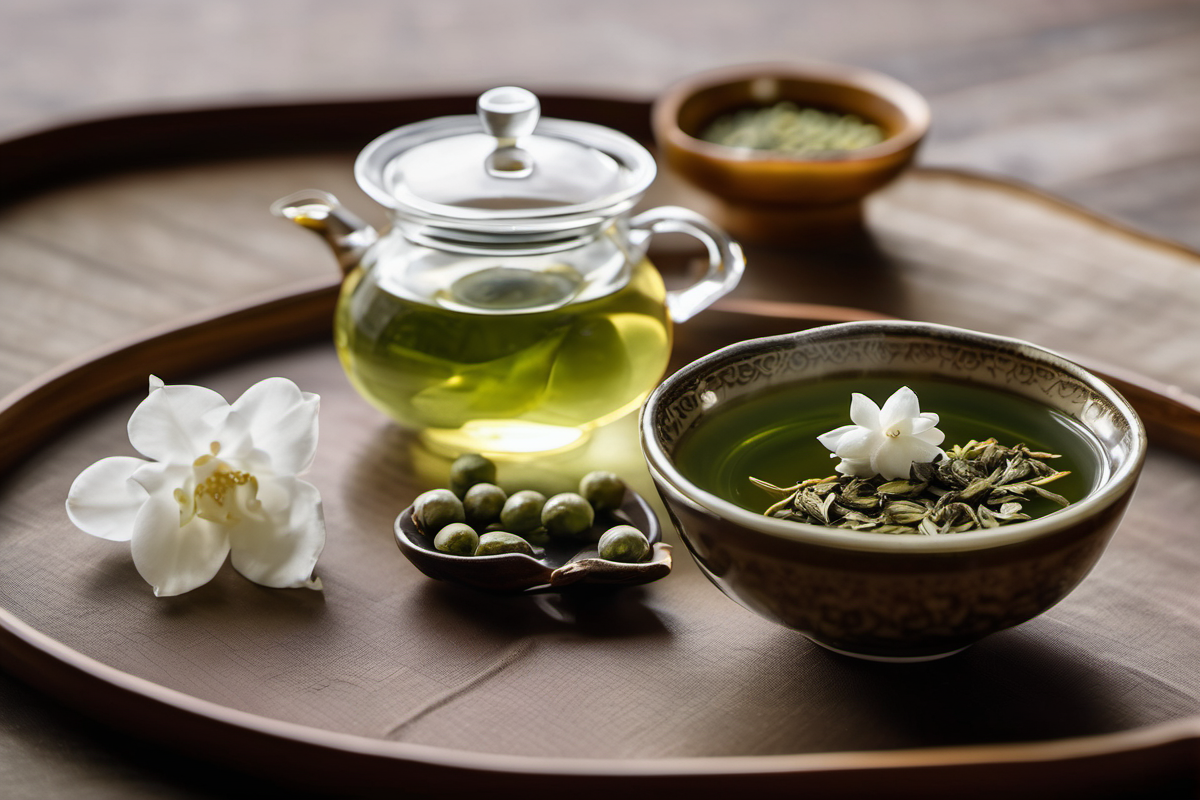
How to recognize it: Tight, hand-rolled pearls about the size of a small green pea. Should feel firm and slightly sticky (the natural tea resins). Brews to a clear yellow-green liquor with strong jasmine aroma that releases as the pearls open.
3. Jasmine Dragon Phoenix (茉莉龙凤)
Base: A blend of green and a small amount of white tea, traditionally rolled into shapes that vaguely resemble dragons and phoenixes
Scenting: 4-7 rounds
Flavor: A middle ground between Silver Needle and Dragon Pearl — slightly more body than Silver Needle, slightly softer jasmine than Dragon Pearl
Price: $15 – $40 per 50g
Why it’s special: A traditional style that was historically produced for export, with rolling patterns that vary by producer. Less common than Dragon Pearl but worth trying if you can find it.
4. Buddha’s Hand Jasmine (佛手茉莉)
Base: A Yunnan twisted green tea with a long, curled leaf shape (Buddha’s Hand refers to the fingerlike shape of the curled leaf)
Scenting: 3-5 rounds
Flavor: Slightly more astringent than Dragon Pearl, with jasmine that hits mid-palate rather than the finish
Price: $12 – $25 per 50g
Why it’s special: A regional Yunnan style that some jasmine drinkers prefer for everyday drinking because the heavier green tea base stands up better to multiple steepings.
How to Brew Jasmine Tea
Jasmine tea is more forgiving than green tea but rewards care. Here’s how to get the best out of each style.
Jasmine Silver Needle (Premium Style)
- Teaware: Glass gaiwan or porcelain gaiwan, 100-150 ml
- Water temperature: 80-85°C (176-185°F)
- Leaf amount: 4-5 g per 100 ml
- First steep: 30 seconds
- Subsequent steeps: add 10-15 seconds each time
- Total steeps: 5-7
Silver Needle is delicate — cooler water lets the white tea base sing. If you don’t have a thermometer, bring water to a boil and let it cool for 2-3 minutes.
Jasmine Dragon Pearl (Everyday Style)
- Teaware: Glass gaiwan or porcelain gaiwan, 100-150 ml
- Water temperature: 80-85°C (176-185°F)
- Leaf amount: 5-6 pearls per 100 ml (about 4 g)
- First steep: 45-60 seconds (the pearls need time to unfurl)
- Subsequent steeps: add 15-20 seconds each time
- Total steeps: 6-8, watching for when jasmine character fades
The pearls take longer to open than loose tea — don’t rush the first steep. By the third steep the jasmine will have integrated with the green tea base, and the cup will taste balanced rather than floral-forward.
Western Style
- Teaware: 500 ml ceramic or glass teapot
- Water temperature: 80°C (176°F)
- Leaf amount: 2-3 g per 500 ml (or 4-5 pearls)
- Steep time: 2-3 minutes
- Re-steep: Yes, 2-3 times, longer each time
For a deeper dive into temperature ranges across all Chinese tea classes, see our Chinese tea brewing temperature guide.
Jasmine Tea vs Green Tea
This is the comparison most beginners want. Both are made from the same plant, but jasmine tea is built on top of a green tea base, so the body is green-tea-derived while the flavor is jasmine-driven.
| Aspect | Plain Green Tea | Jasmine Green Tea |
|---|---|---|
| Plant | Camellia sinensis var. sinensis | Same |
| Processing | Fixed, rolled, dried | Same + scenting with jasmine flowers |
| Flavor profile | Grassy, vegetal, fresh | Vegetal + floral, sweet finish |
| Caffeine (per 240ml) | 25-40 mg | 25-40 mg (scenting doesn’t change caffeine) |
| When to drink | Anytime, especially morning | Afternoon / evening (jasmine is calming) |
| Price range (50g) | $3 – $30 | $10 – $80 (depending on scenting rounds) |
| Best for | Vegetal purity | Floral complexity, food pairing |
If you love green tea but want something softer and more aromatic, jasmine is the natural next step. If you find green tea too grassy, jasmine will likely suit you better — the jasmine sweetness rounds out the rough edges of plain green.
For the broader context of how jasmine fits into the six Chinese tea classes, see our types of Chinese tea guide.
Caffeine, Health, and What Jasmine Tea May (and May Not) Support
Jasmine tea’s caffeine content comes entirely from the base tea — the jasmine flowers contribute essentially no caffeine. So a jasmine green tea has roughly the same caffeine as a plain green tea of the same base quality: 25-40 mg per 240 ml cup.
For the full breakdown of caffeine across all Chinese tea classes, see our caffeine in Chinese tea guide.
What jasmine tea may support (FDA/FTC compliant language):
- Mental alertness — caffeine from the green tea base
- Relaxation and mood — jasmine aroma has been studied for mild calming effects, though the evidence is observational rather than conclusive
- Antioxidant intake — green tea contains EGCG and other catechins; scenting doesn’t reduce these
- Hydration — contributes to daily fluid intake
What jasmine tea cannot do:
- It is not a treatment for any medical condition
- Statements have not been evaluated by the FDA
- Pregnant or nursing women should consult a healthcare provider about caffeine intake
For a broader view of Chinese tea and health, see is Chinese tea good for you.
Food Pairings
Jasmine tea pairs naturally with food that you’d serve at afternoon tea, dim sum, or light dinner. Here are my top pairings:
| Food | Why it works |
|---|---|
| Dim sum (especially shrimp dumplings, har gow) | Jasmine lifts the seafood; the light body doesn’t overpower |
| Spicy Sichuan or Thai food | Jasmine sweetness cools the palate between bites |
| Fresh fruit (peaches, melon, lychee) | Echo of floral notes, light body doesn’t compete |
| Light chicken or duck dishes | Jasmine stands up to poultry without overwhelming |
| Almond cookies, shortbread | Sweet baked goods with jasmine’s lingering finish |
| Soft cheeses (brie, fresh mozzarella) | Jasmine floral vs. cream — surprisingly good |
| Salads with citrus dressing | Citrus + jasmine has a clean, refreshing interplay |
For a Chinese tea pairing perspective, jasmine is one of the standard pairings for Chinese tea ceremony etiquette and the most common tea served to guests at the end of a Chinese meal.
Jasmine Tea Storage
Jasmine tea is more delicate than plain green tea because the jasmine character fades over time. Here’s how to keep it fresh:
- Container: Airtight tin or sealed foil bag, away from light
- Temperature: Cool, ideally 5-10°C (refrigerator is fine if sealed tightly)
- Humidity: Low — jasmine tea absorbs moisture and other aromas very easily
- Avoid: Strong-smelling foods (spices, onions, garlic), direct sunlight, and heat
- Shelf life: 12-18 months from purchase, ideally within 12 months
A good test: open the tin. If the jasmine aroma is faint, the tea is past its prime. Real jasmine tea should smell like jasmine when you open the container, even months after purchase. If it doesn’t, it wasn’t real jasmine to begin with, or it was stored poorly.
For the full breakdown of how jasmine storage compares to other tea classes, see our how to store Chinese tea guide.
How to Spot Real Jasmine Tea
Practical buying advice to avoid the fakes:
- Look for scenting rounds in the product description. Reputable sellers will say “5 rounds” or “7 rounds.” If they just say “jasmine-scented” with no number, assume it’s Grade 2 or 3.
- Check the base tea origin. Real jasmine comes from Fuzhou in Fujian (for green and white bases) or Yunnan (for Buddha’s Hand). If the label doesn’t name a region, it’s likely not authentic.
- Smell the dry leaf. Real jasmine tea smells like jasmine flowers, not perfume. The scent should be layered and soft, not sharp or chemical.
- Look for jasmine residue. In Grade 1 jasmine, the jasmine flowers are removed after each round, but you may see a few small dried petal fragments in the leaf. This is normal and authentic. (Grade 4 “decorative” teas have entire dried flowers mixed in — a different thing.)
- Price check. Real 5+ round jasmine tea is $20+ per 50g. If it’s $5 for 100g, it’s almost certainly Grade 3 (sprayed with aroma).
- Buy from specialty importers. Shops like Yunomi, Crimson Lotus Tea, and Tea Drunk carry authentic Fuzhou jasmine in multiple grades.
Reputable Chinese jasmine tea vendors in North America also include Mei Leaf and Adagio for entry-level options (Adagio’s Jasmine Dragon Pearl is Grade 2-3, fine for everyday drinking but not premium).
Common Mistakes When Buying Jasmine Tea
- Buying “jasmine tea” from a supermarket tea aisle. Most of it is Grade 3 (aroma-sprayed). If you’ve only had this, you haven’t had real jasmine.
- Choosing pearls over loose tea for visual reasons only. Dragon Pearl is popular because the pearls look pretty in the tin, but the jasmine character of Silver Needle is more sophisticated. Try both before deciding.
- Storing it in the same tin as your regular green tea. Jasmine will fade, and your green tea will pick up residual jasmine. Keep them separate.
- Brewing with boiling water. Jasmine is built on green tea base — 100°C will scorch it. Stay at 80-85°C.
- Reusing spent flowers. If a “jasmine tea” has visible flowers in the leaf, you might be tempted to reuse them. Don’t — the flowers have given up their scent, and rebrewing them gives nothing.
- Assuming jasmine is just “green tea with flavoring.” Real jasmine tea is a process, not an additive. The flavor is integrated into the leaf, not sprayed on.
A 7-Day Jasmine Tea Tasting Plan
If you want to actually get jasmine tea, here’s a structured way to find what you like:
- Day 1: Try a Grade 2 jasmine Dragon Pearl — start with the most accessible. Note how the jasmine hits the nose vs. the palate.
- Day 2: Try a plain green tea of the same base (e.g., Fuyun) at the same temperature. Notice the difference.
- Day 3: Rest. Drink water.
- Day 4: Try the same Dragon Pearl gongfu style. The jasmine character shifts across steeps — first steep forward, third steep integrated.
- Day 5: Try a Grade 1 jasmine Silver Needle. Notice the softer, more layered jasmine and the white tea body.
- Day 6: Compare a Grade 1 Silver Needle side-by-side with a Grade 3 supermarket jasmine. The difference should be obvious.
- Day 7: Pick your favorite and re-buy in a larger tin or a 100g vacuum-sealed bag.
Frequently Asked Questions
Is jasmine tea the same as green tea?
No. Jasmine tea is a scented tea, usually made by layering jasmine flowers into a finished green tea (or white or oolong) base. The base tea is still green tea, but the scenting process adds a floral layer that plain green tea doesn’t have.
Is jasmine tea caffeinated?
Yes — the caffeine comes entirely from the base tea. Jasmine green tea has roughly the same caffeine as plain green tea of the same base quality, around 25-40 mg per 240 ml cup.
Why does my jasmine tea smell like perfume?
Almost certainly because it’s been sprayed with synthetic jasmine aroma oil rather than scented with real flowers over multiple nights. This is Grade 3 jasmine, the most common type sold outside China. Real jasmine tea smells like jasmine flowers, not perfume.
Can I use jasmine tea in cooking?
Yes, especially in baked goods and desserts. Jasmine shortbread, jasmine panna cotta, and jasmine rice pudding all work well. Avoid using it in savory cooking — the floral character gets lost or clashes with savory notes.
How long does jasmine tea keep?
12-18 months if stored properly (airtight, cool, away from light). Jasmine character fades faster than the base tea, so within a year is ideal. If your jasmine tea doesn’t smell like jasmine when you open the tin, it’s past its prime.
What’s the best jasmine tea for beginners?
A Grade 2 jasmine Dragon Pearl — affordable, accessible, easy to brew. Start there, then move to Silver Needle if you want a more sophisticated jasmine experience.
Is jasmine tea Chinese?
Yes. The traditional scenting process was developed in Fuzhou, Fujian Province, and remains centered there today. Most authentic jasmine tea comes from Fuzhou or Yunnan.
Is jasmine tea good for anxiety?
Jasmine aroma has been studied for mild calming effects, though the evidence is observational rather than conclusive. The combination of jasmine scent and the ritual of brewing may help with relaxation. For sleep specifically, see our best Chinese tea for sleep guide.
Final Thoughts
Jasmine tea has a quality problem, and the quality problem has given the whole category a bad reputation. Most of what gets sold as “jasmine tea” in the Western market is green tea sprayed with synthetic aroma — and most people who say they don’t like jasmine have only ever had the fake version.
Real jasmine tea, made by 3-7 rounds of fresh-flower scenting, is one of the most aromatic and satisfying drinks in the Chinese tea tradition. The jasmine is integrated, not applied. The finish is sweet and lingering, not sharp and soapy. It’s the difference between a perfume and a garden.
If you’ve never had authentic Fuzhou jasmine, this is the moment to try it. Start with a Grade 2 Dragon Pearl, brew it gongfu at 80°C, and find out what jasmine tea actually is.
For the broader context of how jasmine fits with green, white, oolong, black, and dark teas, see our types of Chinese tea guide.
FDA disclaimer: This article is for informational purposes only and does not constitute medical advice. The statements regarding jasmine tea have not been evaluated by the Food and Drug Administration. Jasmine tea is not intended to diagnose, treat, cure, or prevent any disease. Pregnant or nursing women should consult a qualified healthcare provider regarding caffeine intake.