Category: Tea Types (3)
Tags: yellow tea, chinese yellow tea, what is yellow tea, junshan yinzhen, huoshan hu
angya, mengding huangya, yellow tea guide, rare chinese tea, six classes chinese tea, yellow tea brewing, yellow tea vs green tea, yellow tea health
If you think you’ve tried every kind of Chinese tea and you haven’t had yellow tea, you’re not alone — most people haven’t. Yellow tea (黄茶, huáng chá) is the rarest of the six main classes of Chinese tea, and for a long time it stayed that way because almost nobody outside China could buy it. That’s starting to change, but it’s still the class most beginners have never even heard of.
This guide is the orientation I wish I’d had when I first tried a real Junshan Yinzhen in Changsha ten years ago. We’ll cover what yellow tea actually is, why it tastes so different from green tea, the few named varieties worth knowing, how to brew it properly, and where to start if you want to try one. If you’re working through the six classes of Chinese tea and you’re missing the yellow one, this is the article that fills the gap.
The Quick Answer
Yellow tea is a lightly oxidized, micro-fermented tea that sits between green tea and white tea on the oxidation spectrum. It’s made from the same tea plant as green tea, but with an extra step called menhuang (闷黄, “sealed yellowing”) that gives it a mellower, less grassy, more honeyed flavor. The output is a tea that drinks like a softened green tea — softer astringency, rounder body, a touch of natural sweetness — without going as far as oolong or black tea.
There are only a handful of named yellow teas still produced in commercial quantities. The four you’ll see most often are Junshan Yinzhen (君山银针), Huoshan Huangya (霍山黄芽), Mengding Huangya (蒙顶黄芽), and Weishan Maojian (沩山毛尖). All are from specific protected regions in China, all are made in tiny volumes, and all are expensive relative to green tea.
What Makes Yellow Tea Yellow?
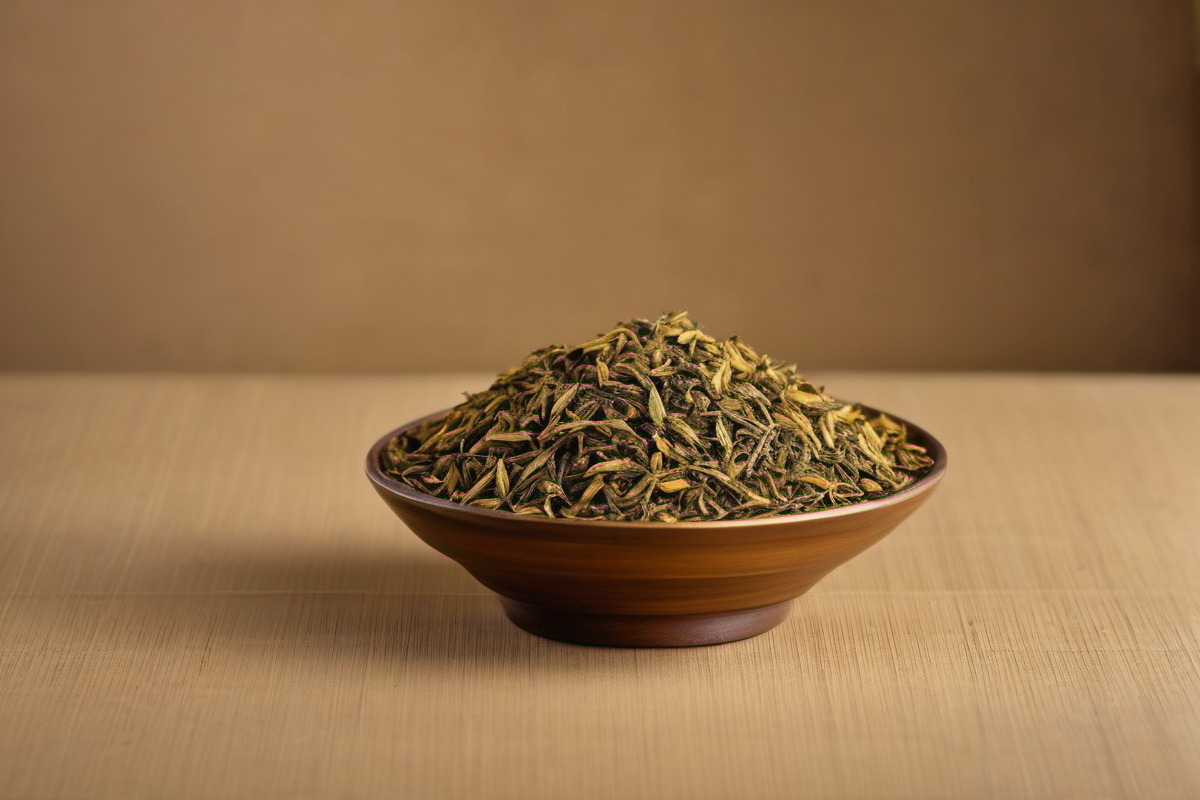
The name “yellow tea” refers to both the dry leaf color (a pale, warm yellow rather than the bright green of unoxidized green tea) and the liquor color (a clear, golden yellow). Both come from the menhuang step, which is the single most important thing to understand about this class.
The Menhuang Step
After the leaves are fixed (pan-heated to stop oxidation, just like green tea) and rolled, they are piled up while still warm and slightly damp, wrapped in cloth or paper, and held at low heat for several hours to several days. During this time, the leaves undergo slow, low-temperature enzymatic activity — not real oxidation in the way an oolong does, but enough to break down some of the chlorophyll and shift the flavor profile away from grassy toward sweet and mellow.
The result:
- The grassiness and “raw bean” notes of green tea are softened
- The astringency drops noticeably
- A natural honey-like sweetness develops in the liquor
- The brewed color shifts from pale green to a clear golden yellow
The best way to think about menhuang is that it’s a small dose of fermentation that the tea master has chosen to perform at a controlled level. Done well, it’s invisible in the process but obvious in the cup. Done badly, the leaves turn brown or develop off-flavors, and the tea becomes worthless.
Why It’s So Rare
Yellow tea has three structural problems that keep production small:
- The process is finicky. A few extra hours of wrong-temperature menhuang can ruin an entire batch. Green tea forgives mistakes; yellow tea doesn’t.
- The yield is lower than green tea. Yellow tea producers compete with green tea producers for the same leaves in the same regions, but they get less tea per kg of fresh leaf.
- The prestige price never materialized. Unlike pu-erh, oolong, or even white tea, yellow tea didn’t get a Western collector market. So the incentive to scale up production is weak.
These three forces combine to keep yellow tea in the “you have to actively look for it” category. Until that changes, it remains the rarest class — by a wide margin.
Yellow Tea vs Green Tea
This is the comparison beginners ask about most often, and it’s the right comparison. The two teas come from the same plant, the same harvest seasons, and many of the same regions. What separates them is menhuang.
| Aspect | Green Tea | Yellow Tea |
|---|---|---|
| Plant | Camellia sinensis var. sinensis | Camellia sinensis var. sinensis |
| Oxidation | < 5% (essentially none) | 5–15% (mild menhuang) |
| Key extra step | None | Menhuang (闷黄, sealed yellowing) |
| Flavor profile | Grassy, vegetal, fresh bean, sometimes nutty | Softer, honeyed, less grassy, mild sweet |
| Astringency | Medium to high | Low to medium |
| Liquor color | Pale green to yellow-green | Clear golden yellow |
| Dry leaf color | Bright green | Pale yellow to greenish-yellow |
| Price range (per 50g) | $3 – $30 | $15 – $80+ |
| Production volume | Very high | Very low |
| Storage life | 12–18 months | 12–24 months (slightly longer) |
If you love green tea but find that some of them are too grassy or too sharp for your palate, yellow tea is the natural next step. It drinks like green tea in its cleanness, but with the rough edges sanded off. If you find green tea “boring” or “bland,” yellow tea will not change your mind — it’s a quieter version of the same idea.
The Four Yellow Teas Worth Knowing
Almost all yellow tea you can buy falls into one of four named varieties. Here’s how they differ.
1. Junshan Yinzhen (君山银针)
Origin: Junshan Island, Dongting Lake, Hunan Province
Style: Single buds only (like Silver Needle, but yellow)
Flavor: Lightly sweet, delicate, slightly floral with a clean finish
Price: $40 – $120 per 50g
The reputation: Often called the champagne of yellow tea. Junshan Yinzhen is the most prestigious and the most expensive. It was historically offered as tribute tea to the imperial court and is now protected by a national geographic indication.
How to recognize it: Tight, straight, fat buds with a pale golden-yellow color. Brews to a clear, bright orange-yellow liquor. The buds should stand upright in the glass when brewed — this is a traditional sign of authentic Junshan Yinzhen, though it’s a marketing claim more than a quality claim.
Who should try it: Anyone curious about the top of the yellow tea category, and anyone who likes Silver Needle but wants something more substantial in the cup.
2. Huoshan Huangya (霍山黄芽)
Origin: Huoshan County, Anhui Province
Style: Single buds to one bud with one leaf
Flavor: Toasty, slightly chestnut-like, with a clear honey sweetness
Price: $15 – $40 per 50g
The reputation: The most accessible of the four. Huoshan Huangya is to yellow tea what Dragonwell is to green tea — good quality, widely available, and a fair introduction to the class.
How to recognize it: Straight, slightly curved buds with a pale yellow-green color and a faint chestnut aroma even in the dry leaf. Brews to a clear golden-yellow liquor with a soft, lingering sweet finish.
Who should try it: First-time yellow tea drinkers. This is the one I’d recommend if you want to try yellow tea without committing to a $60 tin.
3. Mengding Huangya (蒙顶黄芽)
Origin: Meng Mountain (蒙山), Sichuan Province
Style: Single buds to one bud with one leaf
Flavor: Soft, vegetal-sweet with a long, clean aftertaste
Price: $20 – $50 per 50g
The reputation: Mengding is one of the historical heartlands of Chinese tea culture — some historians believe commercial tea cultivation began here. The yellow tea made from this mountain has a longer recorded history than any other named yellow tea.
How to recognize it: Tight, fat buds with a yellow-green color. The brewed liquor is paler than Junshan but with a distinctive vegetal sweetness that’s different from Anhui-style yellow teas.
Who should try it: Anyone interested in Chinese tea history, or anyone who prefers Sichuan-style flavors (Sichuan greens tend to be slightly more vegetal and less toasty than their Anhui cousins).
4. Weishan Maojian (沩山毛尖)
Origin: Weishan, Hunan Province
Style: One bud with one to two leaves
Flavor: Mild, slightly smoky, full-bodied
Price: $15 – $35 per 50g
The reputation: The everyday-drinking yellow tea. Less prestigious than Junshan, but with a distinct personality.
How to recognize it: Curved, slightly fuzzy leaves with a pale yellow-green color. Brews to a slightly darker liquor than the other three. The flavor is fuller-bodied and more grounded.
Who should try it: Anyone who likes fuller-bodied green teas (like Bi Luo Chun) and wants to try a yellow tea with more body.
How Yellow Tea Is Made
The yellow tea process is identical to green tea with one extra step. Here’s the full sequence.
Step 1: Plucking
Yellow teas use young buds or buds-with-leaves, plucked in early spring (typically late March to early April). Plucking standards vary by tea:
- Junshan Yinzhen: Single buds only
- Huoshan Huangya: Single buds, or one bud with one partly-opened leaf
- Mengding Huangya: One bud with one leaf
- Weishan Maojian: One bud with one or two leaves
Step 2: Spreading (摊青)
Fresh leaves are spread out on bamboo mats in a cool, ventilated room for 2–6 hours. This allows the leaves to wilt slightly and lose some surface moisture, which makes them more pliable for the next steps.
Step 3: Fixing (杀青)
The leaves are pan-heated (or sometimes wok-heated) to stop enzymatic oxidation. This is the same kill-green step used in green tea production, and the goal is the same: lock in the green-tea-like base.
Step 4: Rolling (揉捻)
The leaves are lightly rolled to shape them and to break the cell walls slightly. Yellow teas are rolled more gently than green teas — over-rolling bruises the leaves and interferes with the menhuang step that follows.
Step 5: Menhuang (闷黄) — The Defining Step
The rolled leaves are piled into a heap, wrapped in damp cloth or paper, and held at 30–45°C for 4–24 hours (sometimes longer). During this time, low-temperature, low-moisture enzymatic activity transforms the leaf:
- Chlorophyll breaks down → leaves turn yellow
- Some amino acids convert to sugars → natural sweetness emerges
- Tannins polymerize slightly → astringency drops
The tea master must check the heap regularly. Too much menhuang makes the tea brown and over-fermented; too little leaves it tasting like an unremarkable green tea.
Step 6: Final Drying (干燥)
After menhuang, the leaves are slowly dried to lock in the yellow character. The final drying is typically a low-temperature oven dry or charcoal roast.
The full process, start to finish, takes 3–7 days depending on the variety and the producer.
How to Brew Yellow Tea
Yellow tea is brewed much like green tea, but slightly warmer and slightly longer. Here’s the method I’d recommend.
Gongfu Style
- Teaware: Glass gaiwan or porcelain gaiwan, 100–150 ml
- Water temperature: 80–85°C (176–185°F) — slightly cooler than for green tea, because yellow tea’s lower astringency lets you push the temperature up
- Leaf amount: 4–5 g per 100 ml
- First steep: 20–30 seconds
- Subsequent steeps: add 10–15 seconds each time
- Total steeps: 5–8, depending on quality
Western Style
- Teaware: 250–500 ml ceramic or glass teapot
- Water temperature: 80–85°C (176–185°F)
- Leaf amount: 2–3 g per 250 ml
- Steep time: 2–3 minutes
- Re-steep: Yes, 2–3 times
If you don’t have a variable-temperature kettle, bring water to a boil and let it sit for 2–3 minutes before pouring. This brings it to roughly 85°C, which is the right zone for most yellow teas.
For the full western method with timing charts for all six tea classes, see our Chinese tea brewing temperature guide.
Health, Caffeine, and What Yellow Tea May (and May Not) Support
Yellow tea’s health profile is similar to green tea’s, with the same flavonoids (catechins, theaflavins) and the same caffeine range. The slower processing does not remove any of the active compounds, and in some studies the menhuang step appears to slightly increase the bioavailability of certain polyphenols.
What yellow tea may support (FDA/FTC compliant language):
- Antioxidant intake — yellow tea contains EGCG and other catechins, though in slightly lower concentrations than green tea
- Cardiovascular health markers — observational evidence suggests regular tea drinkers have better lipid profiles
- Mental alertness — caffeine content (typically 25–40 mg per 240 ml cup) supports alertness
- Hydration — like all true teas, contributes to daily fluid intake
What yellow tea cannot do:
- It cannot cure, treat, or prevent any disease
- It is not a substitute for medical advice from a qualified provider
- Pregnant or nursing women should consult a doctor about caffeine intake
For a deeper dive into the caffeine levels across all six Chinese tea classes, see our caffeine in Chinese tea guide. For general wellness angles, see is Chinese tea good for you.
Yellow Tea Storage
Treat yellow tea like green tea in storage:
- Container: Airtight tin or sealed foil bag, away from light
- Temperature: Cool, ideally 5–10°C (refrigerator is fine if sealed tightly)
- Humidity: Low — yellow tea absorbs moisture easily
- Avoid: Strong-smelling foods (tea is porous), direct sunlight, and heat
- Shelf life: 12–24 months from purchase
For the full breakdown including pu-erh and white tea exceptions, see our how to store Chinese tea guide.
Where to Buy Yellow Tea
This is the practical bottleneck. Yellow tea is harder to find than green, white, oolong, or black. Three reliable paths:
- Specialty online retailers — shops like Yunomi and Crimson Lotus Tea carry Junshan Yinzhen and Huoshan Huangya in small quantities. Expect $30–$80 per 50g for authentic named varieties.
- Chinese e-commerce apps — Taobao and JD.com sell authentic yellow tea, but the language and logistics barrier is real. If you have a forwarding service or a Chinese-speaking contact, this is the cheapest path.
- Tea-focused travel — if you find yourself in Hunan (Changsha/Yueyang) or Anhui (Huoshan), visit the producers directly. Junshan Yinzhen bought on Junshan Island is dramatically cheaper than the same tea shipped abroad.
A practical warning: yellow tea is rare enough that fakes exist, especially of Junshan Yinzhen. Reputable sellers will name the producer, the village, and the harvest date. Avoid sellers who use phrases like “imperial tribute style” without naming a specific geographic source.
Yellow Tea in the Six Classes — Where It Fits
If you’re building a mental map of Chinese tea, here’s where yellow tea sits in the six classes:
| Class | Oxidation | Example tea |
|---|---|---|
| Green | < 5% | Longjing |
| Yellow | 5–15% | Junshan Yinzhen |
| White | 5–15% (different process) | Silver Needle |
| Oolong | 15–80% | Tieguanyin |
| Black (red) | 80–100% | Keemun |
| Dark (post-fermented) | microbial fermentation | Pu-erh |
Yellow and white tea share a similar oxidation range, but the process is different: yellow tea uses kill-green + menhuang, white tea uses withering + natural drying without kill-green. The flavor outcomes are also very different — yellow tea keeps more of the green-tea body, white tea develops a more hay-like, subtle character.
Common Mistakes When Trying Yellow Tea
A few pitfalls to avoid:
- Brewing with boiling water. Yellow tea is more delicate than oolong or pu-erh. 100°C water will scorch the leaves and bring out bitterness. Stick to 80–85°C.
- Expecting it to taste “yellow.” Yellow tea doesn’t have a distinctive yellow flavor — it tastes like a softened green tea. If you’re expecting something like chamomile or honey-rooibos, recalibrate.
- Buying a generic “yellow tea” blend. Many entry-level “yellow tea” products are actually flavored green tea or low-grade blends. Look for a named regional variety and a named producer.
- Storing it next to strong-smelling foods. Yellow tea is even more porous than green tea. Keep it sealed.
- Comparing it to oolong. Yellow tea is closer to green tea than to oolong. If you want an oolong experience, drink Tieguanyin instead.
A 7-Day Yellow Tea Tasting Plan
If you want to actually get yellow tea, here’s how I’d approach it:
- Day 1: Try a Huoshan Huangya — start with the most accessible. Notice how much softer it is than a green tea.
- Day 2: Try a Longjing or Bi Luo Chun at the same temperature. Notice the difference.
- Day 3: Rest. Drink water. Let your palate reset.
- Day 4: Try the same Huoshan Huangya gongfu style, with a porcelain gaiwan. The fragrance will come through differently.
- Day 5: Try a Junshan Yinzhen if you can find/afford one. Notice the body difference vs. Huoshan.
- Day 6: Compare a Junshan Yinzhen side by side with a Silver Needle. Same bud shape, different processing.
- Day 7: Pick your favorite and re-buy a larger tin.
Frequently Asked Questions
Is yellow tea the same as white tea?
No. Yellow tea and white tea share a similar oxidation percentage, but the processes are different. Yellow tea uses kill-green + menhuang; white tea uses withering + drying without kill-green. The flavor profiles are also different — yellow tea drinks like a softened green tea, while white tea drinks like hay, honey, or melon.
Is yellow tea expensive?
Compared to green tea, yes. Compared to high-end pu-erh or aged oolong, no. Expect $15–$80 per 50g depending on the named variety. Junshan Yinzhen is the most expensive; Huoshan Huangya is the most affordable.
Does yellow tea have caffeine?
Yes. Like all true teas from Camellia sinensis, yellow tea contains caffeine. A typical 240 ml cup has 25–40 mg, depending on the leaf quality, water temperature, and steep time. For the full breakdown, see our caffeine in Chinese tea guide.
Can I use yellow tea in cooking?
Yes, but it’s wasted. Yellow tea’s flavor is too subtle to survive in food. If you want to cook with tea, use a stronger black tea or pu-erh instead.
Is yellow tea good for beginners?
Yes — possibly the best class for beginners who find green tea too sharp. Yellow tea is forgiving, mellow, and easy to drink.
Why is yellow tea so rare?
Three reasons: (1) the menhuang step is finicky and ruins batches easily, (2) yields are lower than green tea for the same fresh leaf, and (3) yellow tea never developed a Western collector market that would have justified scaling up production.
Where Yellow Tea Goes From Here
Yellow tea is having a quiet moment in 2026. A few specialty importers have started carrying named-variety yellow teas in small lots, and a handful of Western tea drinkers are rediscovering it after the white-tea wave of the early 2020s. Production is unlikely to scale dramatically — the process is too finicky and the price point is too narrow — but availability is slowly improving.
If you want to be ahead of the curve on the rarest of the six Chinese tea classes, this is the moment. Pick up a Huoshan Huangya, brew it gongfu at 80°C, and find out what you’ve been missing.
For the broader context of how yellow tea fits with green, white, oolong, black, and dark teas, see our complete types of Chinese tea guide.
FDA disclaimer: This article is for informational purposes only and does not constitute medical advice. The statements regarding yellow tea have not been evaluated by the Food and Drug Administration. Yellow tea is not intended to diagnose, treat, cure, or prevent any disease. Pregnant or nursing women should consult a qualified healthcare provider regarding caffeine intake.