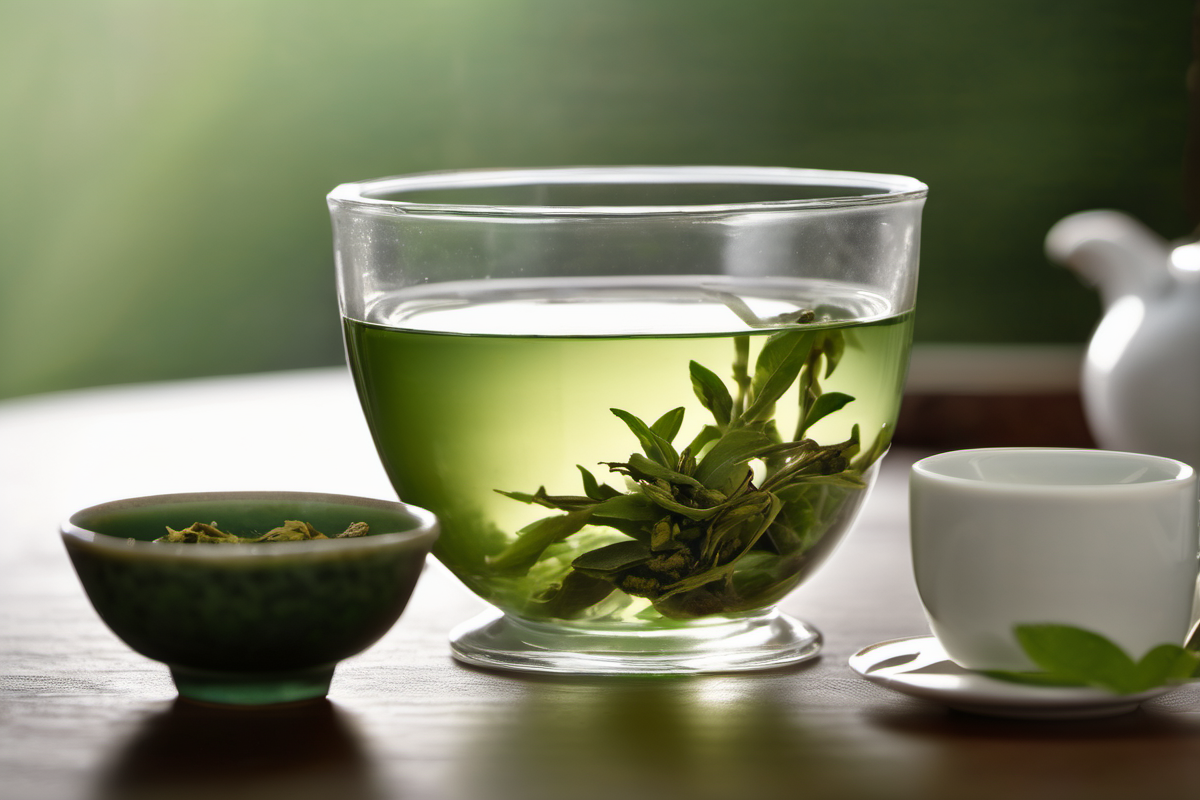
Bi Luo Chun(碧螺春,”Green Spiral” or “Snail Spring”)is one of China’s most famous green teas, alongside Longjing. It’s also one of the most delicate — delicate in leaf, in flavor, and in how you brew it. Get the water temperature wrong and the cup turns bitter in seconds.
This guide walks you through exactly how to brew Bi Luo Chun at home, the right water temperature and leaf ratio, both glass-cup and gongfu methods, and the small mistakes that turn a $30 tea into a sour disappointment.
If you’re new to Chinese green tea, start with our complete brewing guide and our Longjing brewing guide — Bi Luo Chun shares most of the principles, but has its own quirks worth knowing.
The 30-Second Answer
- Water temperature: 75–80°C / 167–176°F(do NOT use boiling)
- Glass-cup ratio: 3 g per 250 ml
- Glass-cup steep time: 1.5–2 minutes for the first infusion
- Gongfu ratio: 4–5 g per 100 ml gaiwan
- Gongfu steep time: 15–20 seconds first infusion; add 5 seconds each round
- Vessel: Tall glass cup(traditional)or porcelain gaiwan
- Re-steeps: 4–6 in glass cup; 6–8 in gongfu
- Telltale warning: If the cup is bitter, the water was too hot. Drop 10°C and try again.
Now let’s go deeper.
What Is Bi Luo Chun?
Bi Luo Chun is a premium Chinese green tea from the Dongting Mountains(洞庭山)around Taihu Lake(太湖)in Suzhou, Jiangsu Province, eastern China. It’s one of the “China Famous Teas”(中国十大名茶)and has been cultivated for over 1,000 years $TRAE_REF.
The name translates several ways depending on which legend you follow:
- “Green Spiral”(碧螺春) — the modern, literal meaning
- “Snail Spring” — based on a folk tale about the tea protecting itself from snails with a spring-like aroma
- “Frightened Buddha”(吓杀人 / 佛动心)— old historical name from the Qing Dynasty
What makes Bi Luo Chun recognizable in the cup:
- Tiny, fuzzy, spiral-shaped buds — each one is a single young leaf curled into a tight spiral covered in white down (pekoe)
- Pale yellow-green liquor — almost clear, never dark
- Intensely floral and fruity — orchard fruit, magnolia, fresh hay
- Long, sweet finish — huigan (returning sweetness) develops across infusions
Compared to Longjing’s flat, roasted, pan-fired character, Bi Luo Chun is lighter, more aromatic, and more delicate. It rewards a softer brewing touch.
The Famous “Fruit Tree Interplanting” Tradition
In the Dongting growing region, tea bushes are traditionally interplanted with loquat, plum, and apricot trees — so the tea absorbs floral and fruit aromatics from neighboring trees during growth. This is partly why real Bi Luo Chun has its distinctive layered fruit-floral aroma $TRAE_REF.
Harvest and Grades
Like Longjing, Bi Luo Chun has tiered grades based on when and how the buds are picked:
| Grade | Harvest | Notes |
|---|---|---|
| Pre-Qingming(明前, before April 5) | Earliest spring buds; tiny and tender | Most expensive; sweet, delicate |
| Yu Qian(雨前, before April 20) | Second flush | Best value for everyday drinking |
| Yu Hou(雨后, after April 20) | Later flush | Larger leaves; less aromatic; cheaper |
For everyday brewing, Yu Qian is the sweet spot — gives you real Bi Luo Chun character at a reasonable price. Pre-Qingming is impressive but the difference is subtle to a new palate.
What You Need
| Item | Why it matters | Budget option |
|---|---|---|
| Tall glass cup (250 ml) | Traditional vessel; shows off leaves | Any clear glass mug |
| Variable-temp kettle | Bi Luo Chun needs 75–80°C, not boiling | Boil, then wait 2 min |
| Scale (0.1 g precision) | Tender leaves need precise measurement | Any kitchen scale |
| Filtered or spring water | Hard/chlorinated water mutes floral notes | Brita pitcher |
| Porcelain gaiwan (100 ml) | For gongfu brewing | Optional but ideal |
You don’t need fancy equipment. A glass mug and a kettle work fine.
Step-by-Step: Glass Cup Method (Traditional)
This is the most common way Chinese people drink Bi Luo Chun at home — and the easiest way for beginners.
Step 1: Warm the Glass
Pour a small amount of hot water into the glass, swirl, discard. This prevents the cold glass from cooling the water below brewing temperature when you add it.
Step 2: Add the Leaves
Use 3 g of leaf per 250 ml glass. That’s roughly 1 heaped teaspoon of dry leaves.
Bi Luo Chun leaves are very light and feathery — 3 g looks like almost nothing in the bottom of the glass. Don’t worry; that’s correct.
Step 3: Add 75–80°C Water
This is the most critical step. Water must be 75–80°C / 167–176°F $TRAE_REF. Hotter water scorches the tender leaves and turns the cup bitter.
If your kettle only boils:
– Boil fully
– Wait about 2 minutes before pouring
– Test by feel — it should feel quite warm but not scalding when you touch the outside of the kettle
– Or use a thermometer the first few times until you calibrate your eye
Step 4. Watch the Leaves Dance
Pour the water slowly down the side of the glass (not directly on the leaves). The tiny spiral buds will:
1. Slowly sink to the bottom
2. Then, as they absorb water, rise back up and unfurl with the white pekoe creating a “downy fur” effect
3. Tiny air bubbles cling to the leaf hairs, making the leaves appear to “shimmer”
This is part of the visual pleasure of Bi Luo Chun. Take 30 seconds to watch.
Step 5: Steep 1.5–2 Minutes
1.5–2 minutes for the first infusion. Longer steeps produce bitterness.
Common mistake: walking away for 5 minutes. With tender greens like Bi Luo Chun, even 30 extra seconds can ruin the cup.
Step 6: Drink
You can sip directly from the glass — the leaves will mostly have settled. Don’t worry about small bits; many Bi Luo Chun drinkers actually chew the spent leaves for the lingering sweetness.
Step 7. Re-steep 4–6 Times
Bi Luo Chun gives 4–6 good infusions in glass cup. The second and third are often the sweetest. Add 30 seconds per round.
Step-by-Step: Gongfu Method
If you want more depth from each infusion, gongfu works beautifully with Bi Luo Chun.
Step 1: Warm the Gaiwan
Pour hot water into your 100 ml gaiwan, swirl, discard.
Step 2: Add the Leaves
Use 4–5 g per 100 ml of leaf. That’s a higher ratio than glass-cup brewing — it makes the infusion concentrated so the short steeps extract enough flavor.
Step 3: First Steep
Pour 75–80°C water, cover, steep 15–20 seconds. Pour completely into cups.
Step 4: Subsequent Steeps
Add 5 seconds per round:
| Steep | Time | What you should taste |
|---|---|---|
| 1 | 15–20 sec | Light, fresh, intensely floral |
| 2 | 20–25 sec | Sweeter, fuller body |
| 3 | 25–30 sec | Huigan (returning sweetness) develops |
| 4 | 30–35 sec | Fruit notes emerge (orchard, plum) |
| 5 | 35–40 sec | Smooth, mellow, long finish |
| 6–8 | 40–60 sec | Final rounds — clean, sweet |
Quality Bi Luo Chun gives 6–8 gongfu infusions $TRAE_REF.
Why the Water Temperature Matters So Much
Bi Luo Chun is unoxidized, which means its flavor compounds (catechins, amino acids like theanine, volatile aromatics) are present in their raw form. When you pour boiling water (100°C) onto raw leaves:
- Catechins oxidize instantly → astringency
- Volatile aromatics flash off → flavor loss
- Theanine breaks down → sweetness loss
- Result: bitter, thin, dull cup
This is why green tea is the most sensitive to temperature of all six Chinese tea categories. Longjing, Bi Luo Chun, and Japanese sencha all need cooler water than oolong or black tea.
The 75–80°C range works because:
- Below 70°C: not enough extraction, thin and grassy
- 75–80°C: extracts aromatics and sweetness without bitterness — the sweet spot
- 85–90°C: more body, but starts to extract harsh tannins
- 95–100°C (boiling): ruins the tea — sharp, bitter, dull
Bi Luo Chun vs Longjing: How They Differ
Both are China’s top green teas, but they brew slightly differently:
| Parameter | Bi Luo Chun | Longjing |
|---|---|---|
| Water temperature | 75–80°C | 75–85°C (slightly more tolerant) |
| Glass-cup ratio | 3 g per 250 ml | 3 g per 250 ml |
| Gongfu ratio | 4–5 g per 100 ml | 3–4 g per 100 ml |
| First steep | 1.5–2 min (glass) / 15–20 sec (gongfu) | 1–2 min / 10–15 sec |
| Re-steeps | 4–6 (glass) / 6–8 (gongfu) | 2–3 (glass) / 7–10 (gongfu) |
| Flavor profile | Floral, fruity, light | Nutty, chestnut, slightly toasted |
| Vessel preference | Tall glass (visual) | Glass cup (simple) or porcelain |
If you already drink Longjing and love it, Bi Luo Chun is the natural next step — slightly more aromatic, slightly less roasted, slightly more delicate. The two together give you a complete green tea education.
Common Mistakes
Boiling Water
The #1 Bi Luo Chun killer. If your cup is bitter and you used 100°C water, the tea isn’t bad — your temperature is wrong. Drop to 75°C and try again.
Too Much Leaf
The leaves are so light and feathery that beginners often under-dose. But 3 g in a 250 ml glass is correct — and even that looks like “almost nothing.” If you go higher (4+ g), the cup will be intense, almost certainly bitter.
Steeping Too Long
Bi Luo Chun doesn’t have the body to support long steeps. 2 minutes is the practical max for glass-cup brewing. Set a timer.
Stale or Improperly Stored Leaves
Bi Luo Chun is more fragile than roasted teas. If it was sitting on a warehouse shelf for 12+ months, or stored next to spices, or in a clear glass jar in sunlight, the aromatics will already be gone by the time you brew it.
For storage, see our Chinese tea storage guide. TL;DR: airtight, dark, cold for green tea.
Brewing With Hard Water
Hard water (high mineral content) reacts with tea polyphenols to produce a film on top of the cup and dull flavor. If your tap water is hard (test with soap — if it doesn’t lather well, it’s hard), use filtered or spring water.
How to Tell Good Bi Luo Chun from Bad
When you open the package:
- Dry leaf should be tiny, fuzzy spirals covered in white pekoe — not brown, not yellow
- Aroma should hit you immediately — floral, fresh hay, ripe fruit. If it smells flat or papery, the tea is past prime
- Wet leaf should be whole and intact — not broken, not powdery. Damaged leaves release astringency
- Liquor should be pale yellow-green to almost clear — never dark, never yellow-brown
Real Dongting Bi Luo Chun from Jiangsu has a distinct “orchard fruit” character that cheaper imitations from other regions lack.
Storage
Bi Luo Chun is the most fragile of the major Chinese teas. To keep it fresh:
- Airtight container immediately after each use
- Cold storage — refrigerate for longer than 2 weeks
- Bring to room temperature before opening — opening cold tea in warm air causes condensation
- Use within 12 months of harvest for peak quality
For full storage principles, see our complete storage guide.
Common Questions
How Long Should You Steep Bi Luo Chun?
1.5–2 minutes in a glass cup (240–250 ml with 3 g leaf). 15–20 seconds in gongfu (100 ml with 4–5 g leaf). Set a timer your first few times — over-steeping is the easiest mistake.
Is Bi Luo Chun the Same as Longjing?
No. Both are famous Chinese green teas, but they’re different cultivars from different regions with different flavor profiles:
- Bi Luo Chun — Jiangsu (Suzhou), tiny spiral buds, intense floral/fruity
- Longjing — Zhejiang (Hangzhou), flat sword-shaped leaves, nutty/roasted/chestnut
They’re like cousins, not twins.
Can I Re-Steep Bi Luo Chun?
Yes — 4–6 times in glass cup, 6–8 times in gongfu. Each round tastes slightly different, and the cup usually gets sweeter as you go (the huigan effect).
What’s the Best Water for Bi Luo Chun?
Filtered or spring water is best. Avoid hard tap water (high mineral content) and avoid distilled water (flat taste). Most grocery store spring water works well.
Why Are Some Bi Luo Chun So Expensive?
Pre-Qingming (明前) Bi Luo Chun — picked before April 5 — has tiny tender buds with concentrated flavor. The picking is hand-done one bud at a time, and yield per bush is tiny. Premium Dongting Bi Luo Chun from early harvest can run $80–$300 for 50g. Mid-range Yu Qian (雨前) Bi Luo Chun at $20–40 for 50g gives you most of the character at a fraction of the cost.
Can I Drink Bi Luo Chun in the Evening?
Yes — Bi Luo Chun is moderate in caffeine (about 25–35 mg per cup, similar to Longjing). Fine for morning through early afternoon. Sensitive to caffeine? Drink before 4 pm or switch to white tea after that.
Is Bi Luo Chun the Same as “Snail Spring”?
Yes. “Snail Spring” is one of the most common English translations of 碧螺春. “Green Spiral” is another. “Bi Luo Chun” is the pinyin romanization, used widely in both Chinese and English contexts.
How Do I Store Opened Bi Luo Chun?
Once opened, Bi Luo Chun oxidizes quickly. Keep in an airtight opaque container, refrigerated. Bring to room temperature before opening (to avoid condensation on the cold leaves). Use within 2–3 months of opening for peak flavor.
Why Does My Bi Luo Chun Have a Fishy Smell?
A slight fishy or oceanic note in the first infusion of Bi Luo Chun can be a sign of:
- Imperfect processing (light under-fixation leaves residual enzymatic activity)
- Improper storage that introduced moisture
- Lower-grade leaf
Premium Bi Luo Chun shouldn’t smell fishy. A faint “marine” or “ocean” note in the second infusion is more about terroir and less about defect. If the fishiness is strong or smells “off,” return the tea.
Can I Use a Gaiwan Instead of a Glass Cup?
Yes, and for gongfu-style brewing it’s actually preferred. The porcelain is neutral and lets you taste the tea cleanly. The glass cup is the traditional serving style because Bi Luo Chun’s tiny leaves look beautiful floating — but functionally, a gaiwan works just as well.
For full gaiwan buying advice, see our first gaiwan guide.
Further Reading
- How to Brew Longjing — the sister Chinese green tea, brewed slightly differently
- How to Brew Chinese Tea (Complete Guide) — the foundational method for all six categories
- Chinese Tea Brewing Temperature Guide — a complete reference
- How to Choose Your First Gaiwan — choosing teaware
- How to Store Chinese Tea — keeping your tea fresh
- How Much Caffeine Is in Chinese Tea? — Bi Luo Chun is moderate-caffeine
- Types of Chinese Tea: Complete Guide — where Bi Luo Chun fits in the category landscape
- Best Chinese Tea for Beginners — if you’re building your tea journey
2 thoughts on “How to Brew Bi Luo Chun (Green Spiral): The Gentle Method”