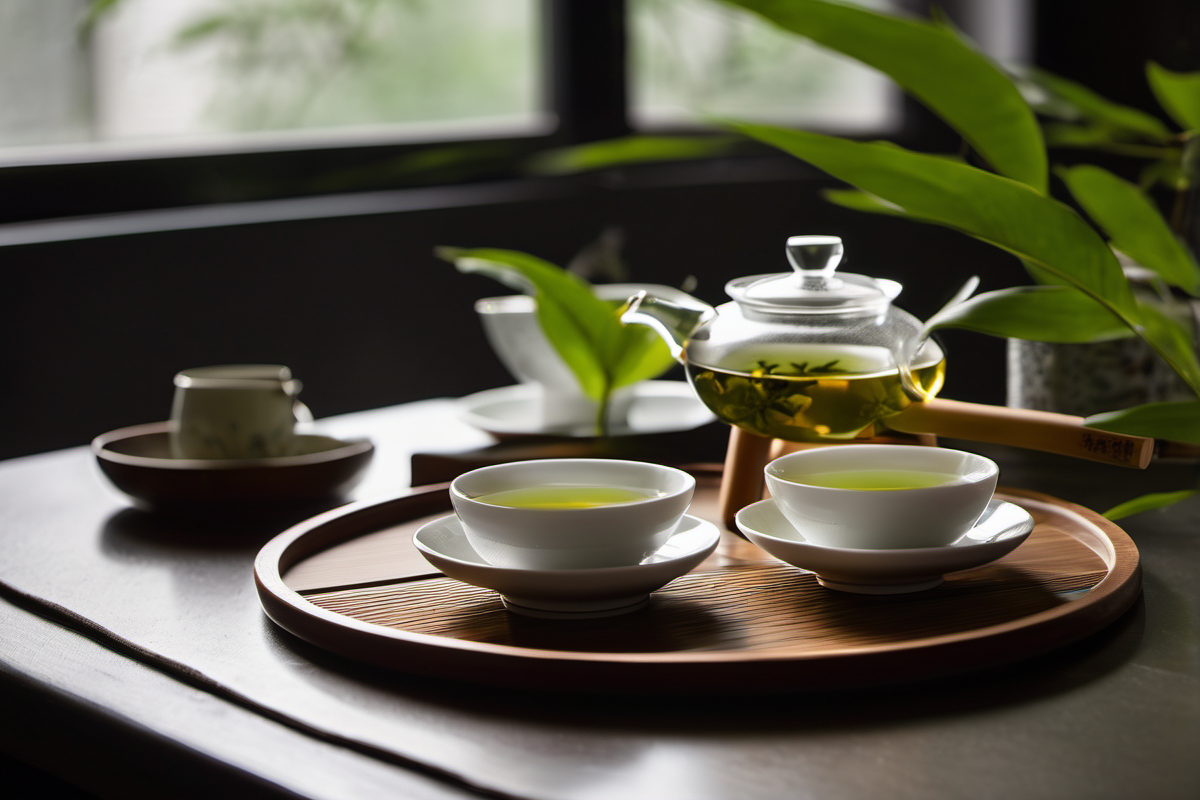
Brewing Chinese tea properly is a skill — the word gongfu literally means “skill” or “effort.” But the basics are simple once you understand the three things that matter: leaf-to-water ratio, water temperature, and steep time.
This guide covers everything you need to brew Chinese tea, from choosing the right temperature to the difference between gongfu and Western brewing.
The 6 Types of Chinese Tea
All Chinese tea comes from the same plant (Camellia sinensis) — the type is determined by how the leaves are processed:
| Type | Processing | Flavor profile |
|---|---|---|
| Green tea | Unoxidized | Fresh, grassy, vegetal |
| White tea | Minimally processed | Delicate, subtle, sweet |
| Yellow tea | Slightly oxidized | Mellow, smooth |
| Oolong tea | Partially oxidized | Floral to roasted, complex |
| Black tea (red tea) | Fully oxidized | Bold, malty, sweet |
| Dark tea (pu-erh) | Fermented | Earthy, deep, aged |
Water Temperature by Tea Type
Temperature is the #1 thing beginners get wrong. Too-hot water scalds delicate leaves and makes tea bitter.
| Tea type | Temperature |
|---|---|
| Green tea | 160–180°F (70–82°C) |
| White tea | 175–185°F (80–85°C) |
| Yellow tea | 175–185°F (80–85°C) |
| Oolong tea | 185–205°F (85–96°C) |
| Black (red) tea | 200–212°F (93–100°C) |
| Pu-erh / dark tea | 200–212°F (95–100°C) |
No thermometer? A rough guide: boil water, then let it rest. Water that has stopped bubbling for ~2–3 minutes is roughly 175–185°F; ~1 minute rest gives ~190–200°F.
Two Brewing Styles: Gongfu vs. Western
| Gongfu style | Western style | |
|---|---|---|
| Leaf ratio | High (about 1 g per 15–20 ml) | Low (about 1 tsp per 8 oz) |
| Water volume | Small vessel (gaiwan or small pot) | Large mug or pot |
| Steep time | Short (10–30 seconds) | Long (2–5 minutes) |
| Infusions | Many (5–10+) | 1–3 |
| Best for | Oolong, pu-erh, quality whole leaf | Everyday brewing, convenience |
How to Brew Chinese Tea (Gongfu Method)
- Warm the teaware: pour hot water into the gaiwan and cups, then discard. This warms the vessel and wakes the leaves.
- Add leaves: use a generous amount — about 1 gram of leaf per 15–20 ml of water (for a 100 ml gaiwan, use 5–7 g).
- Rinse (optional): pour hot water over the leaves and immediately pour it off. This “wakes” the leaves — especially important for pu-erh and rolled oolongs.
- First steep: pour water at the right temperature, cover, and steep 10–30 seconds.
- Pour completely: pour every drop out into a cup or fairness pitcher — don’t let it keep steeping.
- Repeat: add 5–10 seconds to each subsequent infusion. Quality tea can be steeped many times.
Common Brewing Mistakes
- Water too hot for green tea — causes bitterness.
- Too little leaf — weak, thin flavor.
- Steeping too long — bitterness and astringency.
- Leaving water in the pot between steeps — always pour it all out.
- Using tap water with strong chlorine — use filtered or spring water.
Bottom line: start with good whole-leaf tea, match the temperature to the type, and steep short — you’ll taste the difference immediately.
9 thoughts on “How to Brew Chinese Tea (Complete Guide)”