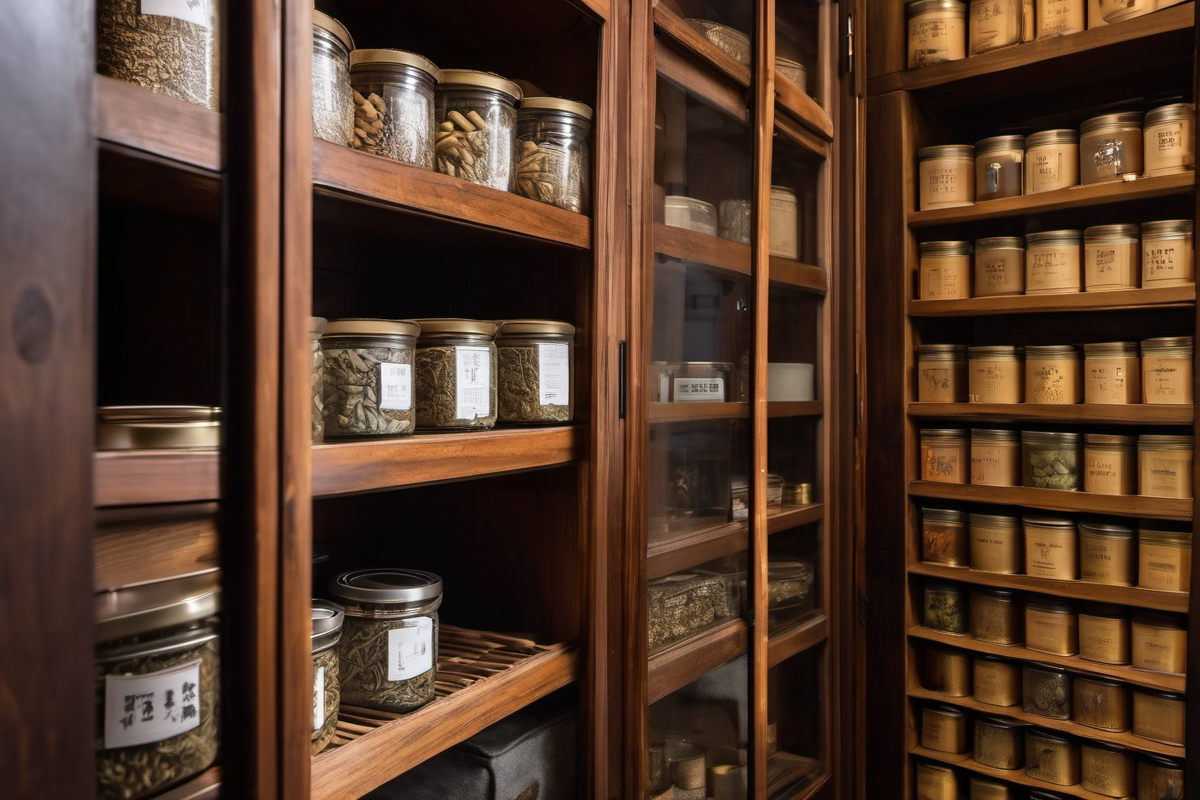
Good tea doesn’t stay good on its own. Storage mistakes are one of the top reasons home drinkers end up thinking they don’t like a particular tea — when in reality the tea was just stale, damp, or off-flavored by the time they brewed it.
This guide walks you through exactly how to store each of the six Chinese tea types: the right container, humidity, temperature, light exposure, expected shelf life, and what to avoid. The principles differ more than you might think — green tea wants very different conditions than pu-erh.
If you’re new to the six categories, see our types of Chinese tea guide first.
The 30-Second Answer
The four universal rules of tea storage:
- Keep air out — oxygen degrades flavors; airtight containers are essential
- Keep light out — light destroys chlorophyll and aromatic compounds
- Keep moisture stable — too humid causes mold; too dry causes flavor loss
- Keep strong odors out — tea absorbs ambient smells aggressively
Container rule of thumb: opaque, airtight, food-safe. Original foil pouch works for 1–3 months; a tin or ceramic canister is better for longer.
One exception: raw pu-erh benefits from some air exposure during aging, so don’t vacuum-seal it. Everything else wants airtight.
Storage by Tea Type
Different teas have different storage needs. Here’s the breakdown.
Quick Reference Table
| Tea type | Container | Humidity | Temperature | Refrigerate? | Shelf life |
|---|---|---|---|---|---|
| Green tea | Airtight tin, foil pouch | Below 60% | Below 5°C (fridge) for long storage | Yes for long storage | 6–12 months |
| White tea | Airtight, breathable for aging | Below 65% | Room temp (15–25°C) | No | 1–2 years (fresh); decades (aged) |
| Yellow tea | Same as green | Below 60% | Cool, dark | Optional | 6–12 months |
| Oolong (green-fresh) | Airtight tin | Below 65% | Room temp | No | 12–18 months |
| Oolong (roasted) | Airtight, can breathe a bit | Below 65% | Room temp | No | 18–24 months |
| Black (red) tea | Airtight tin | Below 65% | Room temp | No | 2–3 years |
| Pu-erh (ripe) | Paper or cloth, breathable | 55–70% | Room temp (20–25°C) | No | Years to decades |
| Pu-erh (raw) | Paper or cloth, breathable | 55–70% | Room temp (20–25°C) | No | Decades for aging |
Now the details.
Green Tea
Green tea is the most fragile category. It’s unoxidized, so the compounds that give it freshness (catechins, amino acids, chlorophyll, volatile aromatics) break down quickly when exposed to air, light, heat, or moisture.
Best storage:
– Airtight opaque container — tin, ceramic with seal, or foil-lined bag with zipper
– Cold — room temperature is okay short-term, but refrigerate for storage longer than a month
– Dry — below 60% humidity; fridge is usually fine
– Dark — no light exposure
Refrigeration tips:
– Use the main fridge compartment, not the freezer
– Bring to room temperature before opening — opening cold tea in warm air causes condensation on the leaves, which is the opposite of what you want
– Keep away from strong-smelling foods (the tea will absorb them)
– Airtight container is essential — your tea will absorb every smell in your fridge otherwise
Shelf life: 6–12 months peak quality. After 12 months, the aromatics fade noticeably.
For specific green tea brewing and storage tips, see our how to brew Longjing guide.
White Tea
White tea is the only category that genuinely improves with age, similar to pu-erh. Aged white tea (陈年白茶, “chen nian bai cha”) is a separate drinking category in China.
Best storage for fresh white tea:
– Airtight container — tin or foil pouch, sealed
– Cool, dark, dry — pantry or cupboard is fine
– No refrigeration (unlike green tea) — moisture cycles damage it
Best storage for aging white tea (intentional long-term):
– Paper-wrapped cake or loose in breathable container — similar to pu-erh
– Stable humidity 60–70% — too dry and aging stalls
– Stable room temperature (18–25°C) — fluctuations cause problems
– Some airflow — not airtight, but not in a draft
Shelf life: 1–2 years peak for fresh white tea; 5–20+ years for intentionally aged white tea.
For more, see our how to brew Silver Needle guide.
Yellow Tea
Yellow tea follows the same rules as green tea — it’s processed similarly with an extra “sealed yellowing” step that mellows the flavor.
Best storage: same as green tea.
– Airtight, dark, cool
– Refrigerate for storage longer than a month
– Use within 6–12 months for peak quality
Yellow tea is rare, so this is mostly about preserving something you’ve acquired.
Oolong Tea
Oolong splits into two storage personalities based on roast level.
Green-fresh oolong (Tieguanyin, light high mountain oolong):
– Airtight container — the floral aromatics are volatile
– Cool, dark, dry — same as green tea
– No refrigeration
– Shelf life: 12–18 months
Roasted oolong (Da Hong Pao, Rou Gui, heavy Tieguanyin):
– Airtight, but can breathe slightly — the roasted character is more stable than fresh aromatics
– Cool, dark, dry
– No refrigeration
– Shelf life: 18–24 months; some drinkers report aged roasted oolong is interesting too
For details, see our how to brew Tieguanyin guide and how to brew Da Hong Pao guide.
Black (Red) Tea
Black (red) tea is fully oxidized, which makes it more stable than green or white tea. It’s the easiest category to store.
Best storage:
– Airtight container — tin, ceramic, or foil pouch
– Room temperature — no refrigeration needed
– Dark, dry — keep away from light and moisture
– Stable humidity — below 65%
Shelf life: 2–3 years for most varieties. Premium Keemun can last even longer.
For more, see our what is Chinese black tea guide.
Pu-erh Tea
Pu-erh is the only category where storage actually improves the tea. Both ripe (shou) and raw (sheng) pu-erh benefit from controlled aging.
The fundamental difference: unlike every other tea type, pu-erh wants some air exposure during storage. Vacuum-sealing pu-erh prevents the microbial activity that drives aging.
Best storage for ripe (shou) pu-erh:
– Paper-wrapped cake in a bamboo tong (筒, a bamboo basket) or wooden box
– Breathable but not exposed — some airflow, not airtight
– Stable humidity 55–70% — too dry and aging stops; too wet and mold develops $TRAE_REF
– Stable room temperature (20–25°C)
– No refrigeration — fridge kills the microbial activity
– No direct sunlight
– No strong odors nearby — pu-erh absorbs smells aggressively
Best storage for raw (sheng) pu-erh:
– Same as ripe pu-erh, but aging potential is higher
– Storage in dedicated pu-erh storage cities (Kunming, Guangzhou, Hong Kong) has specific humidity and temperature conventions
– Hong Kong storage: 75–85% humidity, 25–30°C — fast aging, some risk
– Kunming (dry) storage: 55–65% humidity, 15–20°C — slower aging, more reliable
– Home storage: aim for the middle, around 60–70% humidity and stable temperature
Storage containers for pu-erh cakes:
– Original bamboo leaf wrapping — traditional, breathable
– Bamboo tong (筒) — bamboo basket holding 7 cakes, traditional
– Wooden box — provides some protection
– Porcelain jar — for small amounts, very stable
Avoid: plastic bags, airtight containers, refrigerators, anything that prevents air exchange.
Shelf life: years to decades. Aged raw pu-erh (10+ years) commands premium prices. Aged ripe pu-erh (3–10 years) smooths out further.
For full details, see our how to store pu-erh guide and ripe vs raw comparison.
Containers: What to Use
Best Containers by Use Case
| Container | Best for | Notes |
|---|---|---|
| Original foil pouch | Short-term storage (1–3 months) | Usually included; resealable zippers are best |
| Tin canister with seal | Most teas, 3–12 months | Classic, opaque, food-safe; widely available |
| Ceramic canister with lid | Most teas, 3–12 months | Decorative + functional; some have rubber gaskets |
| Glass jar with clamp lid | Decorative use | Not opaque — use only if stored in dark cupboard |
| Paper bag or kraft pouch | Pu-erh cakes | Breathable; traditional for pu-erh |
| Bamboo tong (筒) | Pu-erh cakes (sets of 7) | Traditional storage basket |
| Wooden tea box | Pu-erh, multiple teas | Decorative + protective; avoid aromatic woods |
| Vacuum-sealed bag | Long-term freezer storage | Only for very long-term storage (1+ year) |
| Mylar bag with oxygen absorber | Long-term storage (1+ year) | Best for sealed long-term; popular with collectors |
Containers to Avoid
- Plastic ziplock bags — not airtight enough; can impart plastic flavor; absorb odors
- Clear glass in sunlight — light destroys chlorophyll and aromatics
- Aromatic wood boxes (cedar, sandalwood) — imparts off-flavors
- Cardboard alone — not airtight; absorbs humidity
- Plastic containers not rated food-safe — can leach chemicals
Container Sizing
Choose containers that fit the amount of tea with minimal empty air space. A half-full large tin has more trapped oxygen than a full small tin. For larger quantities, divide into smaller containers.
The Four Enemies of Tea Storage
1. Air (Oxygen)
Oxygen oxidizes catechins, breaks down aromatic compounds, and causes the “stale” or “flat” flavor you get from old tea. Airtight containers are essential for every tea except intentional pu-erh aging.
2. Light
Light destroys chlorophyll (turning green tea brown), degrades volatile aromatics, and can trigger unwanted oxidation. Always store tea in opaque containers or dark cupboards.
The most common mistake: storing tea in a decorative clear glass jar on a sunny countertop. Looks great, destroys the tea.
3. Moisture
Too humid → mold, especially dangerous with pu-erh. Too dry → flavor compounds degrade. The target range is below 65% relative humidity for most teas, 55–70% for pu-erh.
If you live in a humid climate:
- Use airtight containers (seal any gaps)
- Add food-safe desiccant packets (silica gel) inside larger storage containers — replace every 6 months
- Don’t store in kitchens, bathrooms, or basements
- Consider a small dehumidifier in your storage area if humidity is regularly above 70%
If you live in a very dry climate:
- Most teas are fine; dryness is rarely a problem
- For pu-erh aging, a small open cup of water near the storage area helps maintain humidity
4. Heat
Heat accelerates every degradation reaction. Room temperature (15–25°C) is fine for most teas; lower is better for storage. Avoid storing tea:
- Above the stove or oven
- Near radiators or heating vents
- In direct sunlight
- In attics or garages
- On top of refrigerators
For long-term green tea storage, refrigeration is the single biggest improvement you can make.
5. Strong Odors
Tea is highly absorbent of ambient smells — it will pick up coffee, spice, perfume, and food odors if stored nearby. Always store tea:
- Away from the kitchen (or in a separate cupboard)
- Away from spices, coffee, perfume
- In its own sealed container even within a cupboard
- Not in the same fridge compartment as strongly-smelling foods (unless absolutely sealed)
Common Storage Mistakes
Refrigerating Green Tea in a Non-Airtight Container
The most common mistake. The fridge is humid and full of food smells. Green tea in a non-airtight container in the fridge picks up moisture and odors. Always use airtight container when refrigerating.
Putting Hot Tea in the Fridge
If you brewed a pot and want to save the leftover for iced tea later, let it cool to room temperature first before refrigerating. Putting hot liquid in a closed container in the fridge raises the temperature and humidity inside the fridge, affecting other foods and creating condensation on your tea leaves.
Storing Different Teas Together
Different teas have different aromas. Storing them in the same container or even the same cupboard (in porous packaging) causes flavor cross-contamination. Each tea gets its own sealed container.
Opening the Container Repeatedly
Every time you open a tea container, you let in fresh oxygen, light, and ambient humidity. If you brew the same tea every day, decant a small working portion into a separate container and keep the main supply sealed.
Vacuum-Sealing Pu-erh for Storage
Pu-erh needs air exchange to age. Vacuum-sealing stops the aging process and can promote anaerobic mold growth. Use breathable materials for pu-erh storage.
Buying Tea in Bulk and Storing It All Together
Bulk storage doesn’t save money if the tea loses quality before you finish it. Buy smaller amounts more often. The exception is pu-erh cakes, which are designed to age.
Special Storage Situations
Storing Tea Long-Term (1+ Year)
For tea you want to keep fresh for 12+ months:
- Green tea: mylar bag with oxygen absorber, vacuum-sealed, refrigerated
- Other teas: tin or ceramic canister in a cool, dark cupboard (away from any heat source)
Storing Tea While Traveling
For trips or moves:
- Use original foil pouches — they’re designed for transport
- Double-bag in ziplock if the original is torn
- Avoid checking tea in luggage — temperature swings in cargo holds are brutal
- Carry on valuable or delicate teas
- Insulated bag if traveling to a hot climate
Storing Tea in a Humid Climate
- Airtight containers are mandatory
- Consider a small dehumidifier in your storage area
- Don’t store in kitchen, bathroom, or basement
- Use food-safe desiccant packets in larger containers
Storing Tea in an Office or Shared Space
- Keep tea in your desk or a personal bag, not in a shared kitchen cupboard
- Airtight container is essential
- Avoid windowsills and areas near radiators
Storing Tea Cake/Brick (Pu-erh, White Peony)
Cakes and bricks come wrapped in paper:
- Keep the original paper wrap — it’s part of the storage system
- Store in a tong (bamboo basket) or wooden box for sets of cakes
- Keep in a cupboard away from direct light and strong odors
- Don’t vacuum-seal pu-erh cakes (defeats aging); white peony can go either way
How to Tell If Tea Has Gone Bad
Visual Signs
- Mold: fuzzy white, green, or black spots — discard immediately
- Severe browning: green tea that’s gone brown has oxidized; still drinkable but flavor is degraded
- Discoloration in white or yellow tea: usually moisture damage
Smell Signs
- Musty, moldy, or wet-cardboard smell — moisture damage; discard
- Stale, flat, or “old” smell — oxidized but drinkable; use for cooking
- Chemical or plastic smell — container contamination; discard
- Strong odor of stored food — absorbed odors; still drinkable but unpleasant
Taste Signs
- No flavor at all — severely aged; drink or discard based on personal preference
- Bitter, sour, or metallic — possible mold or contamination; discard
- Stale but recognizable — past peak quality; use for iced tea or cooking
When Tea Is Still Safe to Drink
Aged tea is rarely dangerous, just less flavorful. The exceptions are:
- Visible mold — discard; mold can produce mycotoxins
- Severe contamination smell — discard
Aged-but-not-moldy tea is safe to drink; it just won’t taste as good as fresh.
Buying Tips to Help Storage
Buy in Sizes You Can Use
- 25–50g of green or fresh oolong: drink within 3–6 months
- 100g of black tea: drink within 12 months
- 357g cake of pu-erh: ages well, drink over years
Choose Vendors with Good Storage
Reputable vendors:
- Store tea in climate-controlled warehouses
- Rotate stock so you get fresh tea
- Pack orders quickly with minimal air
- Provide batch numbers and harvest dates
Check the Date
Look for harvest date or packing date on the packaging. The closer to harvest, the longer you’ll have to enjoy it.
Special Note on Pu-erh Cake Storage
If you buy a pu-erh cake (compressed 357g disc), here’s what to do:
- Keep the original paper wrap — it helps with breathing
- Place in a bamboo tong or wooden box if storing multiple cakes
- Store in a cupboard away from light, heat, and strong odors
- Maintain stable humidity 55–70%
- Don’t vacuum-seal
- Don’t refrigerate
- Break off pieces by prying with a tea knife — don’t saw or hammer (creates dust)
For aging raw pu-erh specifically, storage location matters:
- Hong Kong (wet) storage: 75–85% humidity, 25–30°C — fast aging, strong “wet storage” character
- Kunming (dry) storage: 55–65% humidity, 15–20°C — slower, cleaner aging
- Home storage: aim for the middle, around 60–70% humidity
Both styles are valid; collectors argue about which is “better.” For your first few cakes, dry storage at home is the safer choice.
For our full pu-erh storage guide, see how to store pu-erh.
FAQ
Should I refrigerate green tea?
Yes, for long-term storage (1+ months). Use airtight container, keep away from smelly foods, bring to room temperature before opening. The fridge is the single biggest improvement you can make for green tea freshness.
Should I refrigerate pu-erh?
No. Pu-erh ages through microbial activity, which refrigeration stops. Cold temperatures can also cause condensation and mold risk. Store pu-erh at room temperature, away from direct sunlight.
Can I store different teas in the same container?
No. Different teas have different aromas and they’ll cross-contaminate. Each tea gets its own sealed container, even within the same cupboard.
How long does green tea last?
6–12 months for peak quality when stored properly. Beyond that, the aromatics fade noticeably but the tea is still drinkable. Refrigerated green tea can last 18+ months in decent condition.
Does white tea improve with age?
Yes, with caveats. Aged white tea (5+ years) develops deeper, sweeter, more “medicinal” character. The aging needs proper storage: stable humidity 60–70%, stable temperature, paper wrapping or breathable container. See our Silver Needle brewing guide for more.
Can I vacuum-seal pu-erh to preserve it?
No. Pu-erh needs air exchange to age. Vacuum-sealing stops the aging process and can promote anaerobic mold. Use breathable storage instead.
What containers do tea shops use?
Most tea shops use:
- Foil-lined bags with heat seals for short-term retail
- Tin canisters with rubber gaskets for display and short-term storage
- Porcelain jars with sealed lids for premium teas
- Bamboo tong or wooden boxes for pu-erh cakes
- Mylar bags with oxygen absorbers for long-term storage (1+ year)
For home use, tin canisters or ceramic jars are the best balance of cost, function, and aesthetics.
How do I store tea if I don’t have a kitchen cupboard?
Any dark, cool, dry location works:
- Bedroom closet shelf
- Hallway linen cupboard
- Basement storage room (if dry and not too hot)
- Closet shelf in any room away from kitchen and bathroom
The container does most of the work; the location just needs to avoid heat, light, and strong odors.
Can I keep tea in the freezer?
Green tea — yes, for long-term storage. Use airtight container, bring to room temp before opening.
Other teas — generally no. Freezer is too cold, too humid, and you risk odor absorption and freezer burn.
The exception: some very long-term collectors freeze pu-erh cakes in airtight bags, but this is uncommon and not recommended for most drinkers.
How do I tell if pu-erh has gone bad?
Bad pu-erh is rare because of the aging process, but signs include:
- Visible mold (white, green, or black fuzz) — discard
- Severe chemical or rotting smell — discard
- Sour or fermented “wrong” taste — may be over-fermented or contaminated
Properly stored pu-erh almost never “goes bad” — it just ages. Even very old pu-erh that tastes strange is usually salvageable by brewing more carefully.
Can I use mason jars to store tea?
Yes, if they’re clean, dry, and stored in a dark place. Mason jars are airtight and clear glass lets you see the tea — but the clarity means you need to keep them in a dark cupboard to avoid light damage.
If you use mason jars:
- Choose tinted or wrap in fabric for light protection
- Use new seals to ensure airtight fit
- Don’t store near spices, coffee, or strong-smelling foods
What about tea stored in the original decorative tin?
Decorative tins are usually metal with a fitted lid, not airtight. They’re fine for short-term (1–3 months) storage if:
- The lid fits tightly
- The tin is opaque or kept in a dark place
- The original foil pouch is inside, sealed
For long-term storage, transfer to a more airtight container.
Is it OK to store tea in the freezer with coffee?
No. Tea and coffee should be stored separately even when sealed. If you must store them in the same freezer, keep each in a tightly sealed container (double-bagged if needed). The risk is odor transfer if either container leaks.
Further Reading
- How to Store Pu-erh Tea — full deep-dive on the only aging category
- Ripe vs Raw Pu-erh — how aging differs between the two
- How to Buy Chinese Tea (Beginner’s Guide) — buying fresh tea
- Best Chinese Tea for Beginners — what to buy
- Types of Chinese Tea: Complete Guide — all six categories
- How to Brew Chinese Tea (Complete Guide) — brewing principles
Categories: Buying & Storage, Tea Types
2 thoughts on “How to Store Chinese Tea: A Complete Guide by Tea Type”